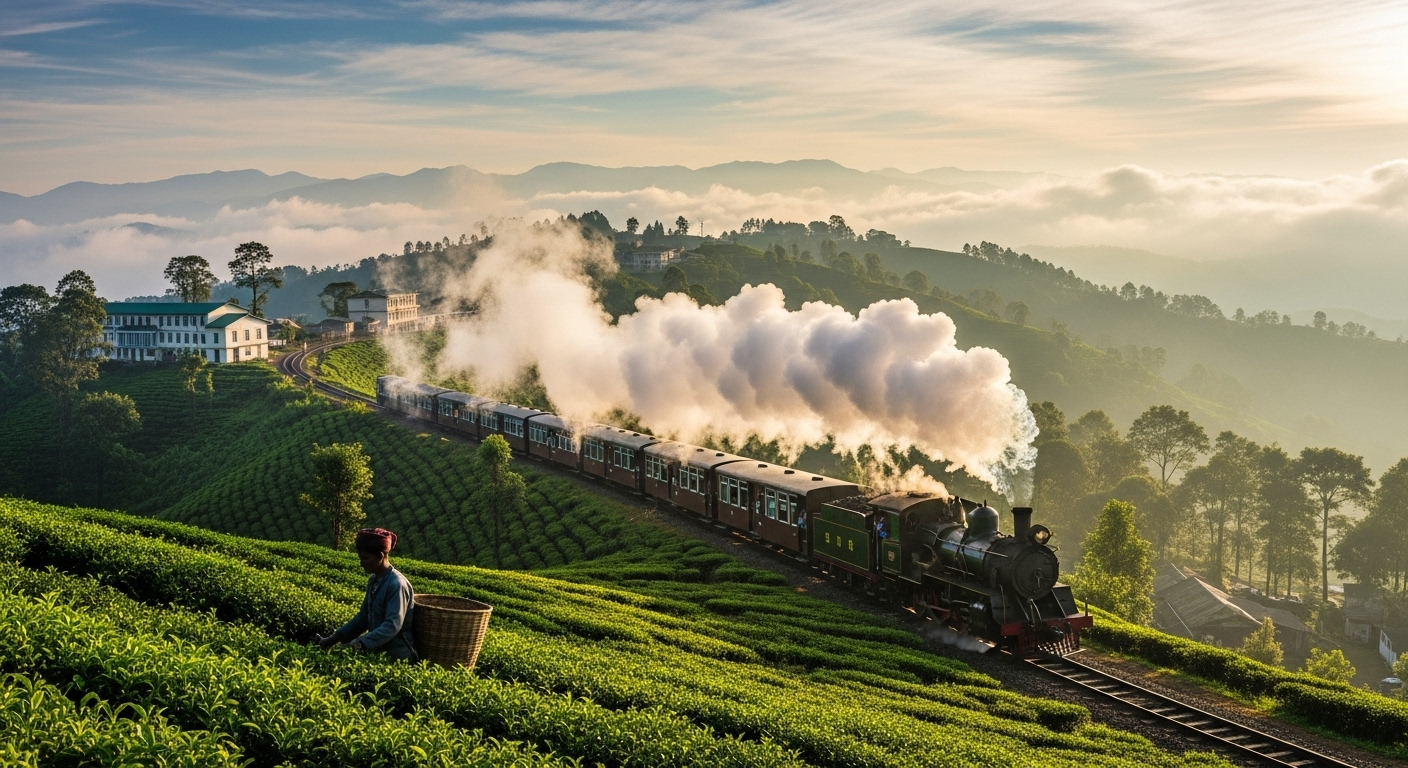
Darjeeling stands high at 2000 meters, famous for its vibrant tea gardens. Yet, it holds untouched stories and mysteries. The area’s tea, loved for its scent and taste, once sold for $1,850 per kg. This made it India’s most expensive tea, showcasing Darjeeling’s rich history.
Since 1881, the Darjeeling Himalayan Railway, or the Toy Train, has journeyed through these lands. It marks Darjeeling as a blend of Tibetan, Nepali, and Indian cultures. As a UNESCO World Heritage Site, it tells the stories of Darjeeling’s past.
Key Takeaways
- The juxtaposition of Darjeeling’s famed tea legacy and its pivotal historical narratives.
- Insight into the cultural and historical mosaic that constructs the unique identity of Darjeeling.
- The Toy Train’s role in the ascendancy of Darjeeling as a coveted tourist attraction.
- Understanding the relevance of Geographical Indication (GI) status in preserving Darjeeling’s heritage.
- An introduction to the diverse cultural influences creating the rich tapestry that is Darjeeling’s historical and social fabric.
Exploring Darjeeling’s Enigmatic Beginnings
Darjeeling’s story starts with its complex history and geography. It lies in the Himalayas, surrounded by tea gardens. Its past is a rich historical enigma that goes back centuries. It was a place for explorers and soon became famous for tea.
To really know Darjeeling is to find stories at every turn. It is known for its views and history. It played a big part in culture and politics over time.
Darjeeling was once a colonial escape and a key military spot. Its evolution makes many curious about its early days. The mixing of nature and historical enigma of Darjeeling keeps attracting people. It has a special place in history books.
Old buildings and streets in Darjeeling attract many. They show the city’s history and charm. This helps us learn about Darjeeling’s past and explore old stories among the green hills.
Hidden Stories of Darjeeling: Colonial Intrigues and Legends
Darjeeling, in the lush Himalayan foothills, is famous for more than its beauty. Its history during the British Raj has left a lasting mark. This period enriched the area with many legends and tales. Now, these are a big part of Darjeeling’s stories and folklore.
British Raj’s Legacy and Architectural Heritage
The British Raj gave Darjeeling its special colonial buildings. These buildings are a big draw for tourists and history lovers. Places like the Raj Bhavan and tea estates have old Victorian design. Each one tells a story of the past, mixing British style with local ways.
Folklore and Oral Histories Shaping Darjeeling’s Identity
Darjeeling’s culture is full of stories about spirits in the misty hills. These stories have been told for generations. They’re not just tales, but a way for the community to connect with their surroundings. One popular story is about two lovers from rival tribes, similar to Romeo and Juliet. It’s filled with local beliefs. Keeping these stories alive connects Darjeeling to its past even as it changes.
The Indigenous Roots and Cultural Tapestry of Darjeeling
Darjeeling is famous for its beautiful views and great tea. It also has a deep history and culture thanks to its indigenous people. The Lepcha, Bhutia, and Gorkha peoples have all added to Darjeeling’s rich history. Their traditions help us understand this area’s unique culture more fully.
Lepcha, Bhutia, and Gorkha Influences
The Lepcha, Bhutia, and Gorkha communities each have their own way of life. Their languages, customs, and religions make Darjeeling’s culture very rich. Special festivals like Losar for Bhutias, and Tendong Lho Rum Faat for Lepchas, show the depth of their cultures and beliefs.
Preserving Linguistic Diversity and Traditional Practices
- Linguistic Preservation: There are efforts to keep the indigenous languages alive through education and cultural events. This helps younger generations learn the languages of their ancestors.
- Cultural Practices: There’s a focus on keeping traditional arts like thangka painting and handicrafts alive. Workshops and shows are held often to celebrate these arts.
Darjeeling is more than just a place to visit. It’s a living museum that shows the history of the Himalayan people. It’s a great place for anyone who loves learning about cultures and history.
| Community | Language | Key Festivals | Traditional Art Forms |
|---|---|---|---|
| Lepcha | Rong | Tendong Lho Rum Faat | Wood carving, Weaving |
| Bhutia | Sikkimese | Losar | Thangka Painting, Handicrafts |
| Gorkha | Nepali | Dasain | Folk Songs, Dance |
Darjeeling’s Tea Legacy and the Untold Tales of Plantation Workers
Darjeeling tea history is full of interesting stories. It’s not just about growing and making tea. The workers’ stories are often not told. These stories are hidden behind the beautiful, green tea plantations.

The tea industry started in Darjeeling in the mid-19th century. It changed the area’s economy and society. The tea fields became very important for Darjeeling’s economy. But, the workers’ stories show more about human spirit than about tea’s success.
Many plantation workers come from families who have been there for years. They share stories of picking tea and making it. They also talk about cultural exchanges and how their society has changed.
“The legacy of Darjeeling tea is as much about the workers as it is about the tea. Each cup tells a story of tradition, hard work, and family bonds.”
To really understand Darjeeling tea, we must recognize the workers’ contributions. Their stories help us see how tea has changed their world. But they also show us the personal histories that make each batch of tea special.
| Aspect | Impact on Plantation Workers |
|---|---|
| Cultural Exchange | Integration of diverse ethnic practices and languages, enriching local culture. |
| Technological Advancements | Introduction of modern farming techniques has transformed traditional tea farming methods, impacting labor practices. |
| Global Recognition | The international acclaim of Darjeeling tea has brought pride but also challenges in maintaining quality and competing in global markets. |
| Community Development | Revenues from tea plantations have enabled infrastructural development, yet disparities exist in wealth distribution and access to resources. |
The stories from the tea plantations remind us of the people behind the tea. They make us see the full story of Darjeeling tea. They also tell us we should appreciate and support the workers. This way, the tea legacy can keep growing.
Unlocking Darjeeling’s Mysteries: Famous Landmarks with Hidden Histories
Darjeeling is known for its green lands and sweet teas. But there’s more to its story. The place has Darjeeling’s historical landmarks with secrets. It’s not just for the views. Each landmark holds a story from the past. They wait for us to find them.
The Darjeeling Himalayan Railway is special. People call it the ‘Toy Train.’ It was made in the British era. It’s more than a spot for visitors. It holds many stories from the past. The railway, with its tough build, is key in Darjeeling’s historical landmarks.
Then there’s the Ghoom Monastery, an old Tibetan Buddhist place in Darjeeling. It’s important for its faith. The monastery keeps rare Buddhist writings and thangkas. It shows the deep cultural and religious mix in the area.
Tiger Hill also brings mystery. It’s famous for its sunrises. Local legends talk about an eternal tiger once seen around. This place shows the mystery of Darjeeling’s attractions. It combines beauty with old tales.
Darjeeling’s landmarks tell many stories. From old buildings to holy places and beautiful nature, it calls history lovers. Darjeeling isn’t just a place to see. It’s a puzzle to solve. Each discovery tells us more.
Impact of the Tibetan Uprising on Darjeeling’s Social Fabric
The 1959 Tibetan uprising was a big event in Asian history. It affected areas well beyond Tibet, including Darjeeling. This led to big changes in Darjeeling’s society and culture, showing the strength and flexibility of its people.
Exile and Solidarity: The Establishment of Tibetan Refugee Centers
After Tibetans fled the uprising, Darjeeling welcomed them with open arms. Darjeeling set up many Tibetan refugee centers. These places helped Tibetans keep their culture alive. Darjeeling’s people helped the refugees, creating a strong bond of support and understanding. This bond is still a big part of the town today.
Cultural Exchange and Integration: Tibetan Influence on Local Traditions
The Tibetan uprising changed Darjeeling in many ways, including culture. Tibetan festivals, food, and art became a big part of Darjeeling’s way of life. Monasteries, clothes, and markets show how the two cultures have mixed. These things make Darjeeling more interesting to visitors from around the world.
This mix of cultures has been great for Darjeeling’s tourism. People love visiting Tibetan centers to see art, eat food, and learn. The Losar festival in Darjeeling is a colorful example of Tibetan impact. It draws tourists every year.
The way Darjeeling embraced Tibetan culture shows how powerful solidarity can be. It turned a tough situation into a chance for growth and unity. This is a lesson on making the best out of hard times.
Darjeeling During Wars: Untold Stories and Contributions
The town of Darjeeling is known for its beautiful landscapes and tea. But, it also has a hidden history with wars, especially World War II. This part talks about the military contributions of Darjeeling. These contributions are not well-known in history books.
The Role of Darjeeling in WWII
Darjeeling in WWII was important due to its location. It was close to South Asian war zones. The town helped in planning and was a place for soldiers to recover. Soldiers got better here, away from the war’s hardships.
Contributions of Darjeeling’s Residents to Military Campaigns
The people of Darjeeling helped a lot in the war. Many joined the military to fight and showed great bravery. They did more than fight; they also helped with supplies and support. This help was vital for the Allied forces.
Darjeeling remembers its heroes with memorials and records. The military contributions of Darjeeling are remembered across generations. It honors the sacrifices of those brave people.
| Memorial Site | Date Established | Visitor Information |
|---|---|---|
| Tiger Hill Cemetery | 1905 | No entry fee, best visited from October to March |
| Balancing Rock War Memorial | N/A | Located 3.4 km from Rani Durgavati Museum, accessible by road |
| Queen of the Hills Battalion Plaque | N/A | Placed centrally in Darjeeling Town for easy access |
This story about Darjeeling in WWII shows its key role and its people’s spirit. It adds an important part to India’s war history.
Natural Disasters and Their Impacts on Darjeeling’s Heritage
Darjeeling has faced many natural disasters over time. This includes landslides, earthquakes, and severe weather. Each event has left its mark on the area’s history and culture.
Landslides are common because of the steep land and heavy rains. They damage roads and buildings. They also hurt many historic sites in Darjeeling. Earthquakes can harm old buildings too. Many were built during British rule and are very important.
Darjeeling’s heritage has suffered a lot. Temples, historical buildings, and the Darjeeling Himalayan Railway have been damaged. These places need constant care to keep them safe.
- Landslides – Triggered by heavy rainfall and leading to loss of both life and heritage structures.
- Earthquakes – Posing threats to the structural integrity of historic buildings and monuments.
- Floods – Often washing away roads and bridges, disrupting connectivity and conservation efforts.
People are working hard to protect Darjeeling from natural disasters. They make buildings stronger and improve drainage. They also teach the community how to be prepared for emergencies.

Preserving history is important for the area’s tourism. This is a big part of Darjeeling’s economy. Keeping historical places safe lets visitors enjoy Darjeeling’s beauty for years to come.
It’s important to understand how natural disasters affect Darjeeling. This helps protect its heritage and people. Lessons from past events guide us to keep Darjeeling beautiful and safe.
Revival and Renewal: Efforts to Preserve Darjeeling’s History
In Darjeeling, people are working hard to protect its history. They’re using conservation projects and community efforts. These projects help keep Darjeeling’s history alive. They teach locals and visitors about the past.
Conservation Projects for Historic Buildings and Sites
Historical landmarks like the Happy Valley Tea Estate are being restored. This estate, from 1860, shows Darjeeling’s tea-making history. It mixes old ways with new to stay famous worldwide. The Tibetan Refugee Self Help Center, started in 1959, shows the Tibetan community’s strength. It keeps their culture alive through this historic site.
Community Initiatives in Documenting and Celebrating Darjeeling’s Past
Darjeeling’s communities are recording and celebrating their history. They host cultural festivals with dance, music, and crafts. These events reflect Tibetan, Gorkha, and British influences on Darjeeling. They also document stories and legends, taught by elders. This keeps the region’s history vibrant for future generations.
These efforts have made Darjeeling’s people very proud. Tourists come to see the beautiful old buildings and enjoy the culture. This helps Darjeeling keep its history alive for future kids. They will learn about their past, full of stories of bravery, many cultures, and change.
The Darjeeling Himalayan Railway: A Journey through Time
The Darjeeling Himalayan Railway runs through the steep hills and lush areas of the Eastern Himalayas. It’s known as the ‘Toy Train’ and is a big part of Darjeeling’s culture and history. It shows us the past with its great engineering and lasting charm.
It was made in the late 1800s to help with the tea trade. Now, it’s a symbol of Darjeeling, drawing tourists from all over. They come to see its beautiful routes and its history.
In a similar way to exploring Nainital, the railway lets you see the area’s beauty up close. The trip goes from Darjeeling to Ghum and back. You’ll see the amazing Kanchenjunga and the green hills.
While riding, the sounds of the steam whistle and wheels are special. The trip isn’t just about where you’re going. It’s about seeing Darjeeling’s past, too. Each station has its story, like the famous Batasia Loop. There, the track goes around a garden, showing off Darjeeling’s scenery all around.
| Feature | Description |
|---|---|
| Engineering | Exemplary use of narrow gauge for sharp curves and steep gradients |
| Historical Significance | Began in 1879, UNESCO World Heritage Site since 1999 |
| Cultural Impact | Integral to local tourism, embodying the spirit of Darjeeling |
| Route Highlights | Batasia Loop, Ghum Station, views of Kanchenjunga |
The Darjeeling Himalayan Railway tells the stories of the people and places here. It keeps running as a sign of Darjeeling’s heritage. This makes it one of the most iconic journeys in Darjeeling.
Conclusion
We have explored Darjeeling’s amazing story. Its culture, history, and beauty have come alive. From its early days to the present, we’ve seen its magic. The place has a rich past with diverse communities and famous tea.
Darjeeling’s past is still alive in the hearts of its people. They keep old traditions and stories alive. This keeps the spirit of Darjeeling strong and proud. We’ve seen how important it is to protect these tales.
This story about Darjeeling invites us to keep learning. It asks us to explore more and respect its secrets. Sharing these stories helps keep Darjeeling special. Let’s keep the essence of Darjeeling alive for others to enjoy.
FAQ
What are some lesser-known historical facts about Darjeeling’s past?
A: Darjeeling has a rich history. It was first a getaway for British troops. Then, it became a hill station for the British. Many different people, like the Lepcha, Bhutia, and Gorkha, made it diverse. It also has secrets, like how it was bought from Sikkim’s leaders.
How has the British Raj influenced Darjeeling’s history and culture?
The British changed Darjeeling a lot. They built beautiful buildings and started tea gardens. They also brought new ways of living to the area. Stories from those times show how British and local cultures mixed.
What role do the Lepcha, Bhutia, and Gorkha communities play in Darjeeling’s identity?
The Lepcha, Bhutia, and Gorkha people are very important to Darjeeling. They keep their languages, traditions, and beliefs alive. This makes Darjeeling’s culture very rich and varied.
What are some untold tales of the workers in Darjeeling’s tea plantations?
The tea workers have many stories. They worked hard in the tea fields. They shared their cultures and created a strong community. But, they also faced many challenges. Their story is a big part of Darjeeling’s famous tea.
What are the hidden histories behind some of Darjeeling’s most famous landmarks?
Many landmarks in Darjeeling have secret stories. The Darjeeling Railway and old hotels are just a few. Places like Tiger Hill tell us about Darjeeling’s growth. Once remote, now it’s loved by travelers.
How did the Tibetan Uprising affect Darjeeling’s community?
The Tibetan Uprising brought many refugees to Darjeeling. The locals helped by setting up centers for them. Tibetan arts, food, and religion are now part of Darjeeling. This shows how people in Darjeeling care for each other.
How did Darjeeling contribute to military efforts during World War II?
During World War II, Darjeeling was very important. It sent soldiers to help Britain. It was also where soldiers came to heal. Sadly, not many know of the locals’ bravery in wars.
In what ways have natural disasters impacted Darjeeling’s historical preservation?
Bad weather and earthquakes damaged many places in Darjeeling. This loss made people want to save its old buildings and history. Working together, they try to keep Darjeeling’s story alive.
What initiatives exist to preserve and celebrate Darjeeling’s history?
People are working hard to save Darjeeling’s history. They fix old buildings and places like the famous railway. They also keep traditions alive through special events. This helps everyone remember Darjeeling’s past.
What is the historical significance of the Darjeeling Himalayan Railway?
The Darjeeling Railway is very special. It’s recognized worldwide for its beauty and history. Built in the 1800s, it helped Darjeeling grow. It made it easy to share goods and culture between the hills and the plains.