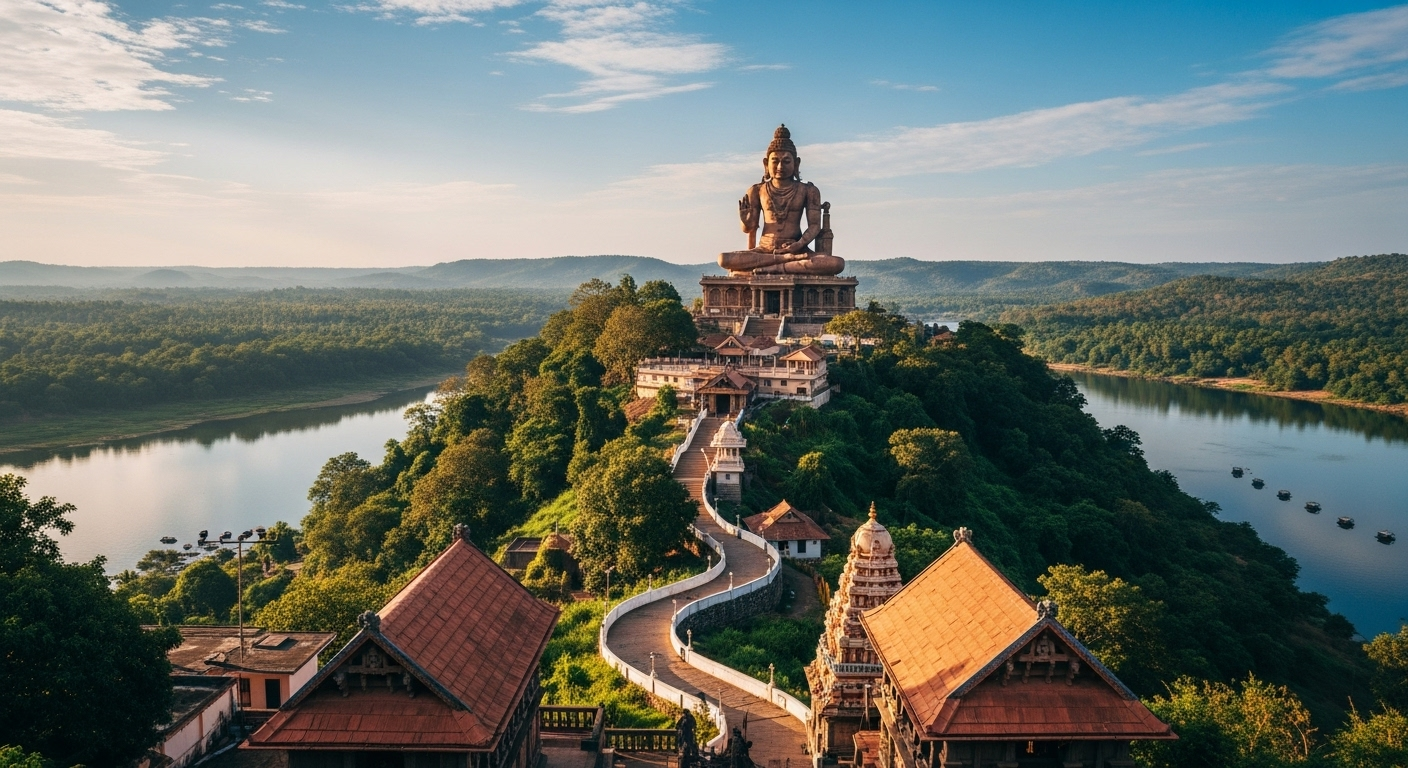
Did you know the Dharmasthala Manjunatha Temple has a long history? For over 800 years, the Heggade family has taken care of it. This special place in Karnataka touches the hearts of many. Dharmasthala is not just a temple. It is a sign of India’s spirit and unity.
This temple shows amazing Dravidian art. It has beautiful stone work made from granite. Besides looking stunning, the temple also does good deeds. Every day, it gives free meals to about 10,000 visitors. It also holds big wedding events for many couples at once.
Dharmasthala welcomes everyone, no matter their religion. It mixes Jain and Hindu ways of worship. There are daily prayers and big festivals. A big event is Lakshadeepotsava. Then, thousands of oil lamps light up the whole place. Dharmasthala stands for togetherness and love for all.
Key Takeaways
- The Dharmasthala Manjunatha Temple has been under the stewardship of the Heggade family for over eight centuries.
- The temple offers free meals to approximately 10,000 devotees daily.
- Dharmasthala is open to people of all religions, promoting inclusiveness.
- The temple town houses around 9,818 residents but sees about 2,000 pilgrims daily.
- The Gommateshwara Statue near the temple stands at a towering 39 feet in height.
Introduction to Dharmasthala
Dharmasthala is a peaceful place in the Western Ghats. It is known for its old Manjunatha Temple. This temple is for Lord Shiva and is over 800 years old.
This temple is in the Dakshin Kannada district. It mixes Jain and Hindu ways in a special way. It is run by Jains but worships Hindu gods, showing deep respect for all beliefs. You can visit from 6.30 am to 2.00 pm and 5.00 pm to 8.30 pm without paying.
The Manjunatha Temple offers various poojas and sevas, including the prominent Tulabhara. In Tulabhara, devotees are weighed against items like rice and coconut.
Inside, four Guardian Spirits named Kalarkayi, Kanyakumari, Kalarahu, and Kumaraswamy protect the temple. Every year, the Laksha Deepotsava festival makes the temple glow with a hundred thousand lamps. This beautiful event brings many people to the temple.
Besides the temple, Dharmasthala is known for its Manjusha Museum. This museum holds old things from Sri Veerendra Heggade’s collection. There’s also a car museum with lots of old cars owned by Dr. Veerendra Heggade. With beautiful nature and a rich culture, Dharmasthala offers a great experience to its guests.
Historical Significance
The origins of Dharmasthala go back about 800 years. It all started in the village of Kuduma in Mallarmadi, South Kanara. This place’s story is closely linked with its spiritual journey. It began when the local Jain chieftain, Shri Birmanna Pergade, had divine visions. He turned his home into a worship place and dedicated his life to spreading Dharma. This shows a strong tradition of faith and service to society.
At first, Dharmasthala was called Kuduma. People there worshipped four Dharma Daivas: Kalarahu, Kalarkai, Kumaraswamy, and Kanyakumari. Shri Birmanna Pergade, with two oracles and four admins, led the community. They focused on the spiritual and social needs of the people.
In the 16th century, Shri Vadiraja Swami of Udupi introduced the Shiva Linga. This was a key moment, making Dharmasthala stand out among ancient Indian temples. The town was then named Dharmasthala, highlighting its commitment to faith and charity. Today, the Heggade family has maintained this legacy of kindness and religious harmony for twenty-one generations. Their efforts have made the town a key religious place.
The origins of Dharmasthala are deeply connected to worship and community service. The Shree Manjunatha Swamy Temple, centered around Lord Manjunatheshwara, shows the area’s spiritual and historic value. Nowadays, Dharmasthala keeps up these traditions. The temple welcomes over 10,000 people daily. They offer free meals and welcome everyone.
| Attribute | Details |
|---|---|
| Location | Dharmasthala, Dakshina Kannada |
| Established | About 800 years ago |
| Key Figures | Shri Birmanna Pergade, Heggade Family |
| Major Temples | Shree Manjunatha Swamy Temple |
| Average Daily Visitors | 10,000 |
| Charity Initiatives | Free food distribution, educational institutes |
Unique Architectural Styles
The Dharmasthala Manjunatha Temple is a stunning piece of Dharmasthala architecture. It perfectly merges heritage with spirituality. Built in 1200 C.E., it beautifully marries Dravidian design and local styles.
Dravidian Architecture
This temple features eye-catching gopurams and is made from granite. It mixes wood, stone, granite, and metals uniquely. This style is special to Kerala. The design also carries deep meanings, highlighting its ancient religious role.
Intricate Stone Carvings
Its walls show stone carvings in Dharmasthala with myths and religious stories. Craftsmen brought tales of gods like Shiva to life in these carvings. The Dharmasthala’s granite sculptures impress and move many visitors every day.
| Feature | Details |
|---|---|
| Completion Year | 1200 C.E. |
| Architectural Style | Dravidian temple design with Kerala influences |
| Main Materials | Wood, stone, granite, metals |
| Notable Carvings | Mythological tales and figures |
| Granite Sculptures | Representations of Hindu deities and protective Jain gods |
Religious Harmony at Its Core
In Dharmasthala, people from different religions come together. This place shows how Jains and Hindus can live in peace. Their Manjunatha Temple, managed by Jains but prayed in by Hindus, is a strong symbol of unity.
Jain and Hindu Practices
A Jain family looks after the Manjunatha Temple, but Hindu priests lead the prayers. This mix of Jain and Hindu ways shows how people can respect each other’s beliefs. Famous leaders like Ashoka also supported living together in peace.
Inclusive Worship
Dharmasthala is a good example of different religions getting along. They have big festivals where everyone is welcome. This idea is not just in Dharmasthala. In places like Kerala, Hindus and Muslims celebrate together, making a strong community.
| Location | Religious Practices | Example of Religious Harmony |
|---|---|---|
| Dharmasthala | Jain-administrated, Hindu rituals | Dharmasthala Temple |
| Punnathala, Kerala | Hindus and Muslims celebrate together | Joint festivals |
| India (General) | Muslims and Sikhs build temples together | National examples by leaders |
Hidden facts about Dharmasthala
Dharmasthala is known for its spiritual importance. It has many Dharmasthala secrets that most people don’t see. The Heggade family plays a key role here. They are known for their fascinating artifacts and leadership.
The Manjusha museum is a big part of Dharmasthala unknown facts. It shows over 6,000 palm leaf writings. These writings come in languages like Sanskrit and Tamil. The museum also has ancient tools and coins from around 300 BCE.
Here, you can also see a 300-year-old Veena. This instrument was once played by Vidwan Veena Sheshanna. It’s very special.
The car museum displays around 50 old cars. This includes a 1903 Renault, one of India’s oldest cars. There are many historical vehicles like a Pre-1920 Fordson Tractor. Plus, a 1972 Hindustan Trainer Aircraft from the Defence Ministry.
Annappa Swamy’s story is a big part of the Dharmasthala secrets. He is said to have magically cared for the Manjunatha Temple’s deities.
The Heggade family makes Dharmasthala unique. They manage to blend Jain rules with Hindu gods. This mix is what makes Dharmasthala’s story so fascinating.
| Museum | Highlights |
|---|---|
| Manjusha | 6,000 palm leaf manuscripts, 300-year-old Veena, Mauryan period coins |
| Car Museum | 1903 Renault, Hindustan Trainer Aircraft, 1926 Merryweather Fire Brigade |
Exploring these rare manuscripts, vehicles, and artifacts helps us learn more. The Dharmasthala unknown facts make us value this historic place more. It’s very meaningful.
Sacred Rituals and Daily Ceremonies
Dharmasthala is famous for its lively and meaningful rituals and daily ceremonies. These honor Lord Manjunatha, the main god there. Around 10,000 people visit every day to experience this. The key ceremonies are Abhisheka, Archana, and Aarti. They are carefully done to keep Dharmasthala’s worship traditions alive.
These Dharmasthala daily ceremonies are key to the temple’s lively spirit. They help people feel close to the divine. These rituals are more than just traditions. They show the town’s deep spiritual side and let people dive into old customs.
But Dharmasthala’s spirituality isn’t just about scheduled rituals. All visitors get free meals at the temple kitchen. This shows a big commitment to helping others and welcoming everyone. The holy ceremonies and daily prayers keep Indian spirituality’s old traditions alive. They make a peaceful, thoughtful place for prayer and thought.
The annual Deepotsava festival, in November or December, also shows Dharmasthala’s spiritual passion. This event, along with Dharmasthala’s worship customs and welcoming activities, draws people back every year. It’s a special mix that keeps attracting new and old devotees.
The temple is unique because it has a Jain administration but Hindu priests do all the rituals. This mix of traditions is special to Dharmasthala daily ceremonies. It shows a big idea of unity and community spirit.
The Role of the Heggade Family
The Heggade family of Dharmasthala has shaped its spiritual and cultural scene. Their work over 21 generations has been crucial to the Dharmasthala temple. They’ve ensured it remains a key spot for worship, cultural meetings, and helping others.
The Legacy of Dharmadhikari
The Dharmadhikari’s legacy shows the Heggade family’s lasting dedication. Led by Dr. D. Veerendra Heggade since 1968, they’ve shown great devotion. They manage the temple well, promoting religious harmony and welcoming everyone.
| Aspect | Contribution |
|---|---|
| Leadership | Dr. D. Veerendra Heggade has been the Dharmadhikari since 1968 |
| Recognition | Padma Vibhushan awarded to Dr. Heggade in 2015 |
| Rural Development | SKDRDP with 37 lakh women volunteers |
| Temple Management | Providing free food and accommodation to visitors |
Continuous Devotion and Service
Heggade’s help to Dharmasthala blends spiritual leadership with helping others. The temple town sees thousands daily, and the Heggade family ensures they’re cared for. Dr. Heggade uses Gandhian ideas to better rural areas, education, and microfinance, helping many.
Charitable Initiatives and Social Welfare
Dharmasthala shines not just for spiritual reasons. It’s also big on helping society through charity. Its efforts aim to lift the community and promote social good.
Mass Marriages
The mass marriage tradition is a key effort of Dharmasthala. It helps couples marry without facing high costs. Every year, thousands of couples are helped. This fights the dowry issue and shows Dharmasthala’s pledge to better society.
Education and Healthcare Programs
Education is another major focus in Dharmasthala. The area supports schools and colleges for everyone. It offers scholarships to bright students. This helps create a better future. Plus, healthcare in Dharmasthala is top-notch. There are many health services, including free ones for the needy.
These efforts show Dharmasthala’s wide approach to lifting the community. It makes sure people grow healthily and learn well. This leads to a happier society.
| Initiative | Focus | Impact |
|---|---|---|
| Mass Marriages | Countering dowry system | Thousands of couples married annually |
| Educational Outreach | Access to quality education | Numerous scholarships and educational institutions |
| Healthcare Programs | Medical aid and specialized treatments | Free health camps and well-equipped hospitals |
Dharmasthala’s work, like mass marriages, education, and health, is foundational. These actions help solve current problems and build a strong future.
The Majestic Gommateshwara Statue
In Dharmasthala, the Gommateshwara Bahubali statue is a stunning sight. It is a huge statue, standing at 39 feet tall.  Placed in 1973, it is an important part of the area’s history. It is a key spiritual spot in Dharmasthala.
The statue was carved from a single piece of granite. It shows great art skill and spiritual meaning. Its big size and detailed work amaze visitors. It stands for peace and sacrifice. It also shows India’s respect for all religions.
This grand statue is close to the Dharmasthala Manjunatha Temple. It attracts many people who love art and are spiritual. The peaceful area around the statue is great for thinking deeply and feeling spiritually connected.
Key Statistics and Information:
| Location | Height | Material | Inauguration Year | Significance |
|---|---|---|---|---|
| Dharmasthala | 39 feet | Granite | 1973 | Non-violence and sacrifice |
Nearby, there’s the Dharmasthala Temple, open at times for visiting. There are also places like Ujire Temple and Ermai Waterfalls to see. The Bahubali Hills, where the statue stands, welcome visitors in the morning and evening.
The Gommateshwara Bahubali statue means a lot to Dharmasthala. It is a place of peace and shows the area’s amazing art. It fills people with respect and brings peace to the region.
Annual Festivals and Celebrations
Dharmasthala is famous for its rich culture. It holds many festivals that attract people globally. These events show the local traditions and spiritual vibe.
Lakshadeepotsava
The Lakshadeepotsava tradition is a big event here. It happens in Kartika (November – December). This five-day festival lights up the place with 100,000 lamps. This symbolizes light winning over darkness.
There are also cultural shows, art exhibits, and talks on religion and literature. It’s a great time for everyone there.
Navaratri Celebrations
Then, there’s Navaratri in Dharmasthala. It’s celebrated with huge joy and faith. For nine nights, the town enjoys dances, songs, and prayers. They honor the divine feminine power.
This event shows how diverse yet united Indian traditions are. It leaves people feeling uplifted and closer to their culture.
| Festival | Month | Main Activities |
|---|---|---|
| Lakshadeepotsava | November – December | Lighting of lamps, cultural activities, seminars |
| Navaratri | Varies (based on lunar calendar) | Dance, music, worship |
Museums and Art Galleries
Dharmasthala has museums and art galleries that tell its history and culture. Places like the Manjusha Museum and the Car Museum attract people from everywhere.
Manjusha Museum
The Manjusha Museum in Dharmasthala shows religious items, old writings, and historic relics. It’s a key spot for learning about Dharmasthala’s culture and history. The museum holds things that show local traditions and faith for future folks to see.
Car Museum
The Car Museum in Dharmasthala is amazing for car lovers and history fans. It has around 50 vintage cars, chariots, carts, and motorbikes. You can see Renaults, Rolls-Royces, Cadillacs, and even a Studebaker from 1929 that Mahatma Gandhi used.
There’s also a 1930 Morris Oxford once used as a taxi here. Plus, a 1943 Ford Jeep from World War II is here. Dr. Veerendra Heggade looks after these vehicles with great care. He even takes them to car shows. These museums show Dharmasthala’s care for its history and culture.
| Vehicle | Year | Significance |
|---|---|---|
| Studebaker | 1929 | Used by Mahatma Gandhi during tours |
| Morris Oxford | 1930 | Used as a taxi to Dharmasthala |
| Ford Jeep | 1943 | Used in World War II |
Visitors’ Information
Dharmasthala is famous as a sacred place. Many pilgrims and tourists visit every day. Everything is set to make their journey smooth and their stay comfy. This part shares key Dharmasthala tourist info. It covers how to get there and places to stay, including pilgrim facilities in Dharmasthala.

How to Reach Dharmasthala
Getting to Dharmasthala is easy thanks to good roads. It’s 311 km from Bengaluru and 75 km from Mangaluru. These are big cities in Karnataka. The closest train station is Putturu railway station, 49 km away.
There are a few ways to travel:
- By Road: Buses from cities like Bengaluru and Mangaluru go to Dharmasthala often.
- By Rail: You can get a train to Putturu station, which is close by.
- By Air: The closest airport is in Mangaluru, not too far from Dharmasthala.
Accommodation and Facilities
Dharmasthala accommodations have many options. You can stay in places run by the temple or in private hotels and lodges. You can book temple guest houses online. They have what you need for a happy visit.
Here are some pilgrim facilities in Dharmasthala to make your stay better:
- Temple Trust Lodgings: These are affordable and clean places to stay.
- Private Hotels and Lodges: You can find many hotels that suit your budget and likes.
The temple has a big, clean kitchen called Annapurna Choultry. It feeds 30,000 to 70,000 pilgrims every day. National Geographic praised it. It shows the temple’s care for its visitors.
| Facility | Details |
|---|---|
| Temple Guest House | Book online, good prices, modern comforts |
| Private Hotels | Lots of choices for any budget |
| Annapurna Choultry | Feeds a huge number of pilgrims daily |
Conclusion
Dharmasthala is a key place for religion and culture. It combines spiritual heritage with caring for others. The Karthika festival showed the author its true beauty. The ancient buildings and the Heggade family’s good deeds show its spiritual side.
Dharmasthala teaches us a lot. It mixes Jain and Hindu ways and cares a lot about helping others. The author shared their peaceful time by the river and meeting temple folks. They felt deeply moved by this visit.
In the end, Dharmasthala is more than a place. It’s a trip that changes you, connecting deep feelings and bringing people together. By keeping its holy traditions and helping others, Dharmasthala inspires many across the globe. It’s a special journey for those wanting to learn about faith, tradition, and kindness.
FAQ
What is Dharmasthala and where is it located?
Dharmasthala is a temple town on the Nethravathi River banks. It’s in Belthangady taluk, Dakshina Kannada district, Karnataka, India. The town is famous for its ancient Manjunatha Temple that honors Lord Shiva.
What makes Dharmasthala unique in terms of religious harmony?
A Jain group runs Dharmasthala. But, a Hindu god, Lord Shiva, is worshipped in Manjunatha Temple. This shows a special mix of Jain and Hindu beliefs. It tells us about the town’s ideal of togetherness in spite of differences.
What is the historical significance of Dharmasthala?
Dharmasthala’s story began about 800 years ago. It started with divine visions seen by a local Jain leader, Birmanna Pergade. Now, it’s a key place for different faiths meeting and shows fairness for all, making it special in India’s religious story.
Can you describe the architectural style of the Manjunatha Temple?
The Manjunatha Temple is a great example of Dravidian architecture. It has tall gopurams and uses granite. The temple walls have detailed stone carvings. These show stories from mythology, adding beauty and deeper meaning.
Who manages the Dharmasthala Manjunatha Temple?
The temple is managed by the Heggade family, who have been doing it for 21 generations. Their continuous dedication and work, now continued by Dr. Veerendra Heggade, turned the town into a symbol of religious peace and kindness.
What are some of the charitable initiatives undertaken at Dharmasthala?
Dharmasthala organizes large wedding ceremonies to help fight dowry problems. It also has big education and healthcare activities. These efforts show the town’s dedication to helping the community and making things better for everyone.
What is the significance of the Gommateshwara statue in Dharmasthala?
The big 39-foot statue of Lord Bahubali was set up in 1973. It stands for peace and giving up. This wonderful statue shows off spiritual power and beauty in art. It attracts both people looking for spiritual wisdom and those who love art.
What are some prominent festivals celebrated in Dharmasthala?
Important festivals in Dharmasthala include Lakshadeepotsava and Navaratri. Lakshadeepotsava is when they light one lakh lamps, and it symbolizes good beating evil. Navaratri is celebrated with nine nights of dance, music, and prayer.
Are there any museums in Dharmasthala?
Yes, there’s the Manjusha Museum and a car museum in Dharmasthala. The Manjusha Museum displays religious and historical items. The car museum has a collection of old cars. These museums show the town’s effort to keep its culture and history alive.
How can visitors reach Dharmasthala and what facilities are available?
You can get to Dharmasthala by road, train, or plane. It’s linked to big cities like Bengaluru and Mangaluru. There are temple trust lodgings or nearby hotels. They offer good places to stay at a fair price.