Did you know Loktak Lake is the biggest freshwater lake in northeastern India? It is home to more than 200 types of birds and lots of water animals. This lake is in Manipur and is very special. It has secrets and unknown stories.
Loktak Lake is very important for nature and culture. It has floating islands called phumdis. It shows how beautiful nature is and the culture of the area.
Looking at Loktak Lake, it’s easy to miss its deep stories. There are old tales and important events linked to this lake. Its history is like a phumdi, with many layers.
This history connects the lake’s nature to the culture around it. We will explore its importance and the challenges it faces.
Key Takeaways
- Loktak Lake is the largest freshwater lake in northeastern India.
- It supports over 200 species of birds, showcasing its rich biodiversity.
- The lake’s unique phumdis contribute to its ecological significance.
- Understanding Loktak Lake reveals both natural beauty and cultural heritage.
- The history of the lake is intertwined with local myths and legends.
- Current environmental challenges threaten its delicate ecosystem.
Introduction to Loktak Lake
Loktak Lake is the biggest freshwater lake in Northeast India. It is very important for both the area’s environment and economy. The lake covers over 300 square kilometers.
It supports the lives of local people. The lake has special features like floating phumdis. These serve as homes for different species and help with fishing and farming. These floating islands are a big part of Manipur natural heritage.
Loktak Lake also helps control floods and supports irrigation. It’s more than just a place for fishing. This lake is where you’ll find the rare Sangai deer in the world’s only floating national park. This shows why it’s so important to keep the lake safe.
This is in line with efforts like those by the Ramsar Convention. They work to protect wetlands and the life they support.
Loktak Lake isn’t just about nature. It’s also a cultural spot connecting different communities. It’s key to their history and culture. The lake shows the deep link between nature and people, showing its value in many ways.
Geographical Overview of Loktak Lake
Loktak Lake is in Manipur and is very important. It is about 780 meters above sea level. This makes it the biggest freshwater lake in India. The area around it has beautiful hills and valleys. This adds to the lake’s beauty and variety of life.
The lake has many different plant and animal homes. It has floating masses called phumdis. These are made of plants and earth. They are home to many species, like the rare Sangai deer. Loktak Lake’s unique features help wildlife and local people too.
Loktak Lake gets water from many rivers, including the Manipur River. It has open water areas and thick vegetation. This mix supports a lot of life. The balance of water and land makes Loktak a special place in the northeast of India.
Ecological Importance of Loktak Lake
Loktak Lake is very important because of its ecology. It covers about 287 square kilometers. This makes it the biggest freshwater lake in Northeast India. The lake has a lot of different life forms, adding to the biodiversity in Loktak Lake.
Special floating lands, called phumdis, give homes to animals. They are also key spots for fish to breed. This helps keep the water ecosystem healthy.
The lake is home to many birds that travel long distances and plants found only there. It’s very important for saving nature. The wetlands clean the water, control floods, help with the climate, and clean water.
Seeing how important Loktak Lake is makes us realize it helps the land and crop growing. It gives water for crops when it’s dry.
Loktak Lake and people living around it depend on each other a lot. The lake’s rich variety of life shows how nature can bounce back. We really need to keep working to save this precious nature spot.
| Feature | Description |
|---|---|
| Size | Approximately 287 sq km, largest freshwater lake in Northeast India |
| Designation | Ramsar Site since March 1990 |
| Biodiversity | Supports numerous fish species, aquatic plants, and migratory birds |
| Ecological Functions | Water purification, flood control, climate regulation |
| Community Impact | Essential for irrigation and the livelihoods of local populations |
Unknown History of Loktak Lake
The history of Loktak Lake is filled with myths and legends. These stories are very important to the Manipuri people. The lake is a key part of their culture and history. It is known for its unique stories, which add to its special place in folklore.
Ancient Myths and Legends
Loktak Lake is sacred and filled with spirit tales. These tales say spirits in the lake bless the fishermen. Such stories show the close bond between nature and the locals. The people here perform rituals to honor these spirits, keeping old traditions alive.
Historical Significance in Local Culture
Loktak Lake has a big role in history, including wars and peace. It was a natural protection for the area. People fish with wooden boats and farm on floating lands. The lake is a source of life and a symbol of strength for the locals.
Loktak Lake Traditions and Folklore
The culture around Loktak Lake is full of old traditions and beliefs. Fishing is key and comes with many rituals. These help get a good catch. Families follow these traditions. They show respect for the lake and the balance with nature.
There are festivals that show how great Loktak Lake is. The “Rath Yatra” is one big festival. People decorate boats and float them to honor the lake’s spirit. These events show how the community cares about its environment.
The lake’s folklore is rich with stories. These talk about mythical guardians of the lake and its people. The tales are fun to hear and share important lessons. They teach us to keep the lake and its surroundings beautiful.
Khuman Khamba is a hero from these tales. He is in the epic poem Khamba Thoibi. His story is about beating tough challenges. It shows bravery and a strong will.
Many dances and performances tell these stories. The Gotipua Dance is one example. In it, young boys dress up and dance. This dance shows the culture’s depth. The Bandha Nritya, a tough dance, is part of it. Music from instruments like the mardala and flute makes the dances special.
The traditions and tales of Loktak Lake tell us a lot. They mix faith, bravery, and art into life by the lake.
Environmental Challenges Faced by Loktak Lake
Loktak Lake is facing many environmental threats. These issues mostly come from human actions and climate change. The lake is suffering because of pollution, invasive species, and deforestation. These problems have hurt the lake’s health and the life in it.
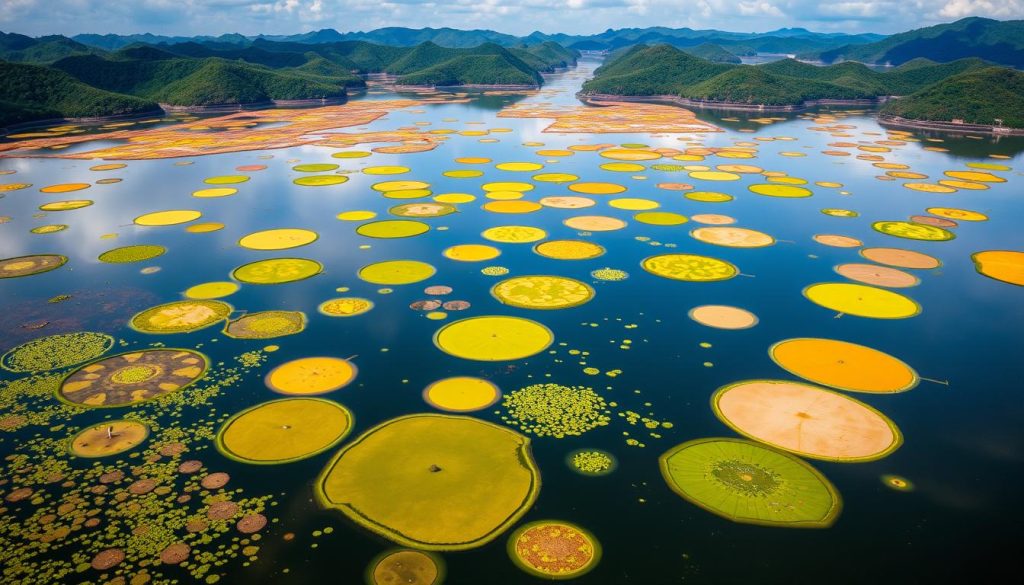
The floating islands of plants, called phumdis, are getting worse. This is bad for the lake’s unique animals. Silt from cutting trees and building nearby has made the lake shallower. This makes it hard for water creatures to live.
Farm chemicals are making things even worse. They flow into the lake, causing too many nutrients and algae growth. This kills marine life. Too much fishing without rules has lowered fish numbers. It has messed up the lake’s natural balance. We need to work together to save and fix Loktak Lake.
It’s important to know about these problems. We need this knowledge to manage the lake better. Here is a table that shows the main issues and how they affect the lake:
| Environmental Issue | Description | Impact |
|---|---|---|
| Pollution | Increased levels of waste from surrounding communities | Decreased water quality, harm to aquatic life |
| Invasive Species | Non-native species disrupting local biodiversity | Loss of native species, altered ecosystems |
| Siltation | Excessive sediment from deforestation | Reduced water depth, habitat loss for aquatic organisms |
| Agricultural Runoff | Fertilizers and pesticides entering the lake | Nutrient overload, algal blooms, dead zones |
| Overfishing | Unregulated fishing practices | Declining fish populations, ecological imbalance |
Conservation Efforts for Loktak Lake
Loktak Lake’s preservation is very important. It faces many challenges. Local people are key to keeping the lake healthy. They help with conservation, which is good for both nature and people.
Role of Local Communities in Conservation
Local communities know a lot about Loktak Lake. They work on:
- Eco-friendly fishing practices which minimize ecological disruption.
- Collective cooperation, enabling community-led initiatives to promote preservation initiatives in Loktak Lake.
- Education and outreach to raise awareness on the importance of sustainable resource management.
These actions help save Loktak Lake. Community members balance using natural resources and keeping the lake sustainable.
Government Initiatives for Preservation
The government has started many programs to save Loktak Lake. The Loktak Lake Conservation Project is a key part. It focuses on fixing the ecosystem and using it in a sustainable way. The government efforts include:
- Implementation of Loktak Lake environmental policies designed to mitigate negative human impacts.
- Encouraging cooperation with NGOs to enhance conservation awareness.
- Developing and enforcing regulations to support sustainable fishing practices.
These government plans work to keep conservation and people’s needs in balance. This ensures the lake’s health for the future.
Loktak Lake and Its Biodiversity
Loktak Lake is a major bio hotspot in India. It’s filled with different water and land species. These creatures help keep the area’s nature in balance. The lake hosts Loktak Lake flora and fauna. This includes special homes for various plants and animals.
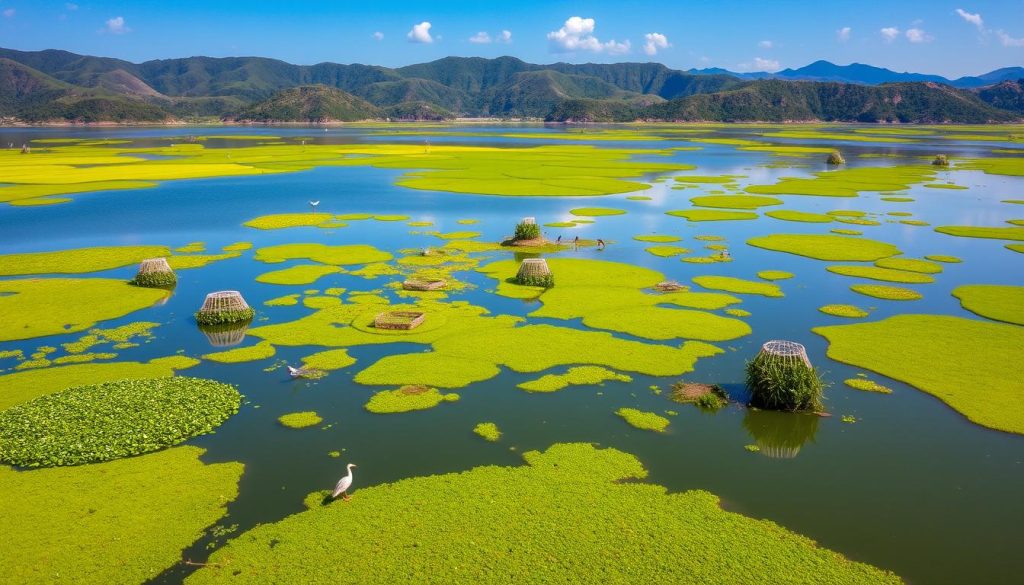
The lake is known for its floating phumdis, or plant masses. They add beauty and are homes for many creatures. Birds from far away come here too. For instance, ducks and pelicans visit, making the lake an important bird spot.
The Sangai deer is special here. This deer shows the lake’s beauty and why we must save such places. Many animals here could disappear. Saving this rich life is key for nature and local people.
We must keep Loktak Lake’s life going for local jobs. The lake gives a lot, but it reminds us to care for our world.
Tourism and Activities Around Loktak Lake
Loktak Lake is a big hit with those who love nature and adventures. Its amazing views and rich plant and animal life make Loktak Lake tourism bloom. It gives visitors a chance to see the area’s biodiversity and culture.
Popular Attractions and Highlights
Many attractions around Loktak Lake pull in tourists. Here are some key spots:
- Keibul Lamjao National Park: The world’s only floating national park, home to the rare Sangai deer. It’s a wildlife lover’s dream.
- Sadu Chiru Waterfalls: With its lovely views, this place is perfect for picnics and walks in nature.
- Kangla Fort: This ancient capital gives a peek into Manipur’s rich past.
- Manipur State Museum: The museum has artifacts and cultural items, showing off the local heritage.
- Ibudhou Thangjing Temple: A holy place for those wanting a spiritual visit. It’s dedicated to an old deity.
- Shree Govindajee Temple: This major shrine is for Lord Krishna and Radha, showing local religious customs.
Adventures at Loktak Lake include boating and bird watching. These activities let you get close to the lake’s lively ecosystem. Tourists love the calm boat rides and the many birds there. Local markets also offer a peek at the bright local crafts and culture.
Loktak Lake’s attractions mix fun and peaceful moments. This makes it an important spot for travelers in Northeast India.
Untold Stories and Hidden Facts About Loktak Lake
Loktak Lake is famous for its beauty. But it has many secrets that most people don’t notice. This lake is more than just a pretty view. It has deep cultural meanings and is very important for nature.
There are legends about how Loktak Lake came to be. These stories show how local people and nature are closely connected.
One amazing thing about Loktak Lake is its floating islands, called phumdis. These islands are homes for many plants and animals. The local people work hard to protect this special place. It shows their love for their history and land.
Scientists have found interesting things about Loktak Lake too. For example, they learned about Spirulina there. It’s a type of algae that is really good for you. It has lots of protein. This shows how important Loktak Lake is for food and nature.
Stories about the lake have been passed down for many years. They tell us about the deep connection people have with nature. These stories help us see Loktak Lake as a key part of local culture.
These stories encourage everyone to learn more about the lake. They show how complex and important it is. There is a lot of research being done to understand more about it.
For more info, check out the biochemical composition of Spirulina. It will help you understand its nutritional and ecological value.
Conclusion
Loktak Lake is a mix of beauty, life, and culture. We see how history, myths, and local ways blend together. People living near the lake work hard to solve environmental problems. They show us how working together helps in saving nature.
It’s important to keep Loktak Lake safe for kids in the future. As a key part of Manipur, it’s more than a home for animals. It’s a place full of stories and traditions. To keep these alive, we must protect Loktak Lake.
The tales of Loktak Lake teach us to keep fighting for it. Focus on knowing more, saving more, and getting everyone involved. This way, Loktak Lake will remain beautiful and vital for many days to come.
FAQ
What is the significance of Loktak Lake in Manipur?
Loktak Lake is called the “Lifeblood of Manipur” because it is very important. It helps local people by providing fish and water for farms. It is also a key place for nature.
What are the floating phumdis in Loktak Lake?
Phumdis are floating islands in Loktak Lake. They are made of plants, soil, and organic stuff. They offer a home to many creatures and are important for the lake’s health.
Are there any endangered species residing in Loktak Lake?
Yes, Loktak Lake is home to the endangered Sangai deer. This deer lives mainly on the floating phumdis. This shows how important the lake is for nature.
What are some environmental challenges faced by Loktak Lake?
Loktak Lake is facing a lot of problems. These include pollution, harmful plants, farm runoff, and cutting down trees. These issues harm its wildlife and balance.
How do local communities contribute to the conservation of Loktak Lake?
Local people help save Loktak Lake by fishing in a way that does not harm it. They work together and use eco-friendly methods. They also teach others how to protect the lake.
What historical significance does Loktak Lake hold?
Loktak Lake is a big part of local history and culture. It appears in many old stories. Its position was important in past battles and friendships.
What attracts tourists to Loktak Lake?
People visit Loktak Lake for its beautiful nature, animals and plants, and fun activities. You can go boating, watch birds, and enjoy local festivals.
What efforts are being made to preserve Loktak Lake?
The government is working hard to save Loktak Lake. The Loktak Lake Conservation Project helps fix the lake’s nature and encourages people to take care of it.
What is the relationship between Loktak Lake and Manipuri culture?
Loktak Lake is very important to the culture of Manipur. Traditional events, celebrations, and stories show how much the lake means to the people.
What are some hidden facts about Loktak Lake?
There are many interesting things about Loktak Lake that not everyone knows. There are old tales, legends of spirits that help fishermen, and how it is part of daily life for many.