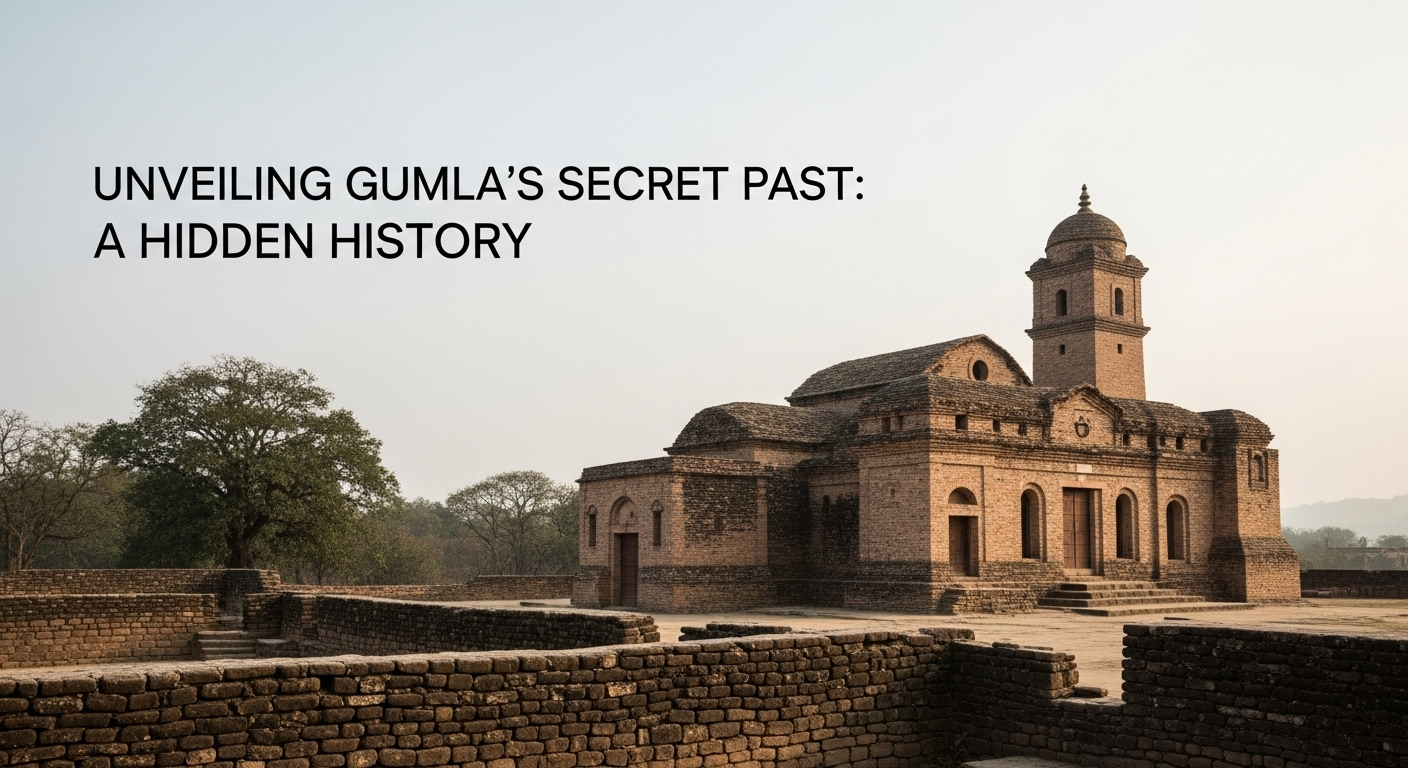
Imagine finding a secret palace over 500 years old in Gumla. In 2009, Navratangarh in Gumla was named a national heritage site. It dates back to the 16th and 17th centuries. King Durjan Shaal loved diamonds. He built a nine-storey fortress in 1571. The Archaeological Survey of India (ASI) found many artifacts and secret passages there. The hidden history of Gumla calls to those who love history and culture.
Navratangarh is 32 km from Gumla’s core. It’s close to Ranchi, the capital. The site shows the power of the Nagvanshi dynasty. Spread over 12 acres, it has 10 historical structures. The ASI looks after them. Places like the Jagannath Temple have a lot of history. Three inscriptions tell stories about Lord Jagannath. It’s a blend of belief and art, like the temple made for Lord Bholenath in 1700. This is where Gumla’s secret past comes alive, telling stories in stone and spirit.
Key Takeaways
- Navratangarh, a treasure trove in Gumla, was anointed as a heritage site in 2009, underlining the district’s historical significance.
- The ancient artifacts and concealed tunnels discovered here provide a tangible connection to Gumla’s bygone splendor.
- The narratives of King Durjan Shaal, a diamond enthusiast, enriches Gumla historical facts with regal anecdotes.
- Ancient inscriptions and temples within the fortress offer insights into Gumla’s religious history and architectural mastery.
- The ongoing excavations by ASI promise to illuminate more chapters of the hidden history of Gumla, adding depth to its cultural heritage.
The Bedrock of Gumla: Exploring Its Prehistoric Relevance
When we dive into Gumla’s mysterious past, we find amazing things. Ancient sculptures and terra-cotta figurines connect us to a time full of creativity. They come from Gumla heritage sites and show us how old societies lived and thought, thanks to the Indus Civilization.
Legacies Etched in Stone: Uncommon Sculptures and Terra-Cotta Figurines
In Gumla, ancient sculptures tell tales of the past. They show how art was a way to connect people spiritually and socially. These and the terra-cotta figurines reveal Gumla’s lesser-known history. They show gods and daily life, telling us about the area’s rich culture.
Mysteries of the Ancient Seals: Decoding Symbolisms
Gumla’s history is also in its ancient seals. They have strange symbols. These seals relate to the Indus Civilization’s economy and society. Studying them helps understand Gumla’s ancient community–its trade, social setup, and beliefs.
The Foregone Artistry: Indus Civilization’s Artisanship in Bronze and Earthenware
The Indus Civilization’s art lives on in Gumla. This is seen through bronze artifacts and earthenware pottery found there. These items show Gumla’s ancient people were skilled and valued quality. They made tools, dishes, and decorative items that lasted.
Gumla shines a light on human history with its artisanship. It adds depth to Gumla’s lesser-known history and makes us see old civilizations in new ways. Saving and studying these things helps us connect to our shared history. They encourage us to keep exploring.
Hidden history of Gumla: Tracing the Unscripted Narratives
Exploring Gumla untold stories brings to life the city’s culture and architectural wonders. One key site is Navratan Garh. This fort, from the Nagvanshi dynasty, is amazing. It has five floors and nine rooms on each level. This tells of Gumla’s rich past and architectural feats.
Many unknown but important places dot Gumla’s history. Sites like Tanginath’s ancient rocks and the Panch Pandava Pahar are essential. They help piece together the district’s heritage. As these places get discovered, we learn more about the area’s past.
Sacred spots, such as Kapil Nath Temple and Mahamaya Temple, show Gumla’s cultural events and beliefs. It’s about more than just old buildings. It’s also the deep traditions that matter to many. Discovering these places helps us understand Gumla’s history better.
The table below highlights important Gumla places and their impact over time:
| Location | Description | Historical Era |
|---|---|---|
| Navratan Garh | Main fort of Nagvanshi dynasty with a unique multi-storeyed architecture. | Approx. 400 years ago |
| Kapil Nath Temple | Built by Nagvanshi King Ram Sai, a site of devotion and architectural interest. | 1700 AD |
| Tanginath | Rich with stone images of divinities and hundreds of Shivalingas, significant both spiritually and archaeologically. | Ancient times, some elements from Lord Buddha’s period. |
| Mahamaya Temple, Hapamuni | A site of religious importance constructed by King Gajghat Ray, showcasing significant spiritual perspectives. | 869 to 905 AD |
| Aamtoli and Banpur, Kamdara | Known for the ancient temple of Lord Shiva, attracting numerous devotees during significant festivals. | Ancient times |
Gumla’s history not only showcases its past glory but also opens the door for future findings. Every artifact and building tells a story. These stories are crucial. They help us understand how culture, religion, and art were woven together in Gumla’s ancient society.
The Artistic Expressions of Indus Civilization in Gumla
Looking into Gumla historical facts, it’s clear that its art tells us a lot. The art from the Indus Civilization shows their values and skills. Finds like bronze dancing figures highlight their knack for detail and culture.
Terra-Cotta figurines, especially female ones, are linked with fertility symbols. They tell stories of everyday and sacred life. Found often in Gumla, they light up the region’s cultural richness.
The Elegance of Bronze: Dancing Figures and Mystical Artefacts
Bronze statues from Gumla show high skill in a small circle of artists. These bronze dancing figures are rare but important. They show Gumla’s artistic legacy, its knack for making and style.
Terra-Cotta’s Tale: Figurines of Fertility and Rituals
Terra-Cotta’s story goes beyond just art. It tells us about a society in tune with nature’s rhythms. These figures often stand for fertility, key to both farming and faith, underlining their role in home and religious events.
In appreciating this art, we connect with Gumla’s ancient civilization. Each piece, from clay figures to bronze statues, links past to present. They offer a peek into the social and cultural fabric of the old Indus Civilization.
Gumla’s Lost Languages and Scripts: An Epitome of Enigma
Exploring Gumla’s history, we find Gumla’s lost languages and mysterious scripts. They show a once advanced Gumla that used ancient communication. These scripts are on the walls of Navratan Garh, 32 km from Gumla. They hint at a past society that was highly developed. To know more, check out Navratan Garh’s study. It was the Nagvanshi dynasty’s base and helps us understand these languages.
Unraveling the Mystic Scripts: The Quest to Comprehend Ancient Communications
Our researchers are looking into Gumla’s mysterious scripts. They think these ancient symbols are linked to the Harappan culture. This suggests a writing system that might have helped in trade and governance. It reflects ancient communication sophistication in the region.
Measurements and Precision in Harappan Culture: Advanced Understanding of Weights and Measures
The Harappan culture in Gumla was not just about scripts. It also showed precision in measurements. This accuracy was key in their architecture and city planning. The Anjan village excavation near Gumla proves this. It shows structures that match the Harappan sites’ careful measurements precision.
| Feature | Details | Location |
|---|---|---|
| Jagannath Temple Inscriptions | Contains references to dedication and construction by local royalty | Navratan Garh Fort |
| Structural Layout | Symmetrical design indicative of advanced urban planning | Main fort of Navratan Garh |
| Measurements System Used | Standardized weights and measures, binary and decimal systems observed | Anjan Village Excavations |
| Archaeological Significance | Multiple artifacts linked to Gumla’s advanced society discovered | Diverse locations around Gumla |
Studying Gumla’s lost languages and scripts reveals an advanced, smart society. With ongoing digs, we hope to fully decode these scripts. This keeps Gumla’s ancient communication mystery alive. It also deepens our knowledge of this area’s rich historical background.
Forgotten Technologies: Gumla’s Mastery over Metal and Stone
Gumla district is famous for its ancient skills. It’s well-known for its work with metal and stone. The area’s history tells of great skill in working with metals and making things from stone. This shows the cleverness of the local people long ago.
In metallurgy, Gumla’s skills are clear. They found many metal items in different places. These things range from simple tools to fancy decorations. They showcase advanced techniques in working with metal. Crafting with bronze, silver, and gold shows their technical skill. It also shows their deep understanding of materials and beauty in design.
Looking at stone work, the Navratan Garh fort is a great example. It shows how well they worked with stone, even long ago. The fort has beautiful sculptures and stone temples. The careful way each stone was shaped shows great skill.
Navratan Garh covers 12 acres. It has important places like the Jagannath Temple and unique Ganesha sculptures. These sites show Gumla’s excellent stone work. These works are important both culturally and historically. They show the great skill of Gumla’s craftsmen in stone carving.
Gumla’s story tells of people’s skill and cleverness. Their work with metal and stone was not just for use. It was also a way to show beauty and keep their culture. Their creations show they were doing well. They made a history that amazes us even today.
Ancestral Adornments: Jewelry and Bead Making in Gumla’s Past
Gumla has a deep history in making jewelry and beads. They used carnelian, shells, and ivory. These materials were not just pretty. They showed how Gumla people could use what was around them.
The Radiance of Carnelian: Precious Gem Crafting Traditions
Gumla was amazing at working with carnelian. People found old beads and carnelian things that were very detailed. These items were more than just for looking nice. They showed a person’s rank and who they were.
Leveraging Shells and Ivory: Resilient Utility in Historical Gumla
Shells and ivory were important in Gumla, not just for beauty. They made tools and fancy things from them. This shows how clever Gumla’s craftsmen were. They used everything nature gave them.

Navratan Garh, an important old place in the area, tells us more about Gumla. The way they used local stuff to build and decorate it is like their jewelry. It helps us see how smart they were in using resources.
| Location | Distance from Gumla | Notable Features |
|---|---|---|
| Navratan Garh | 32 km | 10 big old things, like temples |
| Kamdara | 10 km from Kamdara HQ | Near Sarita panchayat |
| Anjan Village | 18 km | Important in local stories |
Gumla’s way of making jewelry and beads is part of its history and culture. The carnelian work and using shells and ivory are key parts. They show what makes Gumla’s past interesting in ancestral adornments and artisan crafts.
Gumla’s Trade and Commerce: A Legacy of Internal and External Connections
Gumla’s past is full of trade stories. It had internal commerce and wide external connections. Tools and records from Navratan Garh fort show old trade routes. These routes shaped the area’s money and culture.
Gumla’s trading reached far places. Documents show its trade network was big. This network helped Gumla stay strong economically and culturally over time.
Navratan Garh fort shows Gumla’s old trade roles. It is 32 km from Gumla. The fort was key in medieval times. It saw many valuable goods and crafts.
| Historical Site | Historical Significance | Relevance to Trade |
|---|---|---|
| Navratan Garh Fort | Capital of Nagvanshi during medieval period | Trade hub for diamonds and precious materials |
| Rani Mahal, Radha Krishna Temple | Religious and royal structures within Navratangarh | Attracted traders and pilgrims enhancing local trade |
| Underground Palace | Constructed in the medieval period, circa 500-600 years old | Symbol of wealthy and powerful dynasty involved in extensive trade |
The fort shows Gumla’s rich past. It has signs of cultural and architectural ideas trade brought. Every part of Navratan Garh tells of a time when external connections made the area rich and diverse.
Looking at Navratan Garh’s history uncovers a story. It shows Gumla’s big role in trade networks. These networks made Gumla rich in culture and money, still seen today.
Religious Influences and Practices: A Bridge Between Ancient and Current Beliefs
In the green lands of Gumla, a deep history is told. It shows the religious influences in Gumla through the ages. Votive artifacts link today’s people to their ancient faiths, showing how worship has grown.
Remnants like terracotta and steatite artifacts show ancient worship practices. They are not just old items; they tell of how ancient people in Gumla cherished the divine.
Votive Terracotta and Steatite Artefacts: Indications of Worship Practices
Votive artifacts were key in ancient rituals. Used for offerings, they show the complex spirituality of the past. Gumla’s sacred sites with these artifacts reveal organized religious beliefs.
The tie between old artifacts and today’s beliefs in Gumla is strong. Current practices still honor sacred objects. This shows a lasting respect for tradition and a bond with history.
The story of religious influences in Gumla lives on in found objects and ongoing spiritual acts. This lasting faith shapes Gumla’s culture, holding both its history and present spirituality.
From Cotton Cultivation to Textiles: Gumla’s Role in Ancient Industries
Gumla has long been involved with cotton cultivation. This practice boosted local economies. It also helped start early textile making, making cotton cultivation in Gumla very important in the area’s history.
This area’s textiles history shows a deep understanding of making textiles. It was a big part of people’s daily lives and the economy. Ancient methods of spinning, weaving, and dyeing found in Gumla show advanced skills in making cotton fabrics.

The change in textile technologies in Gumla over time is interesting. It shows how new methods have been added to old ones. This mix has helped keep the region’s rich culture alive.
| Period | Technology | Impact on Local Economy |
|---|---|---|
| Ancient Times | Hand Spinning and Weaving | Major source of livelihood, limited external trade |
| Medieval Period | Introduction of Looms | Expansion in productivity, increase in trade |
| Modern Era | Industrialized Textile Manufacturing | Diversified economic activities, significant export potential |
Mixing old and new methods shows resilience and adaptation over time. It highlights cotton cultivation in Gumla’s role in India’s textiles history and ancient industries.
Gumla’s work in the textile industry is still important today. It adds to the ancient skills handed down through generations.
The Ingenuity of Harappan Pottery: A Reflection of Gumla’s Craftsmanship
The Harappan pottery from Gumla shows us ancient India’s art. Gumla is known for its red slip pottery. These artifacts show Gumla’s skill and its important role in culture.
Mysterious Gumla pottery has unique designs. They surprise and confuse people today. These pieces show the ancient world’s skills and beauty.
The Red Slip Pottery: Designs that Narrate a Civilization’s Aesthetic
Gumla’s potters were experts at red slip pottery. They painted black patterns on a bright red background. This style is beautiful and culturally important. It tells us about Harappan life and values.
Mysterious Pottery Pieces: The Puzzle of Ancient Utility and Purpose
Some pottery pieces, like cylindrical vessels, are still mysteries. They suggest a complex society. Each item had a role, maybe in ceremonies or daily life.
Gumla’s Harappan pottery helps us learn about the past. It shows an advanced civilization. These ancient artists combined utility and art. Their work connects us to a deep history.
Carey’s Influence and Gumla’s Silent Conversion to Christianity
William Carey’s mission in Gumla greatly impacted the area. His work showed the power of Christian missionary legacy mixed with regional change. Carey’s influence in Gumla led to a quiet shift to Christianity. This change came from his focus on education and improving society.
This mix of faith and culture lifted the area’s spiritual feel. It also started Gumla’s transformation. Carey’s work in the area showed great educational empowerment. Education went along with religious lessons.
From Missionary Endeavors to Educational Empowerment: The Serampore Connection
The Serampore mission was key in spreading education and the Christian message. William Carey made schools. They taught regular subjects and religion. This opened a path for a wise and literate community. The blend of teaching and faith has a lasting Christian missionary legacy in Gumla.
William Carey’s Plodding Spirit: Fomenting Societal Transitions in Gumla
William Carey worked hard to make Gumla better through education and religion. He was more than a spiritual leader. He built a society open to new ideas, powered by reading and faith. This hardworking missionary spirit is a key part of William Carey’s legacy in Gumla. It influences many and changes cultural identities.
Carey’s work combined theology and education. He planted the seeds for a new social order in Gumla. He aimed for a bright future for the area.
| Aspect | Impact | Legacy Continues Through |
|---|---|---|
| Educational Institutions | Empowerment through Literacy | Schools in Gumla Region |
| Religious Teachings | Elevation of Spiritual Knowledge | Local Churches and Community Gatherings |
| Cultural Integration | Fusion of Traditions & Modernity | Continued Interfaith Dialogues |
Conclusion
As we wrap up our journey into Gumla’s past, we find its history is deep. Its story goes beyond what we see. Gumla’s stone sculptures and crafted textiles show its rich culture.
We see its greatness in copper and bronze vessels. This tells us about Gumla’s advanced skills long ago. The Harappan pottery shows early India’s smart ways.
Gumla had a big trade network. This shows they knew a lot about trade and money. The Harappan script is still a mystery to us. It makes Gumla’s history even more interesting.
The seals found in Gumla might have been very special to its people. They show animals and rituals. This tells us about the beliefs and identity of the people back then.
Going through Gumla’s history teaches us about its lasting culture. Looking at old school records and art shows how the culture has stayed alive. Gumla’s story of trade and craftmanship has left a mark.
Even though this journey ends, Gumla’s history lives on. Its spiritual beliefs, trade skills, and artistry shape its legacy. Gumla continues to inspire with its rich history and achievements.
FAQ
What lies within Gumla’s secret past?
Gumla’s past is full of secrets. It has ancient sculptures and terra-cotta figurines. These date back to the Indus Civilization. They show Gumla’s rich history in trade, religion, and ancient crafts.
What kind of ancient sculptures and terra-cotta figurines have been found in Gumla?
In Gumla, amazing sculptures and figurines were found. They have images of religious people and mythical creatures. These pieces show us Gumla’s religious life long ago.
What do the ancient seals found in Gumla signify?
The seals from Gumla have images of unicorns and other animals. They might hold religious meaning. These seals show Gumla had complex trade and spiritual beliefs.
How did Indus Civilization’s artisanship in bronze and earthenware influence Gumla?
Gumla was influenced by Indus Civilization’s bronze and pottery skills. It had bronze figures and pottery showing advanced artistry. This shows Gumla had a highly skilled artistic community.
What untold stories and hidden landmarks exist in Gumla?
Gumla has many untold stories and hidden places. They show an advanced ancient civilization. There are religious artifacts and signs of global trade too.
Why are Gumla’s lost languages and scripts considered enigmatic?
Gumla’s ancient scripts, like the Harappan script, are a mystery. They remain mostly unread, adding mystery to Gumla’s past. Efforts to decipher them continue.
What advanced technological skills did Gumla’s ancestors possess?
The people of Gumla were experts in metal and stone work. They were masters in bronze and precise in measurements. This shows their high-tech skills and love for order.
What role did jewelry and bead making play in Gumla’s historical society?
Making jewelry and beads was important in Gumla. It showed the community’s love for beauty and their skilled artistry. They used materials like carnelian, shells, and ivory.
How did trade and commerce shape Gumla’s history?
Trade was crucial in Gumla’s history. It brought people together and connected them with others. This exchange of items and ideas was key to the region’s growth.
What do votive terracotta and steatite artifacts reveal about Gumla’s ancient worship practices?
These artifacts show Gumla’s religious past. They tell us about their rich worship traditions. They link us to the spirituality of ancient times.
How significant was Gumla’s contribution to ancient industries?
Gumla was key to ancient industries like cotton and textiles. Finds like dyers’ vats show its big role. Gumla was crucial in these important fields.
What does Harappan pottery tell us about Gumla’s craftsmanship?
Harappan pottery shows Gumla’s great skill. It had red pottery with black designs. These pieces tell of an artistic, skilled civilization.
What impact did William Carey have on Gumla?
William Carey changed Gumla with his work. Through evangelism and education, he led many to Christianity. This changed Gumla’s society in big ways.