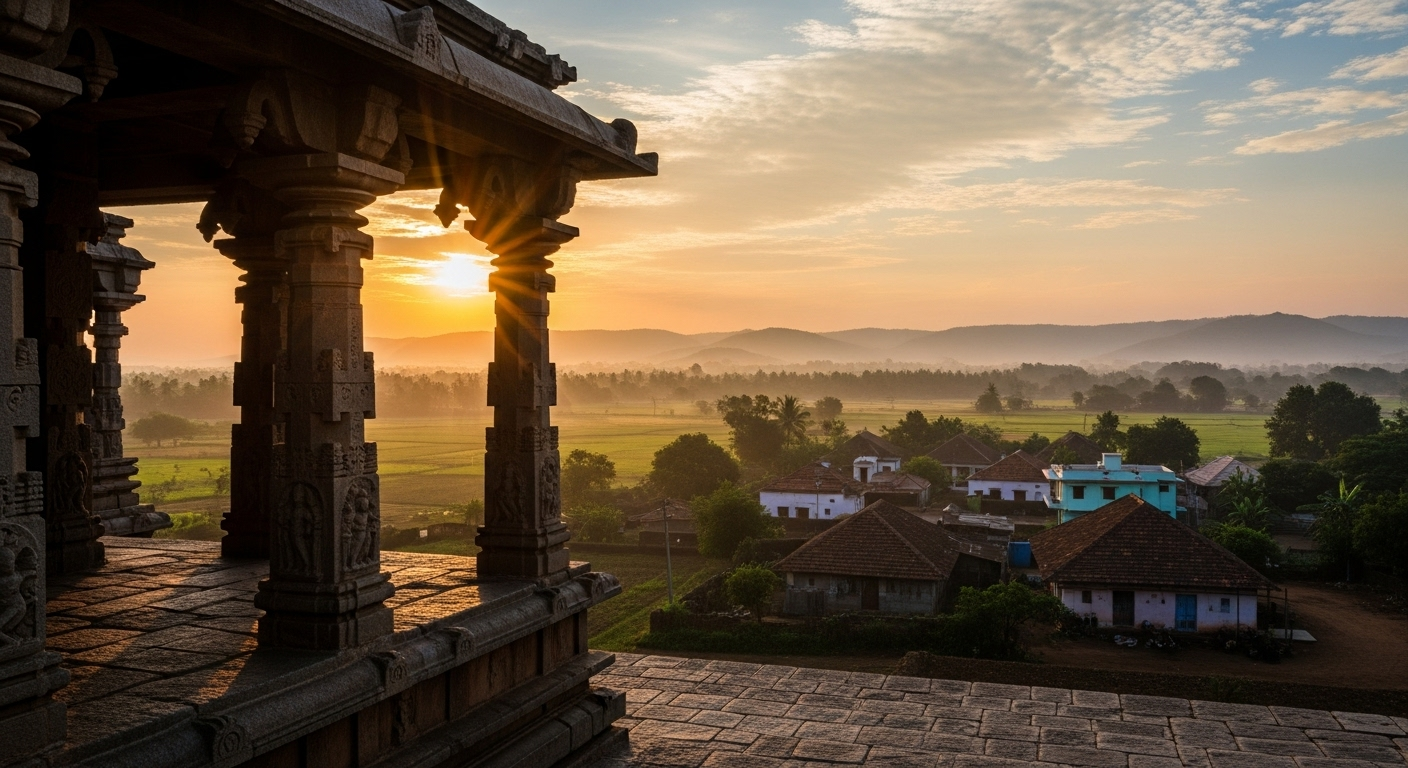
Did you know Lakkundi in Gadag district was once a big hub? Under the Chalukyas of Kalyana, it shone brightly. Known as ‘Lokkigundi,’ Lakkundi was a center for learning. Formed in 1997, Gadag has stories and wonders beyond history books. It is rich in culture and learning.
Gadag sits near other Karnataka districts, full of stories and traditions. Legends like Janamejaya, and 72 Mahajanas, started here. Gadag loves its printing presses and handlooms. Here, a stone throw hits either a press or a loom.
Key Takeaways
- Gadag, created in 1997, was once part of Dharwad.
- Lakkundi, in Gadag, was an important place during Chalukya’s time due to its scholarly atmosphere.
- The district mixes rich history and famous stories, including Janamejaya’s.
- Printing and handlooms are big in Gadag’s economy and culture.
- Gadag invites with temples, history, and culture. It’s a top spot for those exploring Gadag tourism secrets.
The Formation and Geography of Gadag
Gadag was formed on August 24, 1997. It is full of geographical diversity and historical stories. It is located between 15°15′ and 15°45′ North latitude and 75°20′ and 75°47′ East longitude. This area is very fertile, bordered by the Malaprabha River and Tungabhadra River. The rivers add to the district’s beauty and help its farms.
The geography of the Gadag district varies. It is near districts like Haveri, Dharwad, Belagavi, Bagalkote, Koppal, and Ballari. This location helps the district grow many crops. The main crops are wheat, jowar, maize, cotton, and groundnut. These crops are part of Gadag’s agriculture. Over a million people lived here in 2001. The number of people grew by 9.61% by 2011.
The district has 978 women for every 1,000 men. 75.18% of people here can read and write. Besides farms, Gadag’s weather is very unique. In summer, it gets up to 42 degrees Celsius in April and May. In winter, it can be as cold as 16 degrees Celsius.
| Aspect | Details |
|---|---|
| Coordinates | 15°24′N 75°45′E |
| Population (2001) | 1,064,570 |
| Population Density | 209 inhabitants per sq km |
| Population Growth Rate (2001-2011) | 9.61% |
| Sex Ratio | 978 females per 1000 males |
| Literacy Rate | 75.18% |
| Urban Population | 35.63% |
| Scheduled Castes | 16.36% |
| Scheduled Tribes | 5.79% |
When we look into Gadag’s lesser-known facts, we find high farm yields. The culture and environment are also rich. The rainy season is from June to September. A mild winter follows in December and January. Gadag always has something new to discover.
Gadag’s Historical Significance
Gadag, in Karnataka, is full of history and culture. It’s known as an important Gadag historical landmark. The district shows India’s ancient heritage well.
The Legend of Janamejaya
Gadag’s story is tied to Janamejaya, a famous ruler. Stories of Janamejaya highlight Gadag ancient heritage. He made Gadag a place of power and faith. This history makes Gadag special. It mixes myths and real history smoothly.
The Role of 72 Mahajanas
The 72 Mahajanas made Gadag important. They were top scholars. Gadag became a learning center. This happened during the Western Chalukyan Empire, from the 10th to 12th centuries. Gadag’s history draws people who love learning and old stories.
Printing Presses and Handlooms in Gadag
Gadag and nearby Betageri are known for their lively industries. They focus a lot on printing presses and handlooms. These areas help the economy grow and keep local traditions alive.
The Printing Press Legacy
Gadag’s printing presses have a long history. They are very important for the town’s business, spreading knowledge and info. Gadag makes many printed items for education and business. Printing presses are key to the area’s economy.
Betageri and Handloom Tradition
The Betageri handloom tradition shows off amazing skill. Their textiles are beautiful and well made, loved in many places. This tradition helps the local economy and keeps cultural heritage alive. It is why the handloom craft in Gadag keeps growing.
Cultural Contributions of Gadag
Gadag-Betgeri shines with a deep heritage in music and books. It’s famous for mixing cultures like Kannada, Marathi, and Telugu. This mix makes its culture strong in arts and writing.

Narayanappa’s Literary Works
Narayanappa is a big name in Gadag. He wrote the Karnataka Bharatha Katha Manjari, a big epic. This story mixes the beauty and spirit of Karnataka. It has left a big mark on Gadag’s culture.
Kumaravyasa was very important for writing back then. He still inspires writers today. To know more about Gadag’s culture, go to this link.
Hindustani Classical Music Heritage
Gadag is also famous for its music. It has helped many music stars grow. People like Pandit Bhimsen Joshi became very famous. Pandit Puttaraj Gawai helped with music and helping people.
The Sri Veereshwar Punyashrama by Pandit Puttaraj Gawai is special. It gives free education in arts to those in need. This keeps Gadag’s music and writing alive for the future.
Important events show how Gadag loves its culture:
- 74th death anniversary of Ganayogi Shivayogi Panchakshara Gavai
- 8th death anniversary of Padmabhushan Pandit Dr Puttaraj Kavi Gavai
- 105th anniversary celebrations of Sri Veereshwar Punyashrama
- Diamond jubilee celebrations of Sri Kumareshwara Krupaposhita Pandit Panchakshara Gavai Natya Sangha
These events highlight Gadag’s commitment to culture. They honor important people and keep Gadag’s culture vibrant. This makes Gadag a key place for music and Narayanappa’s writing.
Iconic Temples and Architectural Marvels
Gadag is full of historical and sacred wonders. It shows its rich heritage with amazing temples. These temples show the region’s skill in building, especially from the Kalyana Chalukyan era.
They show spiritual meaning and architectural creativity. This is seen in the detailed stone work and great structures. Gadag’s temples bring ancient India’s innovation to life.
Trikuteshwar Temple
The Trikuteshwar Temple is a key example of Gadag’s building wonders. It is for Lord Shiva and has a special three-shrine design. This shows the holy Hindu trinity.
Its design shows off Kalyana Chalukyan art at its best. With ornate pillars and a spiritual feel, it’s a top spot for history lovers and worshippers.
Veeranarayana Temple
Veeranarayana Temple in Gadag is also a stunning site. It worships Lord Vishnu and is known for its history and complex stone work. The temple mixes Hoysala and Chalukyan styles, showing off the era’s great artistry. It is one of the Gadag iconic temples.
Lakkundi Temples
The village of Lakkundi in Gadag is famous for its many historical temples. The 20 Lakkundi temples give a close look at Chalukyan skill. Among them, Brahma Jainalaya stands out for its shiny pillars.
The Nanneshwara Temple highlights the Deccan style. Kashi Vishveshwara Temple draws folks with its fine sculptures. The Side-by-side Surya Narayana and Kashi Vishveshwara Temples show Kalyana Chalukyan era’s splendor. These Gadag wonders add a lot to Karnataka’s heritage and tourism.
Hidden facts about Gadag
Gadag is a district that’s rich in history and culture. It has many hidden gems. One key example is the Veeranarayana Temple, made around 1117 by King Vishnuvardhana of the Hoysala Empire. This temple mixes different architectural styles like Chalukya, Hoysala, and Vijayanagara. It shows the many influences over centuries. The Veeranarayana figure is shown holding a Conch, Wheel, Club, and Lotus. He is next to his partner Lakshmi and the eagle Garuda.

Gadag has more surprises besides its buildings. An old inscription from around 1539 talks about a gift. King Achyuta Deva Raya gave it to the Veeranarayana Temple. This shows his support. Also, 34 medieval inscriptions found in Gadag tell us about its past. They show Gadag’s important role in the area’s economy and culture.
Let’s explore Gadag’s diverse population. Gadag is home to many different groups of people:
| Community | Population |
|---|---|
| Adi Dravida | 80 |
| Adi Karnataka | 100 |
| Agamudaiyan Nattaman | 70 |
| Anglos | 30 |
| Arora (Sikh traditions) | 30 |
| Banjara | 57,000 |
| Bedar (Hindu traditions) | 74,000 |
| Bania Chetti | 2,500 |
| Banjara Rathod (Hindu traditions) | 7,100 |
| Bhil unspecified | 30 |
| Brahmin Kannada | 16,000 |
| Chamar (Hindu traditions) | 60,000 |
| Devanga | 10,000 |
| Gangakula | 46,000 |
| Gond unspecified | 80 |
| Jat (Hindu traditions) | 50 |
| Jat (Sikh traditions) | 100 |
| Kodaga | 100 |
The info we have on Gadag offers us a closer look. Whether it’s the different communities or the history found in inscriptions. Each part tells us a special story about Gadag. These stories show us its heritage and how it impacts the bigger area.
Gadag’s Role in Agriculture
Agriculture is very important in Gadag. The region has many crops like Bengal gram, maize, groundnut, and sunflower. These crops help the local market and even bigger markets too.
Gadag is in a special place. It has rivers like Malaprabha and Tungabhadra. These rivers help farms grow more food.
This water makes sure the crops can handle bad weather. So, farms in Gadag do really well.
| Crops in Gadag | Advantages |
|---|---|
| Bengal Gram | High Nutritional Value, Soil Fertility Improvement |
| Maize | Versatile Uses, Drought-Resistant |
| Groundnut | Protein-Rich, Oil Production |
| Sunflower | High Oil Yield, Attractive Cash Crop |
Gadag is getting better at farming because of new tools. Farmers there use new seeds and smart farming. This gives them more crops that are also better.
These new seeds are very helpful. They make plants grow strong and healthy.
New tech like AI and Blockchain could change farming a lot. They can help watch over crops and make selling them easier. This is good for Gadag’s money and growth.
But, there are still some problems. Not everyone in Gadag can use new tech like wind energy. This is because they might not know how or it’s too expensive.
To fix this, Gadag needs to help everyone learn and use new tech. This will make their farms and money better.
In the end, farming is key in Gadag. It helps the place grow and keeps many families happy. By using new ways to farm, Gadag can have a bright future.
Prominent Personalities from Gadag
Gadag has grown many famous people who have added a lot to India’s culture. Among them, Pandit Bhimsen Joshi is a big name in music. He won the Bharat Ratna and is known worldwide. His amazing music makes Gadag very important in India’s music history.
Pandit Bhimsen Joshi
Pandit Bhimsen Joshi was a master of Hindustani classical music. He was born in Gadag in 1922. From a young age, he loved music. He made Gadag famous with his beautiful singing. He won many awards, including the Bharat Ratna. He made a big mark in music.
Pandit Ganayogi Panchakshari Gawai
Pandit Ganayogi Panchakshari Gawai from Gadag was an amazing musician, even without his sight. He started a special school in Gadag to help blind musicians. This shows Gadag’s love for music and helping others. His work made a big difference in the cultural world.
These musicians show the rich culture and history of Gadag. The people of Gadag are proud of them. Their music makes Gadag known for its great talent. Their stories are an important part of Gadag’s culture.
FAQ
What is the geographical significance of Gadag?
Gadag is a district in Karnataka. It’s surrounded by big rivers like the Malaprabha and Tungabhadra. The land is very good for farming. People grow wheat, jowar, maize, cotton, and groundnut there.
What was the formation process of Gadag as a separate district?
In 1997, Gadag became its own district. It was part of Dharwad before. Now it’s near districts like Haveri, Dharwad, Belagavi, Bagalkote, Koppal, and Ballari.
How did Janamejaya influence Gadag’s historical importance?
The story of Janamejaya, a famous ruler, is important to Gadag. He started the first educational places there. This makes Gadag known for learning.
Who were the 72 Mahajanas in Gadag’s history?
The 72 Mahajanas were wise teachers in Gadag long ago. They made Gadag a place known for smart people and good schools.
Why are printing presses important to Gadag?
Printing presses are big in Gadag’s economy and life. The town is famous for having many of them. They have shaped Gadag’s society and economy a lot.
What is Betageri’s contribution to Gadag’s economy?
Betageri is a town near Gadag. It’s known for its beautiful handloom work. This craft is a big part of what makes the local culture and economy special.
Who is Narayanappa, and what is his literary contribution?
Narayanappa, known as Kumaravyasa, is a big name in Gadag. He wrote the Karnataka Bharatha Katha Manjari, a famous piece of Kannada literature.
How does Gadag contribute to Hindustani classical music?
Gadag is a key place for Hindustani classical music. People like Pandit Bhimsen Joshi and Pandit Puttaraj Gawai have made big contributions. They have made Gadag’s culture richer.
Which are the iconic temples in Gadag?
Gadag has amazing temples. The Trikuteshwar Temple and the Veeranarayana Temple are beautiful. The Lakkundi Temples show great skill and have Chalukyan style.
Are there any hidden historical facts about Gadag?
Gadag has some secrets. It might have been big in old coin making. It also had special community areas known as agraharas. These facts show its rich history.
What role does agriculture play in Gadag’s economy?
Farming is very important in Gadag. Crops like Bengal gram, maize, groundnut, and sunflower grow well. The Malaprabha and Tungabhadra rivers help a lot with this.
Who are some prominent personalities from Gadag?
Gadag has given us great people. Pandit Bhimsen Joshi was a famous singer. Pandit Ganayogi Panchakshari Gawai started an important ashram. They are both from Gadag.