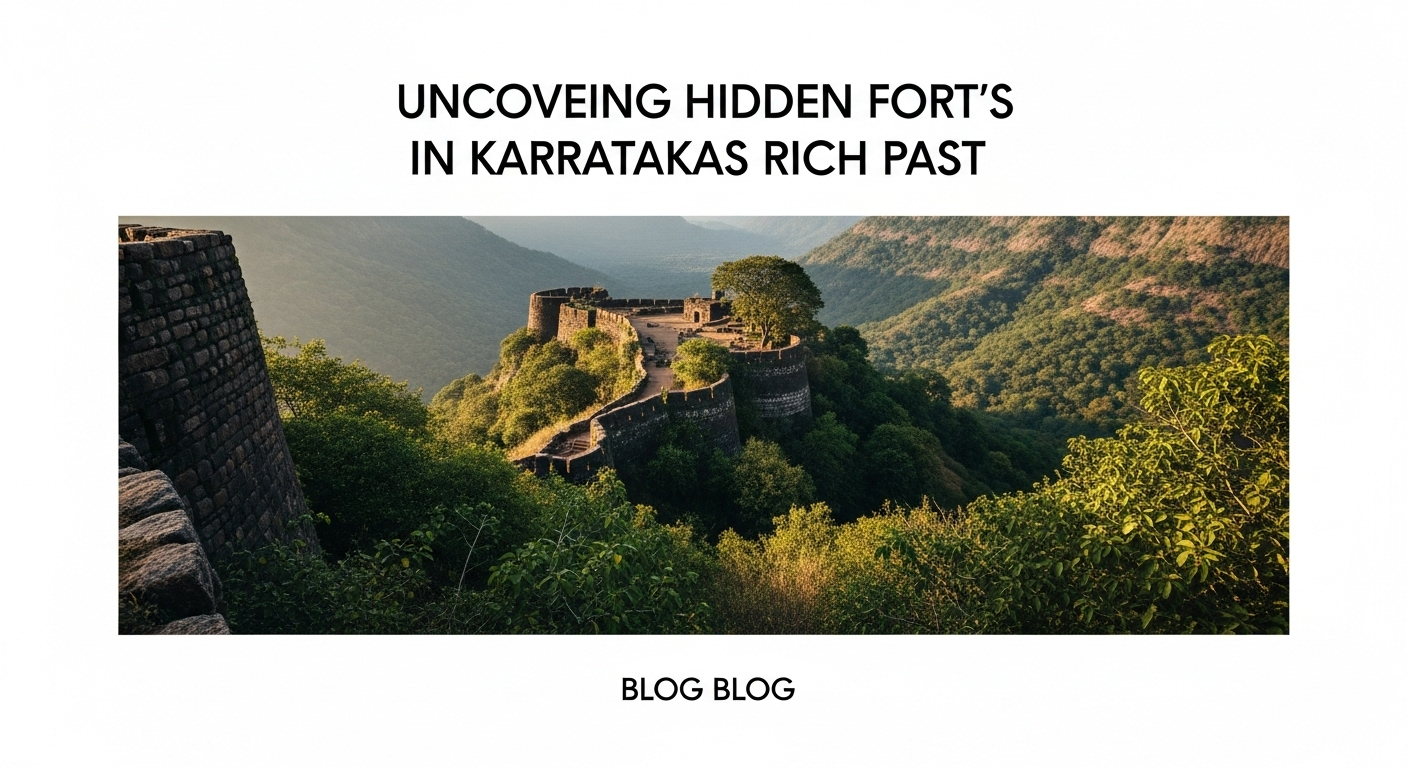
Did you know Karnataka has over 30 ancient forts? Each one tells stories from long ago. These forts show the skill and cleverness of many dynasties like the Chalukyas and the Vijayanagar Empire. Karnataka’s past is alive in these places. They take you on a trip back in time. Let’s explore some of these historic treasures and their amazing designs.
Key Takeaways
- Bidar Fort, from the 15th century, showcases enduring Persian architecture.
- Chitradurga Fort, spanning the 10th-18th centuries, stands as a testament to its historical longevity.
- Gulbarga Fort uniquely blends Hindu and Islamic architectural styles.
- Bellary Fort includes a high vantage point offering panoramic city views.
- Madhugiri Fort is notable for its strategic location on a monolithic hill.
Introduction to Karnataka’s Historic Forts
Karnataka’s historic forts show a long and varied history. They are testament to the skill and strength of many dynasties. Known locally as ಕೋಟೆ (kōṭe) and ದುರ್ಗ (durga), these forts are key to Karnataka’s rich culture. Many are over a thousand years old.
Raichur Fort, built in 1294 A.D., is one famous example. It saw important battles with the Vijayanagar kings, Bahmanis, and Adilshahis. These fights highlight the forts’ strategic roles in history.
Gulbarga Fort and Chitradurga Fort are top sites to see. They are being restored to keep their history alive. Chitradurga Fort is known for its complex design, with gates, temples, and hidden paths.
There are also lesser-known forts in Karnataka. Places like Jaladurga and Mudgal Fort need saving to share their tales. Kittur Fort shows the bravery of Rani Chennamma against the British East India Company.
Visiting these forts is like travelling back in time. The Rock-cut temples of Badami and the giant Gommateshwara Bahubali statue add to the region’s historic feel. They highlight the area’s art and spiritual depth.
Exploring these forts lets you dive into Karnataka’s rich history, culture, and architecture. From famous spots like Hampi and Pattadakal to hidden forts, each place shares a piece of Karnataka’s past and cultural richness.
| Fort Name | Historical Era | Special Highlights |
|---|---|---|
| Raichur Fort | Built in 1294 A.D. | Key battles involving Vijayanagar kings, Bahmanis, Adilshahis |
| Bidar Fort | Bahmani Sultanate | Persian-style architecture, prominent historical site |
| Gulbarga Fort | 14th century | Set for restoration, important during Bahmani rule |
| Chitradurga Fort | Pre-13th century | Massive fortification, secret passages, multiple gates |
| Kittur Fort | 18th century | Associated with Rani Chennamma’s resistance against British |
Bidar Fort: A Historical Marvel
Bidar Fort is a symbol of Karnataka’s rich history and stunning architecture. It’s close to the railway station, only 2.5km away. Its massive size and design tell tales of the past.
The fort first came to be when the Bahmanid moved their capital to Bidar. Sultan Alla-Ud Din Bahman started it all. It got rebuilt between 1429 and 1432 CE by Sultan Ahmad Shah Wali. The design of the fort and the mix of Islamic and Persian styles are key to its story.
Architecture and Layout
The fort covers a large area and has 37 bastions with canons. There are also seven gates for protection. Inside, you’ll find over 30 monuments like mosques and a palace. There’s even a Turkish Bath turned museum.
The Islamic and Persian influence can be seen in the beautiful designs. Don’t miss the Rangeen Mahal and the Solah Khamba Mosque. They show off the amazing art of the time.
Historical Significance
The Bidar Fort significance is about more than just looks. It has seen many rulers, including Aurangzeb. This fort was key in battles and defending the region. It helped protect against invasions through the ages. Now, it’s a powerful symbol of Bidar’s history and culture.
Chitradurga Fort: The Fortress of Valor
Chitradurga Fort lies in Karnataka’s heart, showing ancient Indian skills. It covers 1500 acres. The fort showcases the blend of design and history.
Architectural Wonder
The fort’s design is amazing, showing old Chalukyas’ smart work. It has seven circles of walls to protect it. The fort had 19 gateways and many secret paths.
There’s a smart rainwater system in the fort. It made sure water was always there. The fort gives great views of the Kudurehejje Hills, too.
Legend of Onake Obavva
The fort is famous not just for its design but also for Onake Obavva’s bravery. She fought Haider Ali’s army with just a wooden pestle.
The fight happened at Onake Obavvana Kindi, a fort’s corner. This story shows the fort’s spirit of bravery.
The fort tells of the Vijayanagara Empire and its strong past. It shows how the fort’s design and people’s courage evolved over time.
| Aspect | Details |
|---|---|
| Area | 1500 acres |
| Surrounding Walls | 7 circles |
| Travel Distance from Bangalore | 200 kms |
| Optimal Visit Months | October to February |
| Tour Duration | 45 minutes to 1 hour |
| Key Attraction | Onake Obavvana Kindi |
| Nearby Spots | Vani Vilasa Sagara Dam, Davanagere, Hampi |
Gajendragad Fort: The Elephant Fort

Gajendragad Fort sits high on a rock hill. It is also known as the Elephant Fort. This spot shows Karnataka’s hidden beauty. It was built when the famous Maratha leader, Chhatrapati Shivaji Maharaj, ruled. The fort is a symbol of his legacy. It highlights the Marathas’ building skill and battle plans.
Many historical events unfolded here, from Marathas to the era of Tipu Sultan and Maratha Nizam. The fort’s design is a great example of Maratha style. It has strong walls, amazing art, and old writings. There are also carvings of a snake with five heads, two lions, and an elephant head. These show the fort’s rich culture.
| Historical Events | Details |
|---|---|
| Fort Construction | During Chhatrapati Shivaji Maharaj’s reign |
| Architectural Features | Bastions, intricate artwork, sculptures |
| Main Inhabitants | Soldiers, administrative personnel |
| Water Storage | Rock carved tank for rainwater |
| Visitor Information | Popular among local families and picnickers |
I visited Gajendragad Fort in October 2010. The fort provides great views. You can see windmills and old sites like Kalakaleswara Temple. It reveals old military strategies with its rainwater tanks and rock structures.
The climb to the fort has about 200 steps. It’s fun and lets you see nature and old remains. Near other old buildings like a mosque and Deepastamba, the fort’s story adds to its time.
Gajendragad Fort is an important part of Karnataka’s treasures. It’s more than just an old fort. It’s a place where different cultures and times come together.
Bellary Fort: The Stronghold of Hyder Ali
Bellary Fort sits high on Ballari Gudda hill. It shows the mix of Vijayanagara era forts and Hyder Ali’s touch. It’s a key part of Karnataka’s history because of its design and location.
Historical Background
The fort’s story began in the 14th century, but it got famous in the Vijayanagara era. Hyder Ali took over in the 18th century. He made big changes with the help of French engineers. This includes building the Lower Fort.
The Upper Fort has big walls covering 1.5 miles, standing 460 feet above the ground. It gave a great view and control of the area. Hyder Ali used new building ways from Europe, making it more important.
Fort Layout
The Bellary Fort layout is very interesting. The Upper Fort is up high at 1,976 feet. It has layers for defense, water storage spots cut into rock, and old buildings inside. The fort is split into the Upper and Lower Forts.
The Lower Fort was for the army. It had weapons and living spaces. There are two main gates, one west and one east. They are surrounded by walls with watchtowers and a big ditch for protection.
| Fort Segment | Features |
|---|---|
| Upper Fort | Quadrangular fortification, 1.5 miles circumference, 460 ft above plains |
| Lower Fort | 0.5 miles diameter, two entrance gates, deep ditch, ramparts with bastions |
The land around the fort is mostly hard granite rock. This natural defense, with the history and upgrades by Hyder Ali, makes it special. The fort looks magical when lit up on weekends. It feels like stepping back in time.
Malkheda Fort: The Rashtrakuta Legacy
Malkheda Fort was the grand capital of the Rashtrakuta Dynasty. It’s in Kalaburagi District, Karnataka. As a key part of Karnataka historical sites, it gives us a peek at history. It’s near places like Gulbarga Fort and the Khwaja Bande Nawaz Dargah.

The history of Malkheda Fort is fascinating. It has Jain temples, mosques, palaces, and secret pathways. These paths lead to towers. The fort was a symbol of power and saw many rulers.
Kalaburagi has a semi-arid climate. Summers are around 35 degrees Celsius. Winters are about 20 degrees Celsius. People of many faiths, like Hinduism, Islam, and Jainism, live here. You can see ancient forts of Karnataka here.
The table below shows more about Kalaburagi and its rich heritage:
| Attribute | Details |
|---|---|
| Population | Approximately 560,000 |
| Climate | Semi-arid, 35°C (summer), 20°C (winter) |
| Average Annual Rainfall | 600 mm |
| Major Religions | Hinduism, Islam, Jainism |
| Notable Monuments | Gulbarga Fort, Khwaja Bande Nawaz Dargah |
| Recreational Sites | Chandrampalli Dam, Yata Pota Waterfall |
The Malkheda Fort is truly special. It’s surrounded by beauty and has a deep history. People visit to learn about Karnataka’s past.
Kavaledurga Fort: A Hidden Gem of Malenadu
Going on a Kavaledurga Fort exploration shows an amazing fort in Karnataka. It’s in the Malenadu area and is full of history and smart design from the 9th century. You can see the Nayaka architectural style in its three levels of walls.
The Malenadu region forts are known for their cool designs. Kavaledurga Fort is one of them but not many people visit it. This makes it a special trip into the past. It was made better in the 14th century.
The hike to the fort is about four kilometers and quite beautiful. It takes 2 to 2.5 hours to go and come back. The fort has many old buildings like palaces and temples. It’s a good place for those who love history and nature.
Kavaledurga Fort is up high in the Western Ghats in Uttara Kannada. It’s easy to defend and has amazing views. You can see hills, lakes, and forests from the top.
The best time to visit is during the monsoon or winter. But watch out for leeches when it’s wet. Don’t forget your walking shoes, water, snacks, sunglasses, and camera.
| Nearby Trekking Destinations | Tourist Attractions |
|---|---|
| Narasimha Parvatha | Shivappa Nayaka Fort |
| Kodachadri | Talasi Abbi Falls |
| Kudlu Teertha Falls | Hulikal Falls |
| Vanakebe Falls | Kunchikal Falls |
| Jogigundi Falls | Agumbe Village |
| Sringeri Sharadamba Temple | |
| Kollur Mookambika Temple | |
| Thombattu Falls | |
| Bhadra Tiger Reserve |
Kavaledurga Fort is more than just old stones. With its Nayaka architectural style, it invites us to learn about Karnataka’s rich history.
Nagara Fort: A Prominent Structure in Shivamogga
Nagara Fort is in the middle of Shivamogga district. It shows the rich history of Karnataka. Built in 1640 by Veerabhadra Nayaka of the Keladi Dynasty, it tells us a lot about Nagara Fort history and the region’s past.
Historical Context
The Keladi Dynasty influence is clear in Nagara Fort. It has strong defense systems and good design. Built in the 17th century, it saw many battles. These battles show the bravery of the Keladi rulers. The fort is mostly ruins now. But, the remaining parts still tell us a lot about its history. The Keladi rulers, like Hiriya Venkatappa Nayaka, added seven battlements in the 16th century. This helped protect the fort.
Current Attractions
Today, many people visit Nagara Fort. It’s one of the main Shivamogga historical attractions. Visitors can learn about its history and enjoy the views. You can see the old parts of the fort. And look at the beautiful scenery around it.
Nearby places like the Mandagadde Bird Sanctuary and Kudumari Waterfalls make the trip even better. These spots add to the charm of Karnataka cultural tours. The Bheemeshwara Temple inside the fort is also worth visiting. It draws both people who love history and those who are religious.
Nagara Fort is still an important part of Karnataka’s history. It offers learning and fun for everyone who visits.
Hidden Forts in Karnataka: Offbeat Adventures Await
Karnataka has many secret forts that thrill-seekers will love. These forts are in coastal areas and heartlands. They tell stories of bravery and old battle plans.
Mirjan Fort is near Gokarna in Uttara Kannada district. It covers 11.8 acres and is high up. It is known for its octagon shape and turreted walls. People think it was built by the Nawayath Sultanates in the 1200s or by Rani Chennabhairadevi. She was called the “pepper queen” because she sold a lot of pepper.
The fort has secret tunnels, incomplete stairways, wells, and hidden paths. There are steps that go nowhere and an old peepal tree with a Devi statue. These make visitors want to know more about the fort.
Badami Fort is another cool spot, made by the Chalukyan rulers in the 6th century. Badami is famous for its cave temples for different gods. It has the Mahakuta Temples and Malegitti Shivalaya Fort and Temple for Lord Shiva. The Archaeological Museum in Badami shows off Chalukyan era items.
Adventurers can go to Devarayanadurga Hills, about 70 km from Bangalore. Gummanayaka Fort here has amazing views. You can see the Kolar Gold Fields and Nandi Hills from here.
The Bucevara Temple in Koravangala shows off Hoysala architecture from the 12th century. Gudibande Fort was maybe built by Byre Gowda in the 17th century. It’s another exciting historical place.
Nature lovers will enjoy Jogimatti Forest, home to rare animals, and Karighatta Black Hills, full of birds. There’s beauty at Maravanthe Beach and Shivagange hill station. St Mary’s Island and Apsarakonda waterfall are beautiful too.
These secret forts in Karnataka are waiting for you. They offer adventures in hidden history. These undiscovered forts make the state truly enchanting.
Conclusion
Karnataka’s hidden forts tell stories of bravery and art from the past. One special place is Chitradurga Fort. It is surrounded by seven huge walls. It has faced many battles against tough enemies like Hyder Ali and Tipu Sultan. You can learn more about its history and stories by visiting Chitradurga Fort.
Bidar Fort is another amazing place. It was built by Ahmad Shah I. The fort’s walls stretch over 2.5 km. Inside, there are beautiful buildings like Rangin Mahal and Jami Masjid. The fort also shows off old water technology, proving the skill of ancient engineers. Exploring these places helps us understand Karnataka’s deep history.
Manjarabad Fort combines Islamic and French military designs. Built by Tipu Sultan in 1792, it’s shaped like a star. Located 988 meters up, it offers great views and history. It’s open every day for free, making it a perfect spot for learning and fun. The Archaeological Survey of India keeps these places safe for us all. They help us see the beauty of Karnataka’s history.
FAQ
What are some of the hidden forts in Karnataka?
In Karnataka, you can find Kavaledurga Fort in Malenadu and Nagara Fort in Shivamogga. There’s also Malkheda Fort in the Kalaburagi District. Not many tourists go there, but they are full of history and beautiful architecture.
Why is Bidar Fort significant?
Bidar Fort is important because of its history. It was rebuilt by Sultan Ahmad Shah Wali from 1429 to 1432 CE. This fort shows Islamic and Persian styles and has seen many rulers over the years.
What makes Chitradurga Fort unique?
Chitradurga Fort stands out for its strong defenses and exciting stories. One famous story is about Onake Obavva. She was a guard’s wife who fought off attackers with just a pounder.
What was Chhatrapati Shivaji Maharaj’s influence on Gajendragad Fort?
Chhatrapati Shivaji Maharaj had a big impact on Gajendragad Fort. This fort is known for its role in history, including battles with Tipu Sultan. It also has writings and temples inside.
What is the historical background of Bellary Fort?
The Bellary Fort sits on Ballari Gudda hill and has a long history. Hyder Ali captured it and made improvements with French help. Inside, there’s a temple, wells, and lights that show off its architecture at night.
Why is Malkheda Fort important in Karnataka’s history?
Malkheda Fort was once the capital for the Rashtrakuta Dynasty. You can see Jain temples, mosques, and towers there. It tells the story of power changes from the Cholas to the Nizams.
How is Kavaledurga Fort a hidden gem in the Malenadu region?
Kavaledurga Fort is a hidden treasure in Malenadu, part of the Western Ghats. It has strong walls, temples, and places for weapons. There’s even a pond. It shows the power and planning of past rulers.
What are the current attractions at Nagara Fort?
Nagara Fort, made by Veerabhadra Nayaka, tells the Keladi Dynasty’s story. Its entrance and ruins help us understand its past. It invites people to see what has lasted over time.
What adventurous opportunities do hidden forts in Karnataka offer?
Karnataka’s hidden forts are perfect for adventure lovers looking for something different. These old strongholds are amazing. They let you see history untouched by time and offer amazing experiences.
Why should one explore Karnataka’s hidden forts?
Exploring Karnataka’s hidden forts means seeing the state’s wonderful history. They show amazing designs and tell big stories. These forts are a testament to the area’s history and are great for anyone interested in exploring.