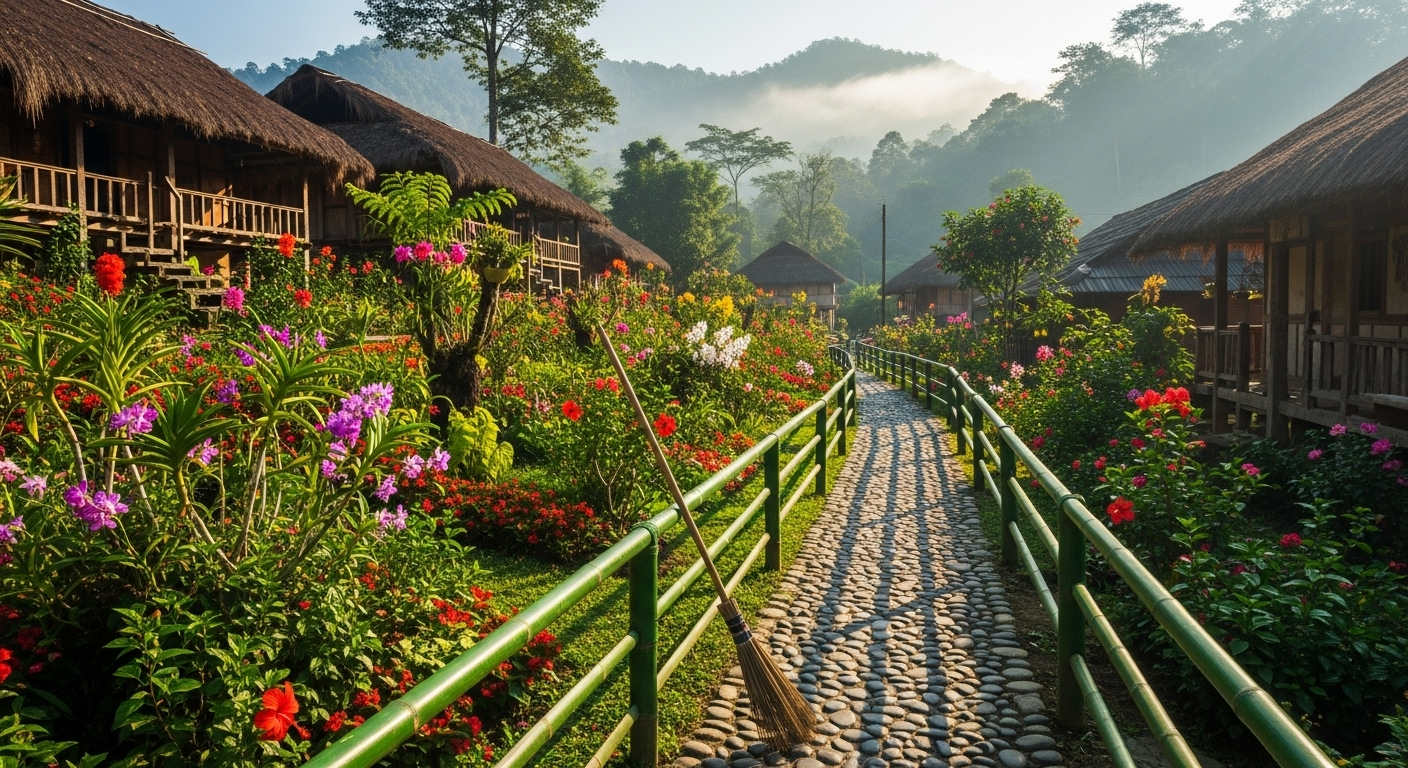
In the East Khasi Hills of Meghalaya, India, there’s a unique village. It’s called Mawlynnong. This place is not like other villages. It’s known as ‘India’s pristine village.’ People say it’s the ‘cleanest village in India.’ This title is just one small part of what makes Mawlynnong amazing. About 70 percent of Meghalaya is covered in forests. So, Mawlynnong is a peaceful escape into nature. It offers a sustainable lifestyle that many travelers love.
Mawlynnong is also called the ‘Scotland of the East.’ It’s famous for being super clean. But it’s also full of secrets to discover. There are amazing living root bridges and colorful cultural traditions here. The people of Mawlynnong keep their traditions alive. They protect their cultural heritage, even as the modern world changes around them.
Mawlynnong is close to the world’s wettest region and India’s cleanest river in Dawki. But it still stands out. It’s not just the location that’s special. It’s how the community takes care of their environment. Their work shows how much they care about the land. These efforts keep Mawlynnong balanced and great for tourists who care about nature.
Key Takeaways
- Mawlynnong is celebrated for its title of ‘India’s pristine village’ and stands as an epitome of cleanliness and environmental consciousness.
- The village’s mystique is enhanced by its lush surroundings and the preservation of age-old traditions by the local Khasi people.
- Mysterious facts about Mawlynnong include its sustainable tourism practices and the lesser-known natural attractions it guards.
- Cultural uniqueness is a cornerstone of Mawlynnong, with the village showcasing an undisturbed way of life that fascinates visitors.
- The community’s concerted efforts have led to the village achieving a delicate balance between tourist appeal and ecological preservation.
- Unknown marvels in Mawlynnong extend beyond its environmental endeavors, into the realms of its cultural and social fabric.
Unveiling the Hidden Wonders of Mawlynnong
Mawlynnong is in Meghalaya and is super beautiful. It’s known as the ‘cleanest village in India’. Here, people live in a way that’s good for the Earth. They share their secrets too.
The village has special bridges made from tree roots. These bridges get stronger as they grow. By using nature smartly, the people show they care about the Earth.
Mawlynnong loves nature. They farm in a way that’s good for the Earth. This makes the village more special.
- Bamboo is used in buildings here. It’s a smart design that doesn’t harm the Earth.
- They collect rainwater to use when it’s dry. This is smart use of the rain they get.
The village is really good at managing waste. They show how to keep things clean while caring for the planet.
Mawlynnong is inspiring. It shows us how small changes can make a big difference.
Visitors come to see the beautiful place and learn. They see how culture and caring for nature go hand in hand. Mawlynnong is a true hidden gem in Meghalaya.
The Enchanting Secrets Behind Asia’s Cleanest Village
Mawlynnong lies in Meghalaya, India. It’s known as Asia’s cleanest village. This title comes from the hard work of its people. Surrounded by greenery and traditional Khasi huts, the village shows how people care for the environment every day.
Immaculate Environs and Community Efforts
The village has won many awards for being so clean. Its cleanliness shows the residents’ pride. They use bamboo dustbins all over to avoid littering. They also turn organic waste into compost. This helps keep the cycle of sustainability going.
Traditional Khasi Way of Life Preserved
Keeping Khasi culture alive is important in Mawlynnong. The village shines in both environmental and cultural preservation. They follow a matrilineal system, where family lines and property pass through women. This strengthens their community and keeps their traditions alive. Their festivals and daily life showcase their rich culture.
Mawlynnong is a special place where tradition and ecology meet. Visitors are amazed by this mix. They leave respecting how the village blends culture with caring for the earth. It’s an example for others around the world.
Mysterious facts about Mawlynnong: The Legend of a Living Root Bridge
The living root bridge in Mawlynnong is more than just a story. It shows the smart natural engineering of the Khasi tribes. These bridges are made from the rubber fig trees’ roots, shaped over many years by the locals. This makes a strong natural path over streams in lush Meghalaya. It’s a great example of working with nature and adds mystery to the mysterious facts about Mawlynnong.
These bridges show the area’s deep bond with nature. They are not built but grown. This takes generations. Young roots are stretched across rivers, twisted together. They grow strong enough to hold people.
| Feature | Description |
|---|---|
| Material | Aerial roots of Ficus elastica (Rubber Fig Tree) |
| Technique | Interweaving live tree roots across spans of rivers and streams |
| Timeline | 10-15 years for initial development, continues to strengthen over time |
| Location Significance | Primarily found in the East Khasi Hills, especially around Mawlynnong |
| Cultural Impact | Symbolizes the symbiotic relationship between the Khasi people and their land |
The living root bridge near Mawlynnong is not just for walking. It shows we can solve building issues with nature. Keeping these bridges alive shows the love for nature and working together in Meghalaya. Each bridge, shaped by nature and careful planning, makes Mawlynnong enchanting. Visitors from everywhere come and leave amazed by these natural wonders.
Exploring Mawlynnong’s Unique Matrilineal Society
Mawlynnong is known as Asia’s cleanest village. But, it’s also famous for its unique society. Here, women lead under the matrilineal society, unlike other parts of the world.
The Role of Women in Mawlynnong’s Matrilineage
In Mawlynnong, women do more than just house chores. They lead in keeping the community’s cultural heritage. They inherit properties and surnames, making them key decision-makers. This shows deep respect for women through the Khasi lineage system.
Understanding the Khasi Lineage System
The Khasi lineage system ensures heritage is passed down from mother to child. It places women as keepers of tradition and land. This system values women’s roles, improving the community’s health and growth.
Learning about Mawlynnong’s society shows how women lead strongly. They help their families and shape society’s social and economic structures.
| Location | Distance from Shillong (km) | Unique Attractions |
|---|---|---|
| Mawlynnong | 90 | Asia’s cleanest village, Matrilineal society |
| Mawlyngbna | 75 | Kayaking, Trekking |
| Ranikor River Beach | 140 | White sandy beaches |
| Umiam Lake Beach | 15 | Water sports like kayaking, boating |
| Kongthong | 60 | Whistling language communication tradition |
| Laitmawsiang | 60 | Natural caves, waterfalls |
This table shows places near Mawlynnong with unique things to see and do. These places highlight the area’s effort to keep its natural and cultural treasures alive.
The Fascinating Mysteries of Mawlynnong’s Indigenous Flora and Fauna
When you walk into Mawlynnong, you feel a wave of fresh air. This place is known for keeping nature safe and unchanged. It is also known as “Asia’s Cleanest Village.” Mawlynnong shows off beautiful nature and the complex world of its indigenous flora and fauna.
This village is a great example of how to care for the environment. It is like a big, open book full of nature’s secrets. Here, you can find rare animals and plants. They are very important to the local people’s stories and the balance of nature.
One example is the hard-to-find clouded leopard. There are also many kinds of orchids and birds. They all add to Mawlynnong’s mysterious beauty.
- Rare flowers play a big part in the local Khasi people’s healing and ceremonies.
- Animals are important in local stories, making Mawlynnong’s culture even richer.
- People here have found smart ways to keep nature safe. They use old traditions and new ideas together.
The people of Mawlynnong work hard to protect their environment. They have saved many plants and animals. They also made a place that shows how much they care about nature. Living with nature like this teaches us how our actions can help or hurt it.
| Species Type | Examples | Conservation Status |
|---|---|---|
| Flora | Orchids, Rhododendrons | Protected |
| Fauna | Clouded Leopard, Various Avian Species | Rare |
| Cultural Significance | Used in rituals and medicines | Integral |
In the end, Mawlynnong’s special plants and animals make it very unique. They help the village stay alive and green. If you are curious about nature’s secrets, Mawlynnong is a great place to explore. It tells a long story about the environment in Meghalaya.
Captivating Truths: Mawlynnong’s Balancing Rock Phenomenon
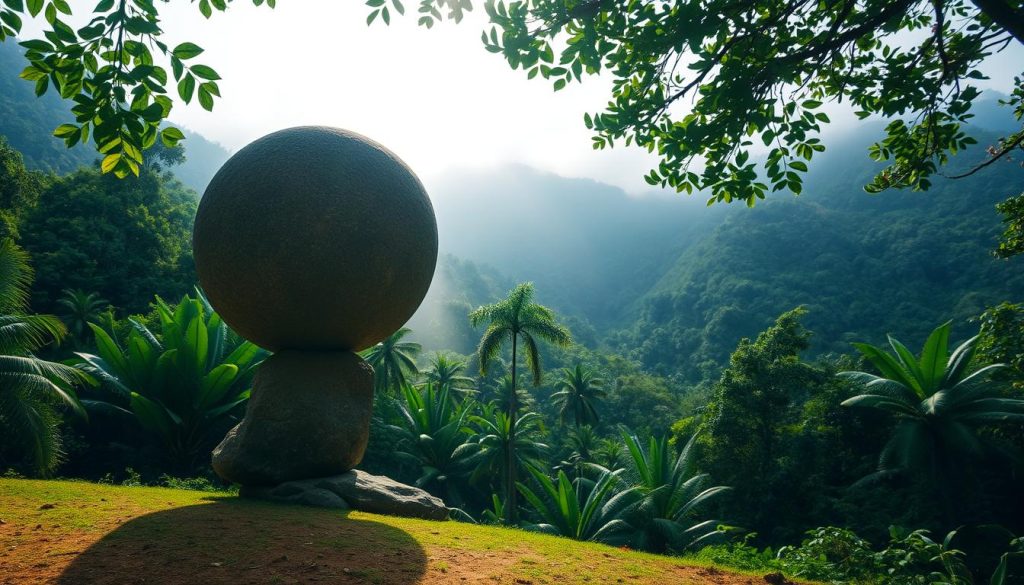
Mawlynnong village in Meghalaya is known for being very clean. It also has a cool rock trick. Huge rocks balance here in a way that amazes people. It makes geologists and tourists want to learn more. They talk about how these rocks stay up.
Geological Marvel: The Natural Balance of Rocks
The balancing rocks in Mawlynnong are hard to explain with science. Big rocks stay up on small bases. People love to see this and wonder how it happens. These rocks make travelers and scientists come together. They want to know how the rocks stay balanced with time and weather changes.
Myths and Spiritual Beliefs Surrounding the Balancing Rocks
The balancing rocks are important in local stories and beliefs. People think they are special or holy. They say these rocks are homes for gods. This adds mystery and magic to Mawlynnong. Visitors feel a deep connection between nature and spirituality here.
These rocks make Mawlynnong even more interesting. It’s not just the cleanest place in Asia. The rocks bring tourists, people who love rocks, and those seeking spiritual meaning. They remind us of how nature and people’s beliefs are linked. They keep making Mawlynnong an exciting place on the world map.
Deciphering Mawlynnong’s Lesser-Known Gems: Hidden Waterfalls and Caves
Mawlynnong hides waterfalls and caves that are truly special. These places are away from where most tourists go. They let you see nature’s beauty that hasn’t been changed.
Secret Cascades: The Uncharted Waterfalls of Mawlynnong
Mawlynnong is about 90 kilometers from Shillong. It has hidden waterfalls with clear water, surrounded by green forests. These waterfalls are a peaceful escape from busy city life.
Mysterious Caverns: Exploring Subterranean Mysteries
Underneath, Mawlynnong has mysterious caves. They invite the bravest people to discover their secrets. These caves are not just amazing to look at. They also have stories from locals, adding to the magic.
| Feature | Description | Location Relative to Shillong |
|---|---|---|
| Hidden Waterfalls | Pristine and secluded waterfalls, ideal for quiet reflection and nature walks. | 90 km from Shillong |
| Mysterious Caverns | Subterranean caves rich with local myths and geological formations. | About 75 km from Shillong in Mawlyngbna |
| Laitmawsiang Landscape | Known as The Garden of Caves, offering a diverse range of natural formations | 60 km from Shillong |
Both the hidden waterfalls and mysterious caves make Mawlynnong unique. They show nature in its wildest, untouched form. This makes the village a special place for nature lovers.
Mawlynnong’s Contribution to Sustainable Tourism and Ecological Balance
The quaint village of Mawlynnong is in the lush greenery of Meghalaya. It’s a great example of sustainable tourism and ecological balance. Called Asia’s cleanest village, Mawlynnong sets high standards in environmental preservation and working together. It shows other places how to do better.
About 82 families live in Mawlynnong. They work hard to keep their home beautiful. They use bamboo dustbins to reduce trash. This helps keep the village pretty and supports responsible tourism.
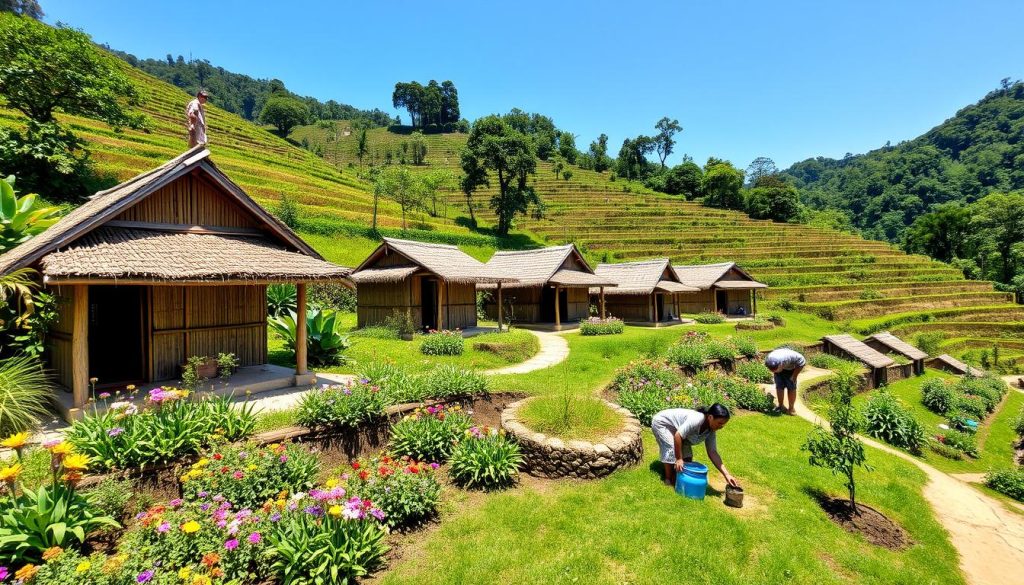
Mawlynnong also has community-based initiatives. For example, they turn waste into compost. This helps make the soil better for farming, like growing betel nut.
The village is known for being green and keeping its culture. It has a SkyWalk made of bamboo. This walkway offers views of Bangladesh and shows off the village’s smart building methods.
Mawlynnong has banned plastic and focuses on natural beauty. These rules help people live better. They also promise a good future, teaching us how to travel and live responsibly.
Mawlynnong teaches us how taking care of our world can make a big difference. The village doesn’t just bring in tourists. It shows them a better way to live with nature.
| Feature | Description | Impact on Tourism |
|---|---|---|
| Bamboo Dustbins | Strategically placed throughout the village to promote cleanliness | Enhances visitor experience by maintaining pristine conditions |
| SkyWalk | Made with sustainable materials, offers magnificent vistas of the region | Attracts eco-conscious tourists, promoting eco-friendly infrastructure |
| Plastic Ban | Comprehensive community enforcement | Preserves natural beauty, aligns with global environmental preservation goals |
Mawlynnong keeps a good ecological balance and leads in sustainable tourism. The village shows us that we can respect nature and attract tourists. It’s a lesson in keeping culture and nature safe while welcoming visitors.
Conclusion
Mawlynnong shines as a beautiful place in India known for ecological sustainability and cultural preservation. Its natural beauty catches the eye, while its work to stay clean is known worldwide. The place also amazes people with its matrilineal society, where women lead families.
People love Mawlynnong for its green landscapes and unique living root bridges. It’s a quiet spot for those seeking peace and a closer look at nature. This place shows how tourism can respect and protect our heritage and nature.
Mawlynnong teaches us how to live well with nature. It tells a powerful story that goes beyond just being eco-friendly. It’s about living in a way that cares for our world and keeps old traditions alive. Mawlynnong is a leader in sustainable living, showing us a bright path into the future.
FAQ
What makes Mawlynnong known as Asia’s cleanest village?
Mawlynnong is called Asia’s cleanest village. This is thanks to its clean surroundings. The local people work together. They clean regularly, manage waste, and use practices like bamboo dustbins to keep it spotless.
How do the residents of Mawlynnong maintain their village’s cleanliness?
Every Mawlynnong resident helps in keeping the village clean every day. They use eco-friendly ways to manage waste. This includes bamboo dustbins and making compost the traditional way.
What is unique about the Khasi way of life in Mawlynnong?
The Khasi in Mawlynnong follow a matrilineal system. In this system, women inherit lineage and property rights. It helps maintain their culture and elevates women’s roles in society.
Can you tell us about the living root bridges in Mawlynnong?
Mawlynnong’s living root bridges show natural engineering. The Khasi people weave rubber tree roots into bridges. Over time, these bridges grow stronger, showing harmony with nature.
What is the role of women in Mawlynnong’s matrilineal society?
Women are vital in Mawlynnong’s society. They inherit wealth, property, and last names. They also make important family and social decisions, keeping the village’s cultural heritage alive.
How does Mawlynnong preserve its indigenous flora and fauna?
Mawlynnong keeps its unique plants and animals safe through conservation. Sustainable living and awareness programs play a big part. This protects rare species like the clouded leopard.
What are the captivating truths behind Mawlynnong’s balancing rock phenomenon?
Mawlynnong’s balancing rocks seem to challenge gravity. Local legends give these formations a spiritual meaning. They bring wonder and curiosity to the village.
What are some of Mawlynnong’s lesser-known gems?
Mawlynnong also has hidden spots like secret waterfalls and caves. They are untouched and full of stories. Visitors find these spots magical.
How does Mawlynnong contribute to sustainable tourism and ecological balance?
Mawlynnong leads in sustainable tourism. The community keeps nature and culture intact. This supports their economy and keeps the environment healthy.