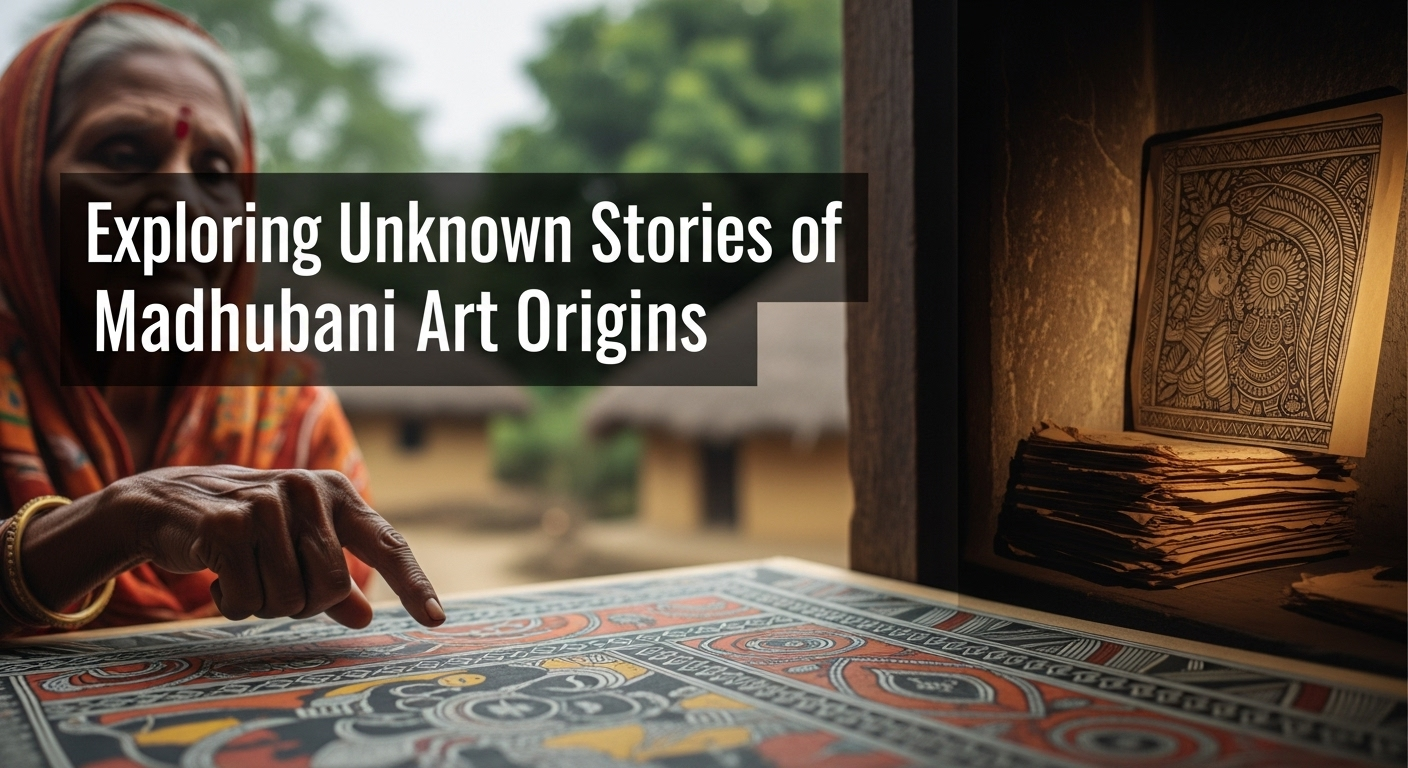
Did you know Madhubani paintings are over 100 years old? They gained fame after a big earthquake in 1934. British Officer William G. Archer found them in Bihar’s Mithila region. These paintings are colorful and full of patterns and symbols. They have stories to tell from the past.
Madhubani art came from women painting walls to using canvas. This change happened when they were advised to sell their art. This was during hard times of no rain. The art shows daily life and myths. It also gave the artists strength.
Madhubani paintings are not just beautiful. They hold untold tales that give us a deeper look at this old art. This article asks you to explore these hidden stories. By doing so, we connect with the artists and the art’s growth.
Key Takeaways
- Madhubani paintings date back over 100 years and originated in the Mithila region of Bihar.
- William G. Archer’s discovery in 1934 was pivotal in introducing Madhubani art to a global audience.
- The All India Handicrafts Board played a crucial role in empowering women artists during droughts by promoting canvases.
- Madhubani paintings utilize natural dyes from plants, creating vibrant colors and unique designs.
- The traditional techniques involve using twigs, matchsticks, and fingers rather than modern brushes.
- Famous artists like Mahasundari Devi have helped to preserve and popularize this rich cultural tradition.
- Unknown stories of Madhubani add layers of meaning to its celebrated history and artistic significance.
A Brief Overview of Madhubani Art
Madhubani art comes from the Mithila region along the India-Nepal border. It’s known for its unique features and colorful stories. It represents a rich cultural heritage. The history of Madhubani art shows a community’s beliefs and habits. People drew complex patterns on walls and floors for rituals.
The art started long ago in the village of Madhubani in Bihar. Women decorated their homes with beautiful designs. These showed social and religious stories. In the 1960s, a big change happened. Women began to paint on paper to make money. This helped spread Madhubani stories further.
The art includes symbols of luck, growth, and happiness. You often see fish, peacocks, and the tree of life in it. All materials come from nature. Colors are made from turmeric, indigo, and more. They use twigs and matchsticks to paint, not brushes. This keeps the art true to its roots.
A British Officer found Madhubani art in 1934. This made it famous around the world. Artists like Pratima Bharti have added new styles to it. The paintings are usually big and done on handmade paper. This shows the great skill involved.
Madhubani art is now loved globally. It is an important part of Indian folk art. Each artwork lets us see into a rich world of history, symbols, and culture. Efforts to keep and share Madhubani art show its lasting importance.
Historical Significance of Madhubani Painting
Madhubani painting has deep roots in *Madhubani art history*. It comes from the Mithila region of Bihar, India. This art shows parts of Indian culture like mythology and nature’s link to humans.
These paintings first decorated the walls and floors of houses, showing local *folk traditions*. After an earthquake in 1934, the world noticed Madhubani art. British Officer William G. Archer saw it while inspecting earthquake damage.
In the 1960s, Madhubani painting’s *historical significance* grew as Mithila women started painting on paper. This shift happened during a harsh drought. The All India Handicrafts Board motivated them to paint for money. This move kept the art alive and recognized women’s role in it.
From mud walls to paper, Madhubani art kept its complex styles and meanings. Artists like Pratima Bharti became well-known. Bharti even won a state award for her art. The paintings, using natural colors, show Indian myths and the country’s cultural identity.
The story of Madhubani painting shows how artists kept their culture alive through tough times. Today, people still love this art, showing its lasting value in society.
Unknown Stories of Madhubani
Madhubani art tells more than just bright colors and complex designs. It comes from the unknown stories of Madhubani. These show the Mithila region’s culture. Women’s roles in Madhubani art are very important. They have always been key in making and keeping this art. Their art challenges old rules and shares their untold stories.
The Role of Women in Madhubani Art
Women are central to Madhubani art. They use art to share thoughts and feelings in a restricted society. Their work tells stories that matter to their communities. The main ways they contribute include:
- Adding personal stories into their art.
- Passing down the art to future generations.
- Using themes of nature and family.
These artists have greatly enriched Madhubani style. They have also encouraged others to value their heritage. Women leading the art’s revival shows empowerment beyond the artwork.
Influence of Mythology and Folklore
The influence of mythology and folklore is important in Madhubani paintings. The art reflects cultural values, local beliefs, and mythical figures. Common themes are:
- Images of gods like Krishna and Durga.
- Stories of local heroes and heroines.
- Tales teaching moral lessons and traditions.
Mythology and personal stories make each piece special. They turn the art into storytelling. Every motif and symbol tells of Mithila’s traditions and values.
Traditional Madhubani Narratives and Their Impact
Traditional Madhubani stories are key to the community’s identity and its history. These cultural narratives share local legends, including tales of Hindu gods and seasonal festivities. The images tell unique stories full of feelings and history. They hold the community’s shared memories.
The impact of history on Madhubani art is huge. This art dates back hundreds of years. It is tied to the community’s social, religious, and cultural events. Artists use bright colors and detailed patterns to share deep messages. Their work keeps and shares their people’s traditions. Every brushstroke tells of history and stories passed down.
The mix of spoken stories and visual art makes Madhubani narratives richer. This combination encourages new artists. They bring new ideas but stay true to old themes. This way, the tradition keeps growing but stays true to its roots.

These stories get more important as they are shown in modern ways. They link the past and present. Artists create a living history. This invites the next generations to learn and add to Madhubani art’s long story.
| Aspect | Details |
|---|---|
| Origins | Rooted in ancient traditions tied to religious and cultural events. |
| Themes | Depictions of deities, festivals, and local folklore. |
| Emotional Depth | Each narrative reflects community values and shared history. |
| Influence on Artists | Oral histories inspire new artists while preserving the tradition. |
| Contemporary Significance | Continued relevance in modern artistic interpretations. |
Lesser-Known Tales of Madhubani Artists
The world of Madhubani art is full of untold stories. These stories highlight both famous and not-so-famous artists. They face many challenges but keep loving their art. Their hard work helps keep their culture alive despite tough times.
Personal Journeys and Struggles
Many Madhubani artists have tough stories. They often come from places with few chances to learn or grow. But they still dedicate themselves to their art. It helps improve their towns.
Artists like Sita Devi and Bhola Mahto show strong spirit. They turn their tough times into creative fuel. They also fight for their art and communities to be recognized.
Influence on Modern Madhubani Artists
Madhubani’s past artists greatly inspire today’s artists. Modern artists mix old styles with new ideas. This way, they keep Madhubani meaningful today. They always remember the art’s roots.
For example, a new Bengali TV show “Ke Prothom Kachhe Eshechi” showcases this art. It stars Mohana Maiti as Madhubani. The show links today’s viewers with traditional stories. It shows the art’s evolving impact on culture.
Authentic Folklore of Madhubani and Its Continuity
The authentic folklore of Madhubani is the heart of its art. These stories have been shared for generations. They shape the art’s themes and motifs.
Madhubani art keeps traditions alive by adapting stories over time. The colors and patterns mean more than beauty. They tell stories of gods, love, and life.
Madhubani myths include social and political ideas. Artists speak out on community issues through their art. This links the past to the present. It makes us value the art more, seeing it as a living part of culture.
| Element | Description |
|---|---|
| Folklore Origins | Stories that have been passed down through generations, forming the backbone of cultural identity. |
| Myths Represented | Various deities and moral tales illustrated in the paintings. |
| Tradition Continuity | Adaptation of ancient narratives into modern artistic expressions. |
| Cultural Impact | Reflects social issues and community values through visual storytelling. |
Hidden Narratives of Madhubani Painting
Madhubani painting holds indigenous legends and unexplored myths of Madhubani. They show this art form’s depth. These stories wait to be found by those who explore these artworks’ cultural roots.
Artists tell of how local tales shape their art. They get ideas from stories about nature, gods, and everyday life. These indigenous legends help them show tradition and identity through their work.
Storytelling is key in Madhubani painting. It shows unexplored myths of Madhubani, adding truth and feeling to the art. Artists like Mohana Maiti and Sayan Bose use themes from their culture.
Talking to local artists shows how these hidden narratives of Madhubani painting link them with audiences today. They keep Madhubani art fresh by returning to old folklore.
Studying these stories praises Madhubani painting’s deep history. It also questions how we see this art now. Reviving indigenous legends lets the art grow but keeps its roots.
| Type | Examples | Impact on Art |
|---|---|---|
| Indigenous Legends | Myths about local deities and natural phenomena | Inspires themes and colors in artworks |
| Unexplored Myths | Stories reflecting the emotional landscape of rural life | Enhances storytelling in modern Madhubani |
| Artist Narratives | Firsthand accounts of inspiration and challenges | Offers depth to personal artistic choices |
By sharing these hidden narratives of Madhubani painting, artists keep this cultural gem alive and growing. It sparks talks about the role of stories in art.
Cultural Heritage of Madhubani District
The cultural heritage of Madhubani district is bright and colorful. It comes from history, tradition, and the art made by the community. This area is known for its special art forms. It faces both good chances and hard challenges to keep its rich history alive.
Preservation Efforts and Challenges
Local government and non-government groups help a lot in keeping the art safe. They give training, help, and chances for artists to show their work everywhere. But, some big problems still exist. Things like making art just for money and hurting the environment make it hard to keep old traditions going.
Role of Art in Community Identity
Art in Madhubani district is very important for the community. It shows the stories, values, and beliefs that the people care about. This makes everyone feel proud and like they belong. Projects that get the community involved help keep the artists and their traditions connected. Teaching the young about their culture makes sure the art of Madhubani will live on.

| Preservation Efforts | Description |
|---|---|
| Government Initiatives | Programs aimed at funding workshops and exhibitions for local artists. |
| Non-Governmental Support | Collaborations with NGOs to provide resources and training for skill development. |
| Community Involvement | Engagement of local communities to participate in preserving and celebrating their art. |
| Challenges Faced | Commercialization, environmental degradation, and lack of awareness threaten the authenticity of art. |
Conclusion
The journey through Madhubani art’s unknown stories is more than just looking at pretty pictures. It shows us a colorful world full of deep cultural meanings. These origins date back to when William G. Archer found it in 1934. Since then, artists like Mahasundari Devi have kept the tradition alive. This art, first made on mud walls, connects us to the earth and ancient tales.
Learning about Madhubani art teaches us to value and keep its culture alive. Artists such as Bharti Dayal play a big role. They teach over 2 lakh students, passing on this art’s secrets. This helps keep the community strong and painting a big part of life.
The future of Madhubani art counts on our support. By engaging with this art, we keep its beauty and stories alive. Everyone’s help is needed to keep Madhubani art part of India’s rich culture. Let’s help it grow for future generations to see and enjoy.
FAQ
What is the significance of Madhubani art in Indian culture?
Madhubani art is very important in Indian culture. It began in Bihar’s Mithila region. It is known for detailed patterns, bright colors, and symbols. These reflect the culture and spiritual beliefs of the area.
How did Madhubani art evolve over time?
Madhubani art changed over time due to history and society. It became famous in the 1960s. Artists and cultural advocates helped show its rich heritage worldwide.
What role do women play in the tradition of Madhubani painting?
Women in the Mithila region have always made Madhubani art. They use it to express themselves and share social issues. Their role is key in keeping the art true.
How does mythology contribute to Madhubani art?
Myths and local stories are key to Madhubani art. The art shows tales of Hindu gods and local legends. This keeps cultural values and traditions alive in a colorful way.
What are some lesser-known stories of Madhubani artists?
Some Madhubani artists have stories of struggle and strength. They face hard times but keep innovating. They mix old ways with new themes.
How is folklore connected to Madhubani art?
Folklore is important for Madhubani art. It gives stories that explain the symbols. These tales share the community’s identity and values.
What preservation efforts are in place for Madhubani art?
Local and other groups work hard to keep Madhubani art going. They help artists and share the art with the world. Their goal is to keep it alive and meaningful.
What are the main challenges facing the preservation of Madhubani art?
Big challenges include selling out, environmental issues, and staying true to old ways. These problems affect the artists’ ability to keep their traditions while being modern.
How can individuals support Madhubani art?
People can help Madhubani art by buying from artists, spreading the word, and going to events or workshops. This helps keep this beautiful art alive.