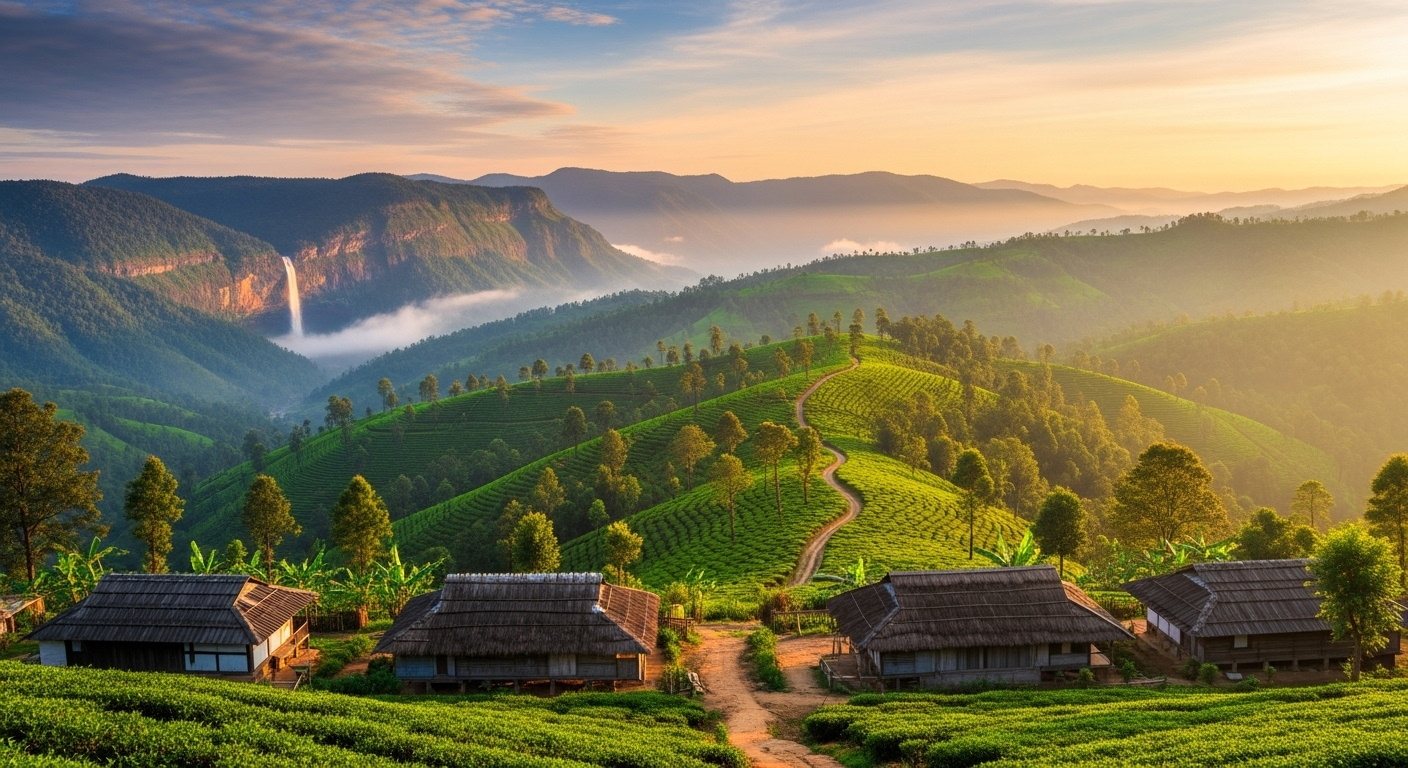
Did you know Majuli is the world’s largest river island? It’s in Assam. This shows the beauty and culture that await in Northeast India. The ‘Seven Sister’ states have unique spots full of wonder.
The untouched landscapes and vibrant cultures in Northeast India provide a unique escape. Places like Mawlynnong Village and Dzukou Valley are truly special. Jatinga’s bird phenomena add to the mystery and allure of exploring this region.
Key Takeaways
- Majuli in Assam is the world’s largest river island, located in the Brahmaputra River.
- The beautiful Mawlynnong Village in Meghalaya is recognized as the cleanest village in Asia and boasts a perfect literacy rate.
- Dzukou Valley in Nagaland is famed for its untouched landscapes and unique Dzukou lilies.
- Jatinga in Assam is known for its mysterious bird phenomena, attracting scientific interest.
- Northeast India’s diverse regions offer unparalleled cultural richness and uncharted natural beauty perfect for adventurous travelers.
Mawlynnong: The Cleanest Village in Asia
Mawlynnong is known as the cleanest village in Asia, also called God’s Own Garden. It’s about 90 km from Shillong. The Khasi tribe lives here. They’re very smart with a 100% literacy rate. Discover India said it’s the cleanest in Asia. People love Mawlynnong for its green living and beautiful nature.
Attractions in Mawlynnong
You can see amazing living root bridges here. UNESCO says they’re a World Heritage Site. There’s also a Balancing Rock that seems to ignore gravity. And from Sky View, 85 feet up in bamboo, you see far views, even to Bangladesh.
The Sky Walk viewpoint, crafted by a local school teacher, lets you climb up. You can then look at peaceful views.
Local Culture and Cuisine
Mawlynnong isn’t just clean. Its culture is rich too. Women are very important here. They keep family names and pass on wealth. This shows how the village supports women.
The food is tasty, made from home-grown veggies and meat. Festivals like Behdienkhlam, Wangala, and the Nongkrem Dance bring everyone together. They show the area’s colorful traditions.
Travel Tips
To get there, drive from big cities like Shillong or Cherrapunji. Shillong has the closest airport, 78 km away. The big train station is in Guwahati, 172 km away.
Stay in homestays or guest houses. Try Ila Jong Homestay or Bangladesh View Homestay. A night costs about INR 2000 on average. Visitors pay INR 200 at the entrance.
Mawlynnong loves the planet. Since 2007, they’ve kept very clean. Every home has a toilet. They use bamboo for trash bins and say no to plastic bags and smoking. They turn waste into fertilizer. This helps their farms grow.
Dzukou Valley: A Trekker’s Paradise
Dzukou Valley, hidden within Nagaland’s dense forests, is India’s well-kept secret. It’s called a Trekker’s Paradise. This valley has green forests, rolling hills, and colorful flowers all year. Here, you’ll find rare Dzukou lilies that make the place extra special.
Flora and Fauna of Dzukou Valley
In June and July, Dzukou Valley becomes a wonderland for plant lovers. Wildflowers, including the rare Dzukou lilies, cover the place. It’s filled with different plants and animals. This makes it great for people who love nature and photography.
Best Time to Visit
Visit from April to July for the best trekking. The valley shows off all its flowers then, like the amazing rare Dzukou lilies. January has snow, but heavy rains from mid-June to mid-September make trekking hard. Yet, winter offers a special snowy view.
Trekking Routes
Two main paths lead to Dzukou Valley. One starts at Jakhama and the other at Viswema. Each trek takes about 4-5 hours. The Viswema path is easier for many. From both spots, the views are stunning. The valley is a short 45-minute drive from Kohima.
The adventure in Dzukou Valley lasts around eight to nine hours. Taxis from Kohima to starting points are quite cheap. There’s simple lodging in the valley. It has dorms and private rooms. For an easier trip, think about using a travel service like India Trail.
Jatinga: The Mystery of Bird Deaths
The small town of Jatinga in Assam has a big mystery. Every year, from August to October, this place sees a sad event. Lots of birds end their lives here because they get confused. This has been happening for over 100 years. People wonder why, mixing science with old stories. You can learn more here.
Exploring the Phenomenon
Birds in Jatinga often die between late September and November. This is because of special weather like no moon, fog, light rain, and strange wind. These weather conditions confuse birds of 44 different types. They fly towards the town’s lights and sadly, die. Only birds from nearby places are affected, not those that fly far.
Scientific Investigations
Scientists have tried to figure out why this happens. They think it’s because birds get lost and are drawn to bright lights. In 1988, lots of birds died during bad floods in Assam. This made people want to learn more about it. Now, there are places to watch birds and learn about them in Muolpong. The Assam tourism department made this to teach people.
Local Legends and Myths
People in Jatinga used to think this event was magic. The Jaintia tribe would catch and eat these confused birds. They used to use bamboo poles. But now, thanks to science, they understand it’s a natural event. So, the old scary stories are being replaced by knowledge. This helps keep the mystery alive for others to learn.
Jatinga has turned into a place where tourists can learn a lot. Places like Nathao Lodge and Landmark Hotel welcome guests. You can stay at Nhoshring Guesthouse or Hotel Joyeswary too. This event makes people curious. It also shows how important it is to understand nature through science.
“The phenomenon of bird suicides in Jatinga happens in a small area. It’s just 1.5 km long and 200 meters wide. This makes it a good spot for both scientists and people interested in culture.”
Krem Puri Caves: The Longest Sandstone Caves
Near Laitsohum village in Mawsynram, Meghalaya, you’ll find Krem Puri Caves. They’re known as the world’s longest sandstone caves. Found in 2016, Krem Puri stretches over 24.5 kilometers. This makes it twice the size of Gibraltar at 13 square kilometers. People love it for its size and hidden treasures. It’s a top spot for cave exploration.

Inside, the caves are cool, staying around 16-17 degrees Celsius. This makes it great for visiting most times of the year. Yet, May to September is the best time. This is when the weather is nice for exploring outside. Meghalaya’s heavy rains help create these amazing caves.
For those into rocks and old times, Krem Puri is awesome. Adventurers and spelunkers love the ancient fossils inside. These fossils show us what was here long ago. They make the caves even more special. Meghalaya is now well-known for its cool caves thanks to this discovery.
Krem Puri is different from Liat Prah, India’s longest limestone cave. Krem Puri is the longest sandstone cave in the world. It’s also India’s second-longest cave. Even though it’s not the longest, Krem Puri’s sandstone caves are very special.
Visitors should take care of the caves. You can go caving, trekking, and even bird watching. You can also take photos and learn from the local Khasi and Jaintia tribes. This makes the visit even better.
| Feature | Krem Puri Caves | Liat Prah Cave System |
|---|---|---|
| Total Length | 24.5 km | 31.1 km |
| Category | Longest Sandstone Cave | Longest General Cave |
| Location | Mawsynram, Meghalaya | Meghalaya Hills |
| Discovery Year | 2016 | N/A |
| Temperature | 16-17°C | Varies |
| Best Time to Visit | May to September | Mild Weather Months |
The exploration of Krem Puri was big. It took a team 25 days to get through it. They started in the Jaintia Hills. This place has a landscape formed over millions of years. The exploration showed just how big and complex Krem Puri is.
Krem Puri shows the beauty of Meghalaya’s nature. It draws people from near and far for cave adventures. With its special features and old fossils, Krem Puri is a treasure. It shows off the amazing natural heritage of the area.
Tawang: The Monastic Marvel
Tawang sits high at 10,000 feet in Arunachal Pradesh. It’s a place of peace and history. It shows deep Buddhist culture. Tawang is a treasure in Northeast India, offering experiences for all travelers.
History and Significance of Tawang Monastery
The Tawang Monastery is the largest in India. It’s a gateway to monastic life, started in the 17th century. The monastery is home to over 300 monks. It has many manuscripts, sacred texts, and lively rituals. It’s a place for pilgrimage and learning about spirituality.
Nearby Attractions
Tawang has beautiful spots to see. The Shonga-Tser Lake, also known as Madhuri Lake, was made by a flood in 1950. Sela Pass is about 80 kilometers away, with views of the Himalayas. Nuranang Falls drops from 100 meters, adding beauty to Tawang.
Travel Information
To get to Tawang, start from Guwahati. It’s 550 km away, a trip over 12 hours depending on the roads. The best times to visit are March to June and September to October. These months offer great weather.
| Distance from Key Locations to Tawang | Distance (Kilometers) |
|---|---|
| Guwahati | 550 |
| Bomdila | 185 |
| Dirang | 140 |
| Itanagar | 507 |
Don’t skip the Indo-China war memorials in Tawang. Jaswant Garh and the Tawang War Memorial honor brave soldiers. They are key parts of Tawang’s history.
Loktak Lake: The Floating Paradise
Loktak Lake is in Manipur’s Bishnupur district. It’s Northeast India’s largest freshwater lake and is near Imphal. The lake is famous for being the only one that floats in the world. It has floating mats of land called phumdis. They make the lake look special. Loktak Lake is very important for the people living nearby. It helps with water, power, and fishing.

Navigating Through Phumdis
The phumdis are key to life in Loktak Lake. They house many plants and animals. These floating pieces keep the balance in the lake’s life. People who visit can see how unique this place is. They learn about how the lake keeps changing. A phumdi lasts about two years. It shows why we need to take care of nature. It also shows how everything in the lake is connected.
Wildlife at Loktak Lake
Loktak Lake is home to unique animals, like the Sangai deer. This deer is only found here, in the Keibul Lamjao National Park. This park floats and keeps the deer safe. The lake also brings many birds. But, fewer birds are coming because of pollution and vanishing phumdis. Keeping the lake safe is very important. It’s a special place to see nature’s magic.
Accommodation and Travel Tips
If you visit Loktak Lake, you can stay in places that help protect the lake. There are simple houses and beautiful places on Sendra and Karang islands. You can see the whole lake from here. The closest airport is in Imphal, just 48 kilometers away. Visit when it’s cool for the best time. Meeting the local people makes your trip better. It also helps them a lot, making your visit good for everyone.
Lunglei: A Nature Lover’s and Bird Watcher’s Haven
Lunglei lies in beautiful Mizoram, away from busy cities. It’s a special place for hidden paradise seekers. At 729 meters high, it’s ideal for bird watcher’s retreats and nature lovers.
Lunglei is home to wildlife sanctuaries full of natural beauty. Thorangtlang Wildlife Sanctuary spreads over 50 square kilometers. It shelters elephants, leopards, tigers, and hoolock gibbons. You can visit from 6 am to 6 pm. Each visit costs Rs. 20.
Saza Wildlife Sanctuary is close by. It’s 55 square kilometers big and known for birds like hornbills. Endemic birds such as peacock pheasants are there too. Entry is Rs. 20 per person, open from 6 am to 6 pm.
Saikuti Hall shows off Mizo culture with artifacts and music. Open 10 am to 5 pm, entry is Rs. 10. Nghasih Stream is perfect for boating and fishing. Boating costs Rs. 50 per half hour, available from April to September.
Old churches add to Lunglei’s calm vibe. They show the town’s rich culture amidst green views.
Lunglei is great for trekking, birdwatching, or trying Mizo food. Places like David’s Kitchen serve tasty dishes. With a subtropical climate, it’s best visited in dry months.
To sum up, Lunglei’s mix of wilderness, culture, and fun makes it a hidden paradise. It’s perfect for those loving natural beauty and activities. Lunglei waits to give you a memorable time.
Majuli Island: Cultural and Natural Wonder
Majuli Island is in the middle of the Brahmaputra River. It is an amazing place with lots of culture and nature. It’s the biggest river island in the world, says the Guinness Book of World Records. Majuli is great for travelers who like heritage and beautiful scenes.
Accessing Majuli Island
To get to Majuli, you need to take a ferry from Nimati Ghat in Jorhat, Assam. The ferry ride shows off the island’s stunning landscape. The best time to explore is from October to March. The weather is nice, and it’s great for seeing the culture and nature.
Cultural Heritage of Majuli
The island is famous for its culture linked to Assam’s Vaishnavite traditions since the 15th century. Majuli has Satras, or monasteries, that are very important. Once there were 64, but now 22 remain. They keep the Assamese art forms like ‘Sattriya’ dance and ‘Bhaona’ theater alive. Places like Kamalabari, Dakshinapat, and Auniati are must-sees for visitors.
Natural Beauty and Biodiversity
Majuli is also a place of natural beauty. It covers 352 square kilometers with wetlands, marshes, and villages. There are many birds to see and tours for birdwatching. You can go boating or fishing for beautiful views and to meet local fishermen. But, the island is at risk because of soil erosion. It could disappear in 15-20 years. Saving Majuli with community projects is very important.
FAQ
What makes Mawlynnong unique among other hidden gems in Northeast India?
Mawlynnong is the cleanest village in Asia. It has cool living root bridges and eco-friendly ways. The village’s balancing rock and location near Bangladesh are also unique.
What is the best time to visit Dzukou Valley for trekking?
The best time for trekking in Dzukou Valley is from June to September. This time offers good weather and beautiful blooms, like Dzukou lilies.
What phenomenon occurs in Jatinga, and what makes it a hidden wonder?
From September to November, migratory birds crash into Jatinga’s lights. This affects 44 bird species and stumps scientists. It’s a big draw for research and stories.
Why are the Krem Puri Caves considered an undiscovered treasure?
Discovered in 2016, the Krem Puri Caves are India’s longest sandstone ones. They’re over 24 kilometers long. Adventurers and scientists love their fossils and deep caverns.
What should visitors know about the Tawang Monastery?
Tawang Monastery is India’s biggest and the world’s second-largest monastery. It’s a key Buddhist site. Nearby, visitors find the Gorichen peak and the Jaswantgarh war memorial.
How can travelers navigate through Loktak Lake?
Visitors use local boats to see Loktak Lake’s floating islands. The lake has rare deer and encourages eco-tourism. Staying with locals helps preserve the area.
What makes Lunglei in Mizoram an ideal destination for nature and bird watchers?
Lunglei is peaceful with stunning nature, old churches, and wildlife. It’s perfect for those who love nature and birds. It’s a quiet escape.
How can visitors access Majuli Island and what cultural heritage does it offer?
Majuli Island is reached by ferries. It’s rich in nature and tribal culture. Visitors enjoy its beauty and traditions, best seen between October and March.