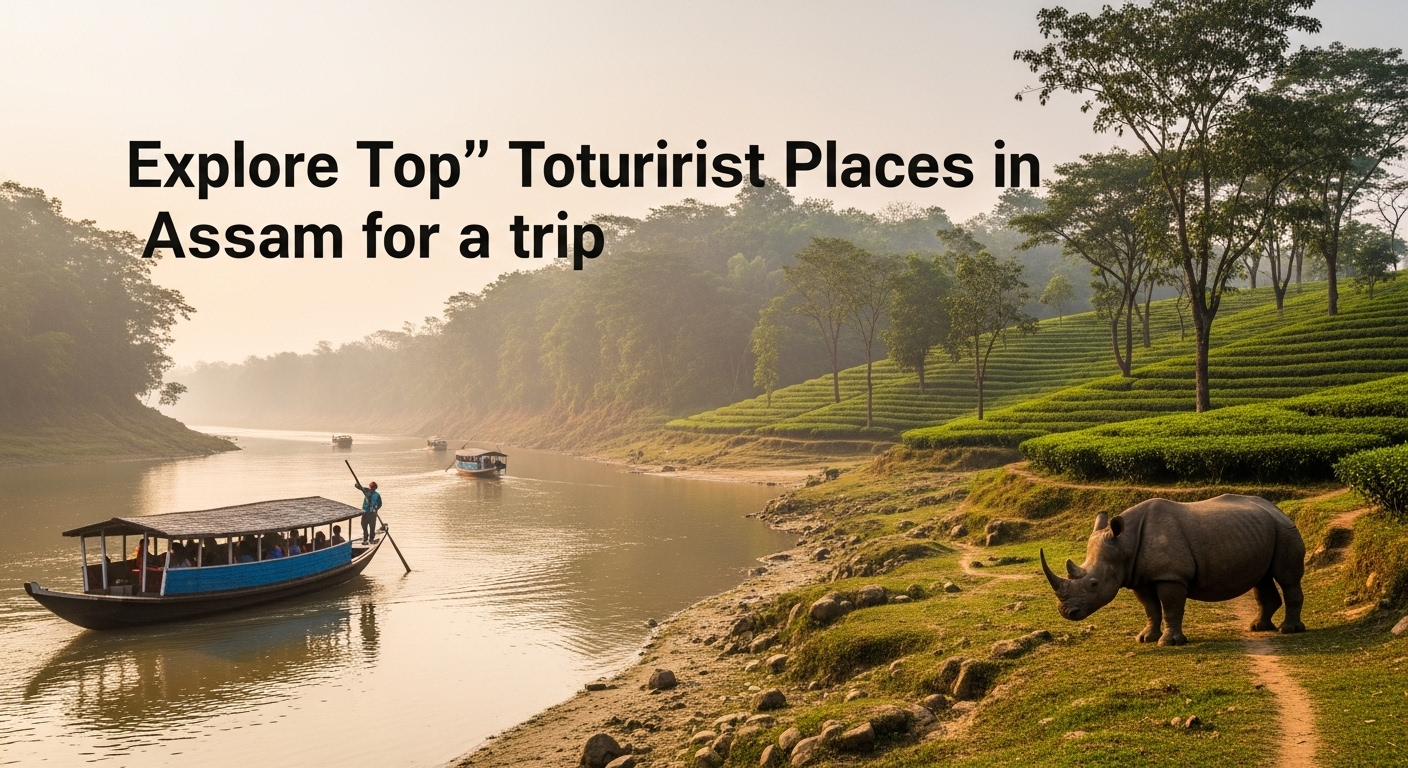
Imagine yourself in a place where blue hills and red rivers merge, creating a vibrant spectacle. As you set out, you dive into Assam’s core, where history and wilderness call to you. Ancient Ahom dynasty monuments whisper of heritage, and the wild promises glimpses of rare, one-horned rhinoceros. Surrounded by 600 lush tea plantations and the cultural richness of diverse tribes, you start your journey through Assam’s prime attractions.
Assam’s travel spots offer an experience beyond mere relaxation; they are a dip into a story rich with flavor, aroma, and tradition. Here, the local cuisine, highlighted by the tangy Masor Tenga, meets the invigorating scent of tea, enhancing your sensory exploration. Visiting these places transcends typical travel—it becomes a journey through diverse textures, flavors, and epochs.
In Assam, the tea estates of Jorhat and the tranquil Brahmaputra riverbanks are ever-present. The world’s smallest river island unveils Umananda Temple’s secrets, while Majuli showcases the resilience of a unique culture. Each step unveils more about why Assam’s destinations are among the most alluring, extending their allure well beyond its borders.
Key Takeaways
- Assam’s 600-year-old Ahom monuments represent a portal to a rich historical past.
- Kaziranga National Park is a sanctuary for the world’s largest population of one-horned rhinoceros.
- With 5 National Parks and 18 wildlife sanctuaries, Assam is a haven for nature and wildlife enthusiasts.
- The state’s tea gardens offer leisurely experiences amid lush greenery.
- From river cruising on MV Mahabaahu to experiencing the harmony of Hajo, Assam’s diversity is unmatched.
- Assam’s festive colors are witnessed in the myriad cultural celebrations embraced by its many indigenous tribes.
- Travel timings are optimal between October to April in Guwahati, making it a prime starting point to explore North East India’s treasures.
An Introduction to Assam’s Diverse Tourist Attractions
Assam, known for its lush landscapes and rich culture, attracts various travelers. It boasts the magnificent Brahmaputra River and the Kamakhya Temple’s spiritual aura. This state beautifully marries natural allure with a deep cultural history.
The Cultural Richness of Assam’s Cuisine and Tea Estates
Assamese cuisine is a fusion of exotic tastes and methods. Dishes like Khar, utilizing raw papaya, pulses, and unique spices, and smoked fish, are culinary treasures. Additionally, the extensive tea estates not only boost Assam’s economy but also add a vibrant green to its scenery. These estates are among Assam’s top attractions, offering visitors the chance to sample fresh tea amidst tranquil, green settings.
Assam’s Heritage: A Blend of Ethnic, Aryan, and Dravidian Influences
Assam’s heritage is a vivid mix of ethnic, Aryan, and Dravidian impacts, seen in its arts, music, and lifestyle. This rich legacy is showcased in its traditional dances and globally acclaimed handwoven textiles. Exploring Assam offers a deep dive into this unique cultural amalgamation, appealing to those interested in diverse backgrounds and stories.
Assam’s geography includes the Brahmaputra Valley, Barak Valley, and hilly areas like the Karbi Plateau and North Cachar Hills. It provides a rich menu of activities from wildlife sanctuaries with unique species to historic sites with deep narratives. These features solidify Assam’s status as a sought-after destination, embodying its environmental and cultural splendor.
Celebrating Assam’s Festivals: A Reflection of its Varied Tribal Cultures
Exploring Assam reveals the vibrant and diverse tribal cultures through its festivals. Each festival enhances Assam’s sightseeing spots with traditional vibrance and community spirit. Assam is home to numerous celebrations that offer deep insights into its people and traditions.

The Baishagu Festival to the grandeur of Bihu highlights Assam’s socio-cultural diversity. These festivities are the lifeline of the Assamese, filled with music, dance, and traditions.
| Festival | Location | Time | Significance |
|---|---|---|---|
| Bihu Festival | Statewide | Year-round | Three major celebrations embracing agricultural cycles |
| Ambubachi Mela | Kamakhya Temple, Guwahati | Mid-June | Tantric rituals reflecting traditional religious practices |
| Dehing Patkai Festival | Tinsukia | January | Promotes elephant conservation and cultural sports |
| Tea Festival | Jorhat | November | Celebration of Assam’s renowned tea production |
| Majuli Festival | Majuli Island | Varies | Cultural exhibitions and traditional pottery displays |
| Ras Lila | Majuli Island | Varies | Depicts the life of Lord Krishna with local artistic expressions |
| Karam Puja | Tea communities | Varies | Focuses on nature worship and harvest celebrations |
Visiting these must-see places in Assam during festivals enriches your journey. It helps preserve the culture of this magnificent state. From the Ambubachi rituals to Bihu’s lively dances, each festival offers a deep dive into Assam’s tribal heritage.
Experience these celebrations to truly understand Assam’s cultural panorama and enhance your sightseeing experience.
Natural Wonders and Wildlife Galore at Assam’s National Parks
Assam, a hub of biodiversity and natural beauty, draws tourists from all corners of Earth. The dense forests of Kaziranga and the mystic grasslands of Manas tell stories of conservation. Each park showcases a unique chapter of biodiversity.
At Kaziranga National Park, the one-horned rhinoceros finds sanctuary. This UNESCO site not only aids rhino conservation but also shelters Bengal tigers and numerous birds. From a mere dozen, the rhino count has surged to over 2000, showcasing conservation success.
Kaziranga National Park: A Sanctuary for the One-Horned Rhinoceros
Kaziranga’s landscapes are stunning, highlighting the majestic one-horned rhinoceros. Visitors enjoy safaris, exploring a vibrant ecosystem inhabited by elephants, wild buffalos, and swamp deer. It stands as a crucial spot for India’s wildlife conservation.
Next to Kaziranga, Manas National Park offers an unparalleled wilderness experience. Recognized as a World Heritage Site and Biosphere Reserve, it boasts rich biodiversity. Home to 60 mammal species, it shelters the rare Assam roofed turtle and golden langur.
Manas National Park: A UNESCO World Heritage Site
Manas invites you to its rugged terrains full of diverse flora and fauna. This park is a haven for endangered species, providing refuge to Bengal tigers and Asian elephants. Its scenic beauty combined with wildlife sightings creates a memorable visit.
Pobitora Wildlife Sanctuary, though smaller, has a high concentration of Indian rhinoceros. It’s vital for conservation and popular among birdwatchers. The skies here are adorned with various bird species.
Pobitora Wildlife Sanctuary: A Haven for the Indian Rhinoceros
Pobitora delivers a close-up wildlife experience, especially for photography enthusiasts. Its dedication to preserving the rhinoceros highlights Assam’s commitment to conservation.
For further details on these natural wonders and their preservation efforts, check out this guide on Assam’s national parks. Assam’s parks provide a unique experience to birdwatchers, photographers, and nature lovers, creating lasting memories.
Guwahati: The Gateway to North East India
Upon arriving in Guwahati, you immediately sense its role as the entrance to North East India. This vibrant city is more than a key travel destination in Assam; it’s a crucial link for the northeast. Its blend of culture, history, and modernity highlights its status among the top attractions in Assam.
Its importance is boosted by exceptional connectivity. Through Lokpriya Gopinath Bordoloi International Airport, it ensures easy access to northeastern states like Sikkim, Mizoram, and Nagaland. So, travel becomes effortless. Moreover, its pivotal railway junction connects regions like Tripura and Arunachal Pradesh, offering smooth transitions for visitors.
The city bridges states and thrives as a bustling commercial center. Its vibrant markets showcase everything from traditional crafts to contemporary goods. These markets epitomize shopping paradise.
The Srimanta Sankaradeva Kalakshetra serves as a window to Assam’s cultural richness and heritage. Meanwhile, the Brahmaputra River’s banks offer tranquil cruises. These cruises blend stunning vistas with local tunes and fare, crafting unforgettable moments.
For relaxation, the Assam State Museum, Assam State Zoo, and Guwahati Planetarium are perfect. Additionally, the Kamakhya Temple draws thousands during the Ambubachi Mela. This positions Guwahati as a spiritual hub in Assam.
The table below sheds light on Guwahati’s strategic position in India’s northeastern corridor:
| Connection Type | Details |
|---|---|
| Air Connectivity | Lokpriya Gopinath Bordoloi International Airport with flights connecting all northeastern states and major Indian cities. |
| Rail Connectivity | Major railway junction linking Mizoram, Tripura, Manipur, Nagaland, and Arunachal Pradesh. |
| Bus Connectivity | Extensive inter-state bus services including day-super and night-super to major northeastern destinations. |

Guwahati encapsulates a dynamic urban life alongside peaceful sceneries. It’s a launching pad for North East explorations and a symbol of cultural wealth. Whether passing through or delving into its charm, Guwahati delivers a rich tapestry. It represents Assam’s finest and marks a splendid beginning or conclusion to your Northeast journey.
Suelkuchi: The Handloom Heaven and a Nook for Traditional Crafts
If you’re in pursuit of a vibrant cultural journey and distinct Assam sightseeing locations, set your sights on Sualkuchi. Celebrated as the ‘Manchester of the East’, this quaint town forms the epicenter of Assamese handloom tradition. It thrives with artisans whose skills are passed down through generations.
Sualkuchi stands as a testament to Assam’s traditional crafts. Almost every home boasts a bamboo loom. The atmosphere resonates with the rhythmic sounds of looms crafting Muga silk. This silk is renowned for its longevity and unique glow.
Experience the Intricate Art of Silk Weaving
Assam is famed for its Muga, Eri, and Pat silks. Sualkuchi shines as a sanctuary for silk enthusiasts. Here, weaving transcends mere craft, evolving into cherished heritage. Observing the weavers’ skilled hands craft elaborate designs is a sight to behold. This tradition bolsters their way of life and safeguards a rich cultural legacy.
Discover Mekhela Chador and Assamese Handicrafts
Sualkuchi’s treasure chest overflows with traditional Assam crafts. The range spans from bamboo and cane items to Sarthebari’s bell metal works. Every piece showcases the pinnacle of craftsmanship. Every item, be it a woven basket or a bell, narrates a story of meticulous artistry.
| Craft | Materials Used | Items Produced |
|---|---|---|
| Bamboo and Cane | Bamboo, Cane | Furniture, Baskets, Musical instruments |
| Silk Weaving | Muga, Eri, Pat Silks | Sarees, Mekhela Chador |
| Bell Metal | Copper, Tin | Utensils, Decorative items |
| Water Hyacinth | Water Hyacinth Plants | Purses, Handbags, Slippers |
Engage with the artisans during your visit. Discover their craft techniques and even attempt weaving. This immersion offers insight into the Assamese handloom world. It also uplifts the local economy.
Exploring traditional crafts in places like Sualkuchi presents a rare glimpse into the intricate artistry and devotion behind these practices. It’s an experience that not only enriches but connects you to Assam’s artisanal heritage. You might even go home with a Mekhela Chador as a cherished memento.
Tourist Places in Assam: Beyond the Tea and the Rhinoceros
Assam is not only about its vast tea gardens and the iconic one-horned rhinoceros. There’s so much more to explore. From Majuli’s expansive river island to Tezpur’s historical sites and the Tai-Phake Village’s vibrant culture, Assam’s tourist spots reflect its rich cultural diversity.
The Serenity of Majuli – The World’s Largest River Island
Majuli stands as a marvel of nature and tradition, recognized as the largest river island in the world. Nestled on the Brahmaputra River, it is a haven for seekers of peace and spiritual growth. The island is home to ancient satras, significant to the area’s Vaishnavite culture. Local arts like mask-making showcase practices that have endured through generations.
Tezpur’s Historical Splendor and Romantic Vibes
Tezpur, another must-see in Assam, is where history and romance intertwine among ancient ruins and scenic views. Its archaeological sites take you back to the 9th and 10th centuries, with the Brahmaputra River providing a majestic background. Strolling through its legendary spots, you’re enveloped in the city’s rich historical tapestry.
Explore the Rhythms of Tribal Life in Tai-Phake Village
Tai-Phake Village offers a genuine slice of Assam’s tribal culture. Originating from Myanmar in the 18th century, this community’s heritage is vibrant and immersive. Join traditional meals, get captivated by tribal dances, and experience the profound lifestyle of the Tai-Phake people. This village is a truly unique site among Assam’s many attractions.
These destinations—Majuli’s spirituality, Tezpur’s historic charm, Tai-Phake’s cultural richness—offer meaningful insights beyond mere sightseeing. They connect you deeply with Assam’s soul.
Conclusion
Assam represents a rich tapestry, blending diverse wildlife, cultural history, and lush landscapes. It offers extensive experiences for travelers venturing to Assam. You could explore Kaziranga National Park, home to 2413 rhinos and countless other species. Or, you might find yourself at the Kamakhya Temple, steeped in the devotion of millions.
Consider wandering around Haflong Lake, known as the Scotland of the East. Or, let Agnigarh’s ancient stories in Tezpur take you back in time. Every visit to Assam adds a story to your life, whether it’s the serene Umananda Island or the historical Charaideow Maidams. As you explore Assam, each nickname from “Tea Capital” to “Pyramids of Assam” reveals its unique history and beauty.
Your trip to Assam is more than a holiday; it’s an enchanting exploration that broadens your understanding of India’s rich heritage. It encourages a deeper connection with places like Jorhat Town and Kareng Ghar in Sivasagar. Anyone looking for a genuine and transformative journey should visit Assam. Create your own anthology of unforgettable experiences and memories.
FAQ
What are some notable tourist places in Assam?
Assam boasts incredible destinations like Kaziranga National Park and Majuli Island. It also features Kamakhya Temple, and Jorhat’s tea gardens. Each spot offers unique experiences, from wildlife encounters to cultural heritage explorations.
What makes Assamese cuisine special?
Assamese cuisine stands out for its simplicity and taste. It primarily uses fresh, local herbs and ingredients. Dishes like Masor Tenga and Khar highlight the state’s rich culinary traditions.
Can you describe the cultural influences found in Assam?
The cultural heritage of Assam is deeply influenced by ethnic, Aryan, and Dravidian elements. This mix is evident in its arts, music, dance, and festivals, offering a comprehensive view of the state’s history and traditions.
What are the top festivals in Assam that reflect its tribal cultures?
Festivals like Bihu, Baishagu, and Ambubachi Mela are central to Assam’s cultural identity. They vividly showcase the customs and spirit of its tribes. These occasions highlight the region’s social and cultural diversity.
What wildlife can be seen in Kaziranga National Park?
Kaziranga National Park is famous for its one-horned rhinoceros. Visitors can also spot wild elephants, tigers, water buffaloes, and swamp deer. It’s a haven for diverse migratory birds too.
Why is Manas National Park a UNESCO World Heritage Site?
Manas National Park has gained UNESCO World Heritage status for its outstanding natural landscapes, biodiversity, and conservation efforts. It plays a critical role in preserving rare, endangered species.
Is Guwahati worth visiting while in Assam?
Guwahati, the largest city in the North East, offers a rich blend of culture, history, and nature. Known for its historical sites, temples, and scenic beauty, it’s a must-visit in Assam.
What unique experiences does Suelkuchi offer to tourists?
Suelkuchi, Assam’s handloom paradise, showcases traditional silk weaving crafts. Here, visitors can explore the making of exquisite Mekhela Chador, ideal for textile and silk enthusiasts.
What are some less-known, must-visit places in Assam for an offbeat travel experience?
For those seeking unique adventures, Majuli river island, Tezpur, and Tai-Phake Village are top picks. These places offer a deep dive into Assam’s culture, natural scenery, and way of life.