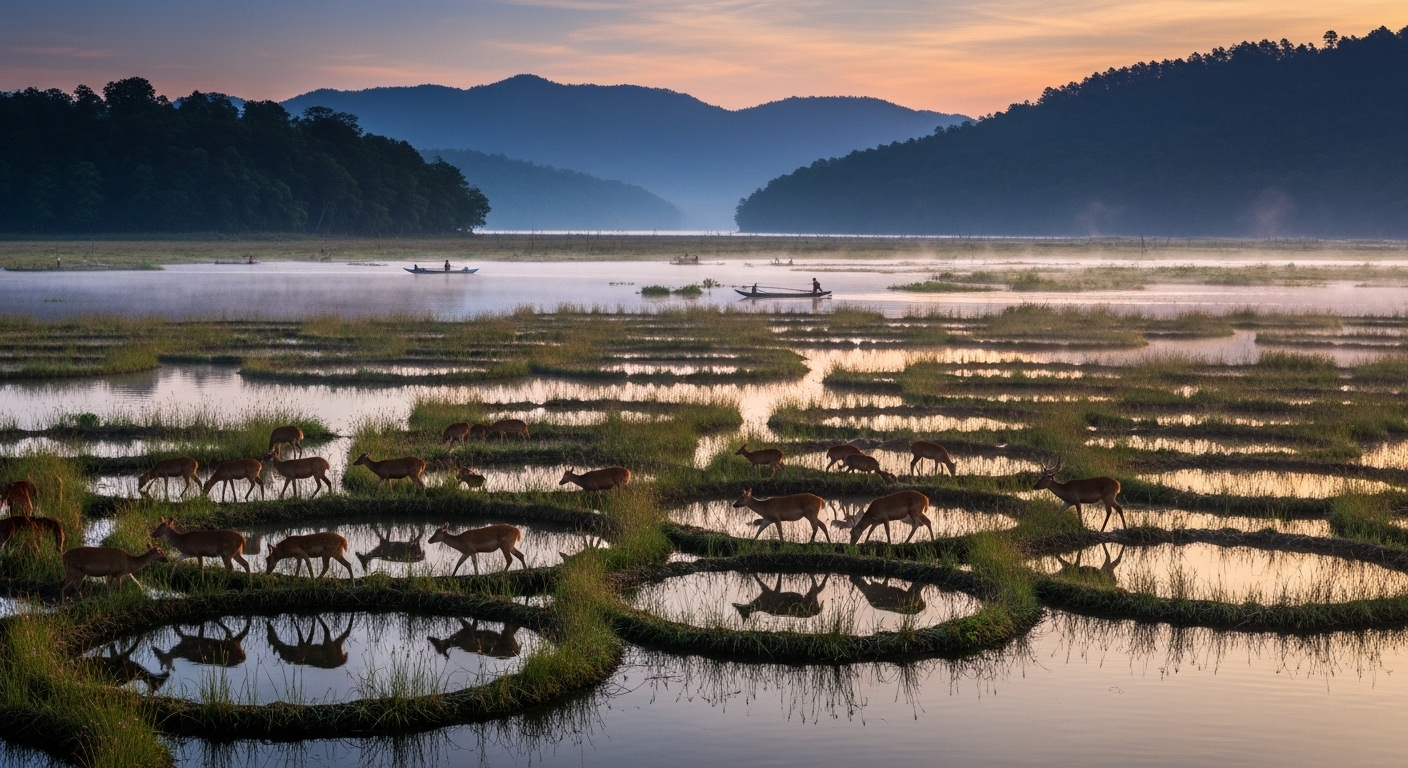
Keibul Lamjao National Park sits on Manipur’s biggest freshwater lake. This lake has special floating islands named ‘Phumdis.’ These islands are made of soil and organic bits. They create one of India’s most unique ecosystems. The park covers about 40 square kilometers. It is a safe place for the very rare Sangai deer, also called the dancing deer. You can also see many birds, fish, amphibians, reptiles, otters, and civets here.
This park is very important for keeping nature in balance. It helps local people earn money through tourists and fishing. Keibul Lamjao National Park has secrets filled with rare plants and animals. It’s a wonderful place for people who love adventures and nature to explore.
Key Takeaways
- Keibul Lamjao National Park is located on Loktak Lake, the largest freshwater lake in Manipur.
- The park spans approximately 40 square kilometers and features unique floating islands called Phumdis.
- It serves as the only habitat for the endangered Sangai deer.
- Rich in biodiversity, the park is home to numerous birds, fish, and amphibian species.
- Local communities benefit from tourism and fishing activities surrounding the area.
Introduction to Keibul Lamjao National Park
Established in 1989, Keibul Lamjao is the only floating national park. It’s in a beautiful spot on Loktak Lake. The lake has unique marshes and floating islands called phumdis. The park helps protect many plants and animals.
The park is known for its amazing animals and plants. It has wetlands and marshes that many creatures call home. It’s a great place for people who love nature and for scientists too.
When you visit, you’ll see the special land and water life. The park shows why we must keep nature safe. It teaches us how to take care of our world and its animals.
Location and Accessibility of the Park
Keibul Lamjao National Park is in Moirang Sub-District of Manipur. It is next to the lovely Loktak Lake, about 53 kilometers from Imphal. This place gives visitors awesome views and supports many life forms.
Getting to the park is easy, which nature lovers like. You can pick from several travel options to Keibul Lamjao. Buses from Imphal to Moirang run often. You can also hire a taxi for a more private trip. Or, take a boat ride for a peaceful tour of its waterways.
The trip to Keibul Lamjao is an adventure itself. Many transport ways make the park easy and fun to get to. This lets travelers enjoy its beauty right from the start.
| Transportation Method | Details |
|---|---|
| Bus Services | Regular buses from Imphal to Moirang. |
| Taxis | Available for hire, providing flexibility and convenience. |
| Boat Rides | Offers a unique way to explore the park’s waterways. |
Wildlife Sanctuary Manipur: A Unique Ecosystem
Keibul Lamjao National Park is on Loktak Lake’s floating islands. It has a unique ecosystem with lots of biodiversity. It’s known for its beauty and helps protect wildlife in the area. At this park, you can see animals that live in wet places.
Key Species and Habitats
The park is home to the Sangai deer, which is in danger. These deer love the wetland of the park for living and having babies. Besides Sangai, there are over 200 kinds of birds, reptiles, and fish. The mix of thick forests and wet marshes gives many animals homes. It helps the park’s nature stay balanced and important.
Significance of Loktak Lake Biodiversity
Loktak Lake’s nature is very important for balance. It’s a UNESCO site known for its phumdis that help endangered animals. The lake gives important things to the people who live there and helps the park’s animals. Healthy water places help protect animals from dangers.
Secrets of the Keibul Lamjao National Park
The Keibul Lamjao National Park is full of mysteries and stories. It shows us how important nature and culture are. It tells us about the Sangai deer, a special animal found only here.
This deer is known as the “dancing deer” because of its graceful movements. It reminds us why we need to protect such unique creatures.
Historical Background and Conservation Efforts
This park is a big part of Manipur’s story. It has wetlands, forests, and beautiful waters. People are working hard to help save it.
They protect the Sangai deer and other animals. Being a Ramsar site means the world cares about this place. Everyone’s trying to stop climate change and keep the park safe.
Local Myths and Folklore Surrounding the Park
There are amazing tales about the Keibul Lamjao National Park. The stories about the Sangai deer are very special. They show how people and nature live together in peace.
These legends help keep the park’s magic alive. They also show why saving animals and their homes is so important.
Exploring the Floating National Park
Keibul Lamjao National Park is unique, being the only floating park worldwide. This floating national park experience lets people see the phumdis—floating islands made from plants, soil, and organic stuff. They get to enjoy Loktak Lake’s beauty, the biggest freshwater lake in northeastern India.
People who love adventures will find lots to do here. During boat tours, they can see rare animals like Eld’s Deer and different birds. Watching birds becomes fun with stunning views all around. They also learn about the local communities by the lake, which makes the trip even better.
There are more cool places nearby to check out. The INA Memorial in Moirang tells stories of the fight for freedom. Ima Keithel (Mother’s Market) shows the area’s rich culture and history. The Sadu Chiru Waterfall is another beautiful spot that shows why this area is important for nature.
Doing different activities helps people love nature more and want to protect it. Keibul Lamjao National Park is perfect for an amazing adventure. It shows the beauty of the natural world in a special way.
Endangered Species Habitat: The Sangai Deer
The Sangai deer live in a unique place called Keibul Lamjao National Park. They face many challenges. These deer are endangered and need urgent help to survive. Protecting their home, getting people involved, and doing research are key to saving them.
Conservation Initiatives for Sangai Deer
There are many projects to help the Sangai deer. Breeding programs help grow their numbers. They also introduce deer to new areas. Teaching locals to protect the deer is important. All work together to stop poaching and destroying the deer’s home.
Impact of Climate Change on Endangered Species
Climate change is a big problem for the Sangai deer. It makes their home in Keibul Lamjao National Park change. The weather changes and Loktak Lake’s water levels go up and down. This hurts the deer’s home and food. We need good plans to face climate change and keep the deer safe.

Rare Flora and Fauna of Keibul Lamjao
Keibul Lamjao National Park is the only floating sanctuary in the world. It is full of rare plants and special plant kinds. This unique place on Loktak Lake is home to many water plants and healing herbs. These plants help keep nature in balance. They help local animals and add to the area’s rich nature life.
Unique Plant Species Found in the Park
The park has many different plant types that add to local nature life. These rare flora include:
- Aquatic plants living in the lake’s floating phumdis (decaying plant matter).
- Healing herbs used by locals for age-old cures.
- Unique species found only here, showing the place’s special nature role.
These plants feed local animals and help keep the ecosystem healthy. They show why it’s important to protect their living places.
Ecological Importance of Local Biodiversity
The park’s nature life has key roles for a stable environment. It helps:
- Make soil better thanks to the diverse plants.
- Keep water clean, which is important for wildlife and people.
- Allow species to deal with changes, helping nature stay strong.
In short, the park’s nature is very important. Saving these plants and where they live keeps the special nature beauty safe. This helps keep the world’s only floating wonder amazing.
Keibul Lamjao Conservation Efforts
Keibul Lamjao National Park is a source of hope for preserving nature in India. It focuses mainly on saving the endangered Manipur brow-antlered deer, also known as Sangai. Many groups including government agencies, NGOs, and locals work together on conservation initiatives. They help in different ways to protect this unique place.
These efforts include improving the deer’s home, known as habitat restoration. Teams work hard to fix the floating lands called phumdis and the land around them. Working with the local people helps ensure they are involved. This involvement helps protect animals and supports people’s ways of making a living.
Environmental awareness plays a big role too. There are programs to teach both locals and visitors why it’s important to protect the park. Knowing about the risks to the Sangai and other local animals makes more people want to help.

Together, these actions show how important it is for communities to work together for nature. By understanding and getting involved, people help ensure a healthier future for the park and its animals.
If you want to learn more about how to protect wild places and animals, check this resource. It has lots of information about national parks and how to keep them safe.
Tourism Attractions in Manipur
Manipur is a place full of beauty and history. Keibul Lamjao National Park is famous for being the only floating park. It’s home to the endangered Sangai deer. Tourists can see these deer up close on safari trips.
Imphal, the capital, is a great place to start exploring Manipur. It has the War Cemetery, a place to remember brave soldiers. The Manipur State Museum is close by. It shows off the region’s art and history.
The Shri Govindajee Temple in Imphal is stunning. Its carvings and murals take your breath away. Khonghampat Orchidarium is perfect for flower lovers. It has many beautiful orchids.
Manipur’s food is amazing. Dishes like Eromba, Chamthong, and Kangshoi show its rich flavors. They’re a must-try.
Here’s a quick guide to some top spots in Manipur:
| Attraction | Description |
|---|---|
| Keibul Lamjao National Park | Home to the endangered Sangai deer; offers safari experiences. |
| War Cemetery | A memorial honoring soldiers of World War II. |
| Manipur State Museum | Showcases Manipuri history, art, and culture through exhibits. |
| Shri Govindajee Temple | Architectural beauty with intricate carvings and murals. |
| Khonghampat Orchidarium | A botanical paradise featuring diverse indigenous orchids. |
| Local Cuisine | Features dishes like Eromba, Chamthong, and Kangshoi. |
Manipur loves to celebrate with festivals like the Sangai Festival. It blends nature and culture beautifully. Visitors always learn something new.
Tips for Visiting Keibul Lamjao National Park
Planning a trip to Keibul Lamjao National Park is very exciting. For a great adventure, follow these tips. Visit from November to February to enjoy cool weather. It’s best for exploring.
Go on tours with local guides. They know a lot about the park and its animals. This helps you learn more and see more wildlife.
It’s important to respect the place and its rules. Doing so keeps the park clean and safe. Everyone can have fun while taking care of nature.
- Visit during the cooler months for a better experience.
- Book guided tours for enhanced wildlife viewing.
- Respect local customs and traditions.
- Follow park rules to help preserve the landscape.
- Carry reusable bags to avoid littering.
Conclusion
Keibul Lamjao National Park is a special place in Manipur. It’s known for its floating lands and rare deer. The park is home to the Sangai deer, called the “dancing deer.” Around Loktak Lake, lush forests and wetlands support many lives.
The work to save this park is very important. It helps keep the area’s diverse life safe. By learning about the park, people feel closer to nature. They also help protect rare animals and their homes.
Visiting the park is an unforgettable experience. It shows why we must all help save wildlife. Together, we can protect our planet’s future. This keeps nature and culture alive for everyone.
FAQ
What is Keibul Lamjao National Park known for?
Keibul Lamjao National Park is special because it’s the only floating national park. It’s where the endangered Sangai deer live. The park has unique marshlands and floating “phumdis” in Loktak Lake.
How can visitors access Keibul Lamjao National Park?
You can get to the park by road from Imphal. Buses go to Moirang regularly. You can also take taxis and enjoy boat rides for a scenic view.
What kind of wildlife can be found in the park?
There are over 200 wildlife species in the park. This includes the unique Sangai deer, birds from other places, reptiles, and water animals. They all live in its special ecosystems.
What conservation efforts are in place for the Sangai deer?
To save the Sangai deer, there are efforts to protect their home, breeding programs, and people working together. They aim to share how important the deer are to nature.
Why is Loktak Lake important to Keibul Lamjao National Park?
Loktak Lake is very important because it keeps the park’s nature in balance. It helps the park’s many plants and animals live. It also gives important resources to people living around it.
What unique plant species can be found in Keibul Lamjao National Park?
In the park, there are special water plants and rare medicinal herbs. They help keep the nature balanced and add to the area’s plant life.
How does climate change affect Keibul Lamjao National Park?
Climate change is a big problem for the park. It changes the wetlands, affects Loktak Lake’s water, and puts animals like the Sangai deer at risk.
What are some tips for visiting Keibul Lamjao National Park?
For a good visit, come in the cooler months. Take guided tours to see more animals. And respect the local ways and nature saving efforts.
Are there any cultural attractions near Keibul Lamjao National Park?
Yes, you can see historic places like the Shri Govindajee Temple and the Manipur State Museum. They let you enjoy the area’s rich culture.
What role do local communities play in the conservation of Keibul Lamjao National Park?
Local people help a lot in saving the park. They help fix the animal homes and teach others how to keep wildlife and nature healthy.