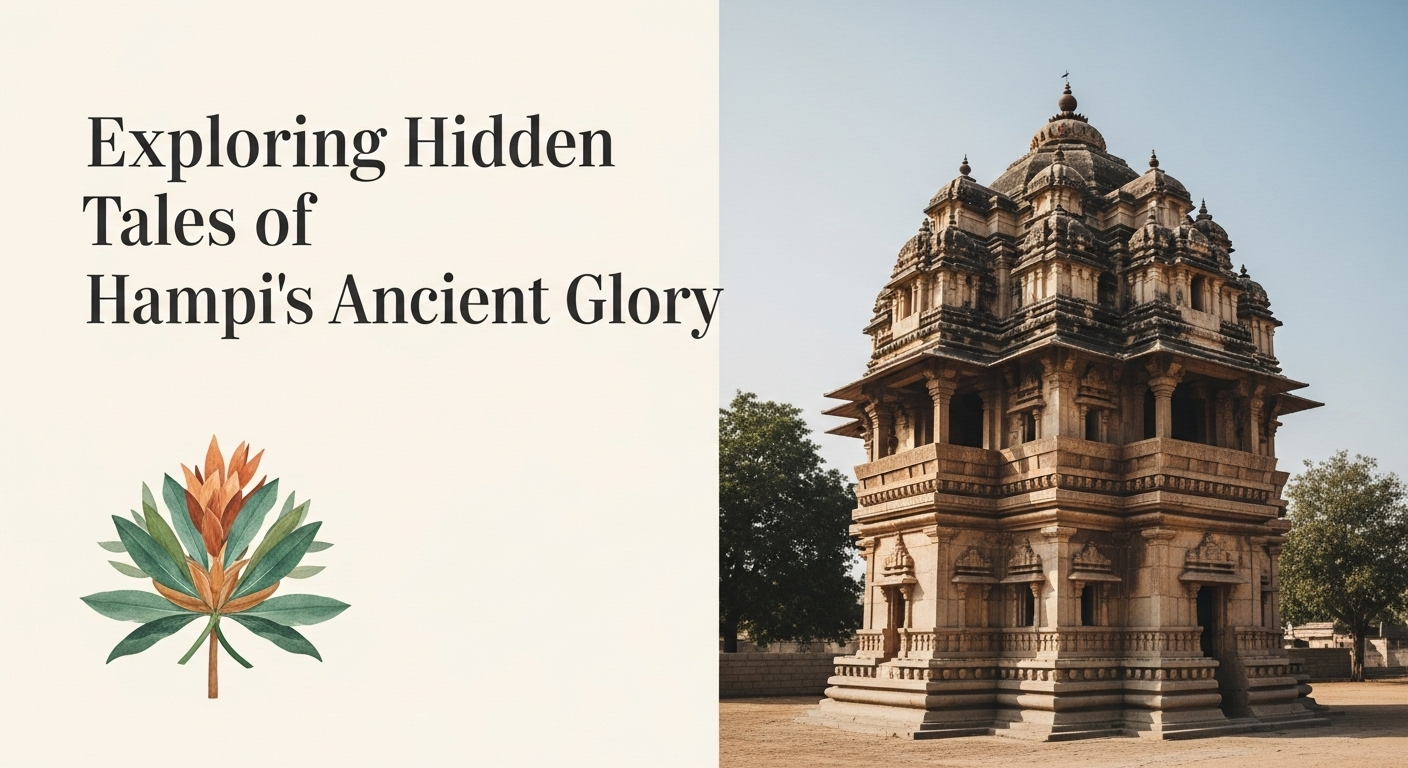
Hampi is a special place in India, known for its 31 amazing attractions. People from all over come to see it. From October to March, it’s the best time to visit. This is because the weather is cool and the land is green. Hampi is a UNESCO World Heritage site. It’s filled with history and the ruins of the great Vijayanagara Empire. But Hampi has more to it. There are ten secrets waiting to be discovered.
People love Hampi for its beautiful art and important history. There are many stories here that many don’t know about. During harvest time, festivals make Hampi Bazaar come alive. The first light of the day on Matanga Hills shows a beautiful view. Sanapur Lake tells stories of old kings. Anjanadri Hill is a place where many come to pray. Hampi tells many stories from India’s past that are yet to be celebrated.
In Hampi, every stone has its own story. It’s more than just ruins. This place is perfect for those who love to discover new things. Hampi’s history and myths fit together perfectly. Visiting Hampi is like going on a journey to India’s past. It shows the creativity and courage of its people long ago.
Key Takeaways
- October to March is the ideal period to delve into Hampi’s historical significance and pristine post-monsoon beauty.
- The region of Hampi boasts 31 attractions, each narrating a distinct chapter of the ancient glory of Hampi.
- Hidden tales of Hampi include little-known gems such as Anjanadri Hill and the intimate narratives of local festivals.
- Cultural and religious significance pervades the landscape, with sites like Matanga Hills offering unrivaled views at dawn.
- Seasonal celebrations and the daily lives of agrarian villages, like Kamalapura, lend insight into the enduring heritage of the UNESCO World Heritage site Hampi.
- Exploring the hidden tales provides a deeper understanding and appreciation for the enigmatic history of Hampi.
The Mysterious Legends of Virupaksha Temple
The Virupaksha Temple in Hampi is full of myths and divine tales. It draws in those who love history and those seeking spiritual insights. This place is more than just for prayer. It holds stories and histories that connect with mysterious stories of Hampi.
Mythical Origin Stories
The beginning of Virupaksha Temple is as fascinating as its legends. It sits in the holy lands of Hampi, said to be blessed by Lord Shiva and Goddess Pampa. Their union brings a sacred feel to the temple, making it key for ancient rituals of Hampi.
Rituals and Ancient Practices
Chants at dawn and glowing lamps at dusk mark Virupaksha Temple’s spiritual events. These are more than simple acts. They show the deep spiritual life in Hampi. Here, the ancient rituals of Hampi go beyond time. They show the spiritual passion that’s been in this place for ages.
Architectural Marvels Unveiled
The Virupaksha Temple’s architecture is amazing. It has a tall tower, detailed carvings, and big yards for worshippers. This temple shows the architectural marvels of Virupaksha. It mixes divinity and design from the Vijayanagara Empire. The careful designs and the stories carved into the stones highlight the craftsmen’s skills.
The stories about the Virupaksha Temple are timeless. They invite those interested in history, architecture, and spirituality. Visiting this temple does more than teach about Virupaksha Temple legends. It takes you through time, to the heart of a civilization that still captures the world’s imagination.
Unraveling the Secrets of Vittala Temple’s Musical Pillars
The Vittala Temple is in historic Hampi. It’s known for its musical pillars. These pillars, when tapped, make musical sounds.
The pillars were not just for fun. They showed technological skills and cultural richness. They are where spirituality meets science.
The Science Behind the Sonic Wonders
These pillars are made of granite. Granite was chosen for its ability to sound notes. This shows the skill of ancient artisans. The Vittala Temple is key for studying old Indian sound science.
Historical Significance and Mythology
The temple is dedicated to Lord Vittala, a form of Lord Vishnu. It’s important in the Vaishnavite tradition. Myths say the pillars made music for the gods.
The temple’s myths add to its charm. Together with the musical pillars, they show the spiritual life of the Vijayanagara Empire. This mix of myth and architecture teaches us about India’s past.
The Enigma of Hampi’s Monolithic Structures
Hampi’s monolithic structures are not just attractions. They tell stories carved in stone. These stories include myths, royal intrigue, and spirituality. The iconic Ugra Narasimha Statue and the Sasivekalu Ganesha are key examples.
The artistry of these structures shows deep understanding. They appeal to everyone curious and scholarly. To see these hidden gems, visit Hampi’s cultural sites.
These wonders are spread across Hampi’s landscapes. From serene lakes near Vittala Temple to the lively Hampi Bazaar during Pongal. Each place adds to Hampi’s wonders, offering an immersive visit.
| Location | Distance/Event | Description |
|---|---|---|
| Sanapur Lake | 2 km from Vittala Temple | Quiet, serene lake behind Hampi’s renowned musical pillars |
| Hampi Bazaar | Annual Event in January | Lively market showcasing local crafts during Pongal festivities |
| Matanga Hill | East of the Royal Centre | Offers panoramic views of Hampi’s sprawling historical site |
Exploring Hampi’s monoliths takes you into its history. From Sanapur Lake to Hampi Bazaar, there’s much to see. Each spot tells part of Hampi’s fascinating story.
The Forgotten Lore of Hampi’s Bazaar
Hampi’s ancient marketplace’s echoes still linger. It was a lively center of the Vijayanagara Empire. Known for its rich stories, it was a key place for cultural exchange. It attracted merchants from all over the world.
These merchants brought exotic goods and their unique cultures. They shared their stories and traditions. This made Hampi’s bazaar a vibrant place of diverse cultures.
Trade and Commerce in the Vijayanagara Empire
Trade in the Vijayanagara Empire was advanced. Many trade routes met in Hampi. The bazaar was famous for silk, spices, gems, and crafts. This attracted traders from places like Persia and Portugal. The trade made Hampi rich and lively.
Cultural Exchange Through Centuries
The marketplace was also a place for cultural meetings. Performers, poets, and philosophers gathered there. Their meetings brought together different cultures. Over time, this influenced local culture, from buildings to food.
Today, visiting these sites gives us a peek into Hampi’s past. For those interested in historical markets in India, this budget-friendly guide offers insights. It explores vibrant markets and their legacies in India.
Learning about Hampi’s Bazaar helps us see the rich history of trade and culture there. It shows how India’s heritage sites, like Hampi’s marketplace, are not just about history. They’re places where history is still alive.
Decoding the Mysteries of Lotus Mahal’s Feminine Essence
The Lotus Mahal in Hampi is a hidden gem. It stuns visitors with its beauty and complex design. This elegant building shows a mix of Hindu and Islamic styles. Its feminine touch shines through its gentle arches, balanced design, and the calm feeling it gives.
In Lotus Mahal, there’s a special lattice work. It let royal women watch the courtyards unseen. This detail points to how women were kept safe and private. It also shows the culture of the Vijayanagara Empire.
Lotus Mahal’s old purposes and tales still puzzle us. People wonder if it was for ceremonies, meetings, or a place for queens to relax. This mystery captures the curiosity of historians and travelers.
Now, Lotus Mahal stands as a symbol of history and art. It’s one of Hampi’s most photographed spots. This place invites us to uncover its hidden stories and celebrate its past achievements.
| Feature | Details |
|---|---|
| Architectural Style | Indo-Islamic with elements of Hindu design |
| Symbolism | Embodies feminine grace and serenity |
| Historical Speculations | Possible uses include ceremonial pavilion or royal women’s observatory |
| Cultural Significance | Represents artistic achievement of the Vijayanagara Empire |
Hidden Tales of Hampi
The ruins of Hampi are a treasure of old stories, wrapping the intriguing folklore of Hampi. Walking through these ruins brings old tales to life. It shows India’s great past in bright colors.
Anecdotes of Lost Civilizations
Hampi’s sights, with big rocks and old buildings, tell the Vijayanagara Empire’s big story. Among these, one can sense the lost civilizations that thrived here. Hampi has tales of great city planning and rich life long ago. It’s a key story in the anecdotes of Vijayanagara.
Tales Etched in Stone
The carvings on Hampi’s temples and ruins tell a lot about ancient life. They show everything from gods to daily life. These carvings are not just art. They are a look into past lives and events, deep in the tales etched in Hampi’s ruins.
Those who love history find many insights in these stories, kept safe in the ruins. Every design and writing tells a tale to discover and share. Hampi is a center of old history and culture. Visitors find stories that touch their hearts, not just pictures.

In the end, Hampi’s ruins draw in history lovers and travelers from all over. Hampi is more than just old stuff to see. It’s a story to live out. It holds the intriguing folklore of Hampi and years of human stories in every bit.
The Enigmatic Kingdom’s Royal Enclosure
Hampi’s Royal Enclosure is truly special. This large area was once full of life with Vijayanagara’s royal homes. It had big audience halls, water features, and grand platforms. Now, it shows us how the kings of Vijayanagara lived in grand style.
The place has the Mahanavami Dibba, a high stone platform. Kings watched festivals and ran their kingdom from here. The design of this big platform shows the wealth of Vijayanagara at its best.
The enigmatic tales of Hampi are many in the Royal Enclosure. Each building has its own important story. They mix myths with the real history of this great empire.
The area also includes the Stepped Tank. It was made for gathering water for the royals and their visitors during big events. This tank shows the skill of the engineers back then.
| Feature | Description | Historical Significance |
|---|---|---|
| Mahanavami Dibba | Elevated stone platform with detailed carvings | Used by kings to observe important festivals and state affairs |
| Stepped Tank | Ingeniously built water structure for royal use | Reflects advanced hydro-engineering and social structure |
| Secret Chambers | Hidden areas within the enclosure | Used for confidential meetings and strategic discussions |
Hampi’s Royal Enclosure shows off Vijayanagara’s amazing architecture. It also tells us about the complex society and politics there. Every part of this large area has exciting stories. It invites all, from historians to travelers, to learn about India’s rich past.
Lost Narratives of the Riverside Ruins
In Hampi, the ruins by the Tungabhadra river tell ancient stories. These places show how sacred and daily life mingled long ago. We see how people and their beliefs lived together, side by side.

Here, old temples and markets stand silent, telling of past times. They show how the Vijayanagara Empire was smart and spiritual. These ruins share stories of busy markets and deep faith under royal and religious care.
Sacred and Secular Spaces Along the Tungabhadra
The ruins by the Tungabhadra river mix sacred and everyday places. There are big temples and old markets where faith and work blended smoothly. This shows how rivers support both spiritual and economic life, reflecting the empire’s peak.
Coracle Stories: Traditions on the Water
In Hampi, traditional coracle boats tell tales of old ways of moving and fishing. These round boats connect to the local culture and community life. They show the cleverness of the people and the importance of the river in the area.
This journey through Hampi’s ruins and coracle traditions reveals more than lost times. It helps us understand how ancient people used nature wisely. Their lives were both spiritually rich and economically smart.
The Spiritual Saga of Anjaneya Hill and Hanuman’s Legacy
Anjaneya Hill sits high atop the vibrant landscapes of Hampi. It’s more than just a hill. It’s a place where myth seems real, touched by the wind itself. Many think this hill is where Lord Hanuman was born. He is a symbol of faith and strength in Hindu stories. This spot draws many devotees into Hampi’s rich pilgrimage traditions. Climbing the hill is a journey through Hampi’s deep spiritual history.
Religious Significance and Pilgrimage Traditions
Chants and temple bells fill the air here. This journey is part of Hampi’s sacred tradition. It’s about finding oneself and showing devotion. With every step, pilgrims dive deeper into stories passed down for ages. This makes the journey special.
Pilgrims come from all over to feel the peace and blessings of Anjaneya Hill. This place helps them feel connected to Hanuman’s strength and loyalty. The views from the top show Hampi’s importance in history. At sunset, everything turns gold, showing the divine in Hampi.
In the end, Anjaneya Hill is more than just a place. It’s a journey into Hampi’s holy stories. The ongoing visits by pilgrims show the hill’s role in worship. They keep Hanuman’s legacy alive in India’s spiritual heart.
Conclusion
The history of Hampi is full of secrets and stories. It’s like the colorful murals in the Virupaksha Temple. The sound of the Vittala Temple’s pillars shares a symphony of stories. Hampi has many temples known around the world. But it also has hidden spots waiting to be found by travelers.
Hampi shows us the great Vijayanagara Empire. It’s as lively as Udupi’s festivals in Karnataka. People who dive into its stories find rich tales. These stories are from long ago.
Every stone and path in Hampi tells a story. These stories are about faith and amazing buildings. Hampi shows us how gods and people come together in sacred places.
It also shows how people visiting for worship helped Hampi grow. Just like rivers meet at the Triveni Sangam, Hampi brings together history, culture, and faith. It welcomes those who seek and those who wonder.
To really know Hampi, we need more than old texts or ruins. We learn from artifacts, writings, and stones. They make Hampi’s history come alive. It’s like a place that teaches us about the past, culture, and faith.
Hampi is unique, offering endless stories. It invites everyone to learn and explore. Its tales keep being told, inspiring all who visit. This city’s stories will always enchant us.
FAQ
What is the historical significance of Hampi?
Hampi is a UNESCO World Heritage site, once the heart of the Vijayanagara Empire. It’s famous for its vast culture, stunning temples, and ancient structures dating to the 14th century.
What are some enigmatic tales associated with the Virupaksha Temple?
The Virupaksha Temple has myths of Lord Shiva and Goddess Pampa’s marriage. It’s also known for ongoing ancient rituals, marking its religious and historical value.
How do the Vittala Temple’s musical pillars work?
The Vittala Temple’s musical pillars make sounds when tapped. They were made from special stones by skilled artisans. This showcases ancient talent and adds to the temple’s mysteries.
What monolithic structures can be found in Hampi?
Hampi is full of huge statues like the Ugra Narasimha and Sasivekalu Ganesha. These amazing sculptures show the Vijayanagara sculptors’ skills and tell tales of the empire’s majesty and faith.
What was the role of Hampi’s Bazaar during the Vijayanagara Empire?
During the Vijayanagara Empire, Hampi’s Bazaar was lively, packed with traders and goods from afar. This market was key to the city’s culture and economy.
What are the mysteries of the Lotus Mahal?
The Lotus Mahal stands out for its beautiful Indo-Islamic design, raising questions about its past. Its elegance suggests many stories and adds to Hampi’s mystery.
Can you tell us an anecdote from Hampi’s lost civilizations?
A story goes that Hampi buzzed with festivals during Mahanavami. Then, music, dance, and parades showed off the city’s riches and arts.
What can one discover at the Royal Enclosure in Hampi?
The Royal Enclosure boasts remains of audience halls and water features from royal times. Visitors see places like the Mahanavami Dibba, learning about the kings’ lives.
What insights do the riverside ruins along the Tungabhadra River offer?
The riverside ruins show Hampi’s two sides: holy temples and old trading spots. Coracle boats on the river keep ancient traditions alive, celebrating Hampi’s history with nature.
What is the significance of Anjaneya Hill in Hampi?
Anjaneya Hill, thought to be Lord Hanuman’s birthplace, is very sacred. It draws those wanting to feel closer to Hampi’s spiritual stories and stunning scenes.