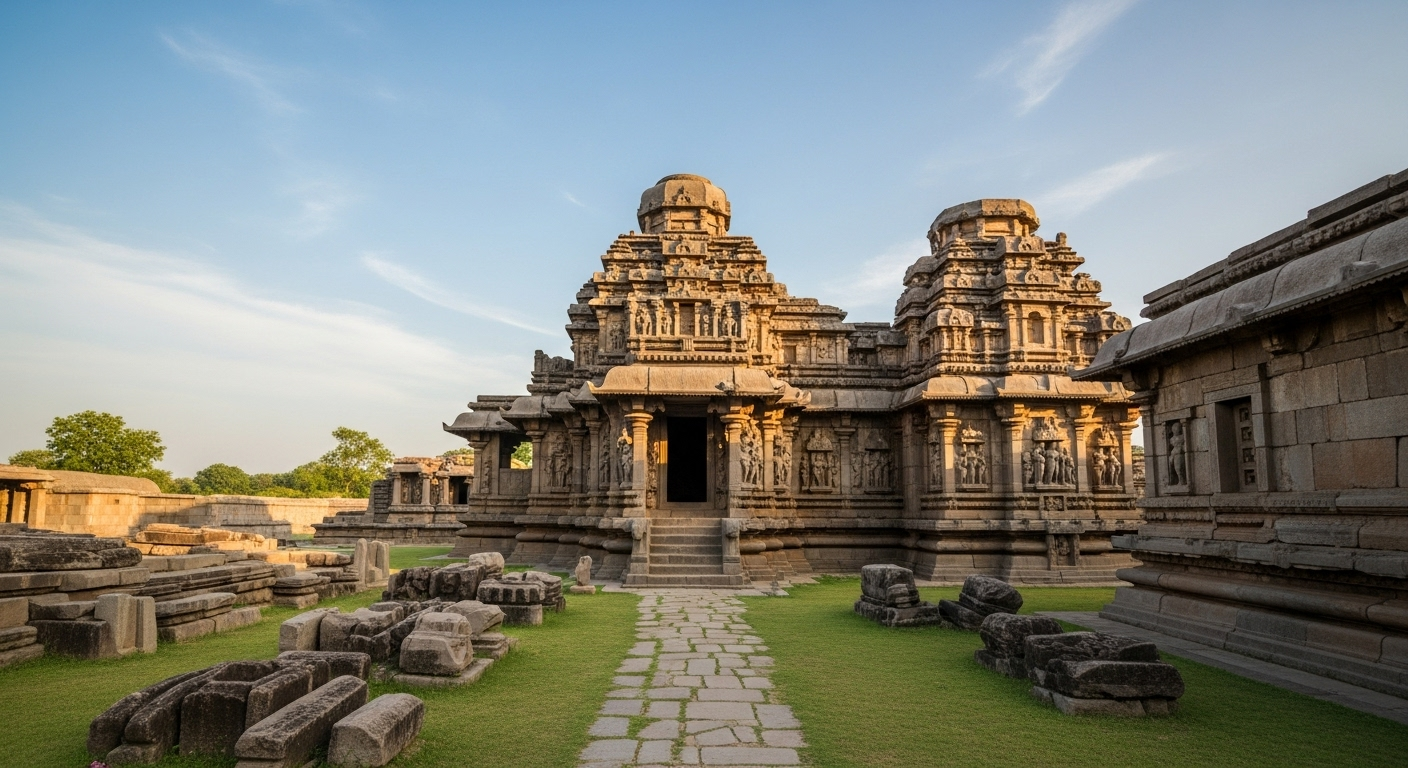
Did you know Aihole in Karnataka, India, has over 120 temples? It’s key to North Karnataka’s heritage. This village in the Bagalkot district shows the brilliance of Indian architecture. It spans from the 4th to the late 13th century.
Aihole was once called Aryapura. It has a rich history and mythological tales. Starting in the 4th century CE, it was the Early Chalukya dynasty’s capital. Legend says Lord Parashurama washed his axe in the Malaprabha River here. The temples display various architectural styles, proving the creators’ genius.
The Durga Temple Complex stands out with about 12 Hindu temples. They date from the 6th to 8th century. Each temple shows a unique architectural style. The Lad Khan Temple is famous for its erotic art and Chalukya motifs. It honors Lord Shiva.
In the 20th century, British rule helped rediscover and restore Aihole’s wonders. Now, it draws historians, architects, and tourists. It’s a place of heritage and culture.
Key Takeaways
- Aihole features over 120 temple complexes, making it vital to North Karnataka’s heritage trail.
- The village dates back to the 4th century CE and was once the capital of the Early Chalukya dynasty.
- The Durga Temple Complex contains approximately 12 temples showcasing diverse architectural styles.
- The Lad Khan Temple is known for its erotic carvings and Chalukya symbols.
- Aihole was restored and recognized for its archaeological significance during British colonial rule in the 20th century.
The Cradle of Indian Architecture
Aihole is known as the “Cradle of Indian Architecture.” It showcases amazing architecture and sculptures. This ancient city was mostly influenced by the Chalukya dynasty from the 4th to 13th century. It has over 125 temples, showing its importance in ancient Indian architecture.
The Birthplace of Temple Architecture
Aihole is seen as where temple architecture began. The Chalukya dynasty built lots of temples here. Early ones date back to the 5th century. An important one is the Lad Khan temple. It has a Shiva Linga and a Nandi statue. Its design inspired many other structures in India.
Early Chalukya Dynasty Influence
Under the Chalukyas, Aihole became a place to try out temple designs. The Durga Gudi and Meguti temple show unique styles from the 8th century and 634 AD. These designs led to important buildings in places like Badami and Pattadakal. Aihole wasn’t just a religious spot. It was key in developing temple architecture across India.
Aihole: An Abode of Temples
Aihole is in the Malprabha river valley, northern Karnataka, known for ancient temples. It’s called a living museum of temple styles. Each temple here is unique and historic. Located 445 km from Bengaluru, it’s a key spot for visitors.
A Multitude of Temples
Aihole has over 120 temples, mixing Hindu and Jain styles. The architecture is varied and beautiful. These monuments offer an insight into different styles, from Chalukyan to Dravidian and Nagara.
Durga Temple Complex
The Durga Temple Complex is important in Aihole. It’s not named after Goddess Durga but means a fort. First for Lord Surya, the Durga Temple has amazing carvings. It’s a well-kept site, visited often by tourists.
Key Temples within Aihole
Aihole has many special temples. The Lad Khan Temple got its name from a Muslim commander. It shows different architectural styles and honors Shiva. Then, the Gaudara Gudi and Konti Group Temples show Chalukyan and North Indian designs. Other key sites are the Suryanarayana Temple and the Ravanaphadi Cave, with lovely Shiva carvings.
| Temple | Significance | Architectural Style |
|---|---|---|
| Lad Khan Temple | Dedicated to Shiva, known for its fusion of styles | Dravidian |
| Durga Temple | Dedicated to Lord Vishnu, celebrated for carvings | Dravidian |
| Suryanarayana Temple | Famous for its 2 feet tall statue of Surya | Nagara |
| Ravanaphadi Cave | Known for intricate adornments dedicated to Shiva | Rock-cut |
| Gaudara Gudi Temple | Part of the experimental temple architecture | Chalukyan |
| Konti Group of Temples | Exquisite panels of Brahma, Shiva, Vishnu | North Indian |
A Fusion of Architectural Styles
Aihole is an important place in India because of its different building styles. It mixes Dravidian architecture, Nagara style, and Chalukyan designs. You can see many beautiful temples with fun details. This place helps us understand how Indian temples changed over time.
Dravidian and Nagara Styles
Aihole’s buildings have the Dravidian style. This means they have strong stone pillars and pyramid shapes. You can see this in old temples like the Lad Khan Temple. The Nagara style adds curvy tower shapes. This mix makes the buildings very pretty.
The Transition to Vesara Style
The mix of Dravidian and Nagara styles created Vesara architecture. Vesara has pyramid shapes and tall, curvy towers. It’s a great mix of the southern and northern styles. The Durga Temple shows this mix well. Aihole was a place where people tried new building ideas. These ideas changed how temples were made all over India. To learn more about the Chalukyas of Badami and their architecture, click here.
Historical Significance of Aihole
The Aihole heritage site is important for history and culture. It was once the capital of the Chalukya kingdom. Here, early Indian temple architecture grew a lot.
It was home to many architectural styles. Aihole also tells many stories from history and myths.
Chalukya Dynasty Capital
Starting in the mid-6th century CE, Aihole was the heart of the Chalukya dynasty. Kings like Pulakeshin I and II made the city great. Their time was Aihole’s golden age for culture and building.
Many temples were built then. Today, their designs and styles tell of the Chalukyas’ lasting impact.
Archaeological Discoveries
Archaeologists found many old things at Aihole. Around 125 temples spread across 22 groups were found. They date back to the 5th century AD.
The Ladh Khan and the famous Durga Temple show amazing craftsmanship. Near the Meguti hills, old sites give clues about ancient people’s lives.
Mythological Connections
Aihole’s stories mix history with myths. The temples and carvings show gods and mythological stories. This adds a spiritual layer to the city.
Gods like Vishnu, Shiva, and Brahma are shown a lot. They make Aihole’s architectural beauty even richer.
| Temple Name | Construction Period | Key Features |
|---|---|---|
| Durga Temple | Late 7th to early 8th century | Elaborate decorations, typical northern Indian architectural features |
| Ladh Khan Temple | About 450 AD | Panchayat hall style, northern style windows, added sanctum |
| Meguti Jain Temple | 634 AD | Early Dravidian style architecture |
| Ravanphadi Cave Temple | 6th century | Carved panels, notable images of Mahishasuramardhini and Shiva linga |
Aihole is special because it brings together building styles and myths. It’s a big part of India’s ancient stories.
Exploring the Experimental Temple Designs
Aihole is known for its ancient building experiments. It is a village in Karnataka, listed by UNESCO. It helped shape the way South Indian temples look. Many temple designs show the skill and creativity of old-time builders.
Innovations in Structure
The Lad Khan Temple stands out with its unique square shape. It’s not like other temples. This shows how builders liked to try new things. Ravana Phadi’s cave shrines show more examples of early ideas in making temples.
Prototype Temples
Aihole had prototype temples for trial and error in building. Builders used them to try out designs and materials. High-quality sandstone was used at Pattadakakal, marking a high point in Chalukya architecture. Dr. Hemanth Kadambi found an etching that suggests there was a sculpture workshop outdoors.
| Temple | Innovative Feature | Remarks |
|---|---|---|
| Lad Khan Temple | Square ground plan similar to a panchayat hall | Deviates from traditional temple layouts |
| Ravana Phadi | Less developed rock-cut shrines | Marks an early phase of cave temple architecture |
| Meguti Jain Temple | Vertical rock face etchings | Indicates an open-air sculpture workshop |
Facts about Aihole
Aihole is an ancient village in Karnataka. It’s famous for its Aihole history and temple designs. It has over 120 temples showing ancient India’s architectural skill.
These temples mix Dravida and Nagara styles and were built from the 6th to 8th centuries. The Lad Khan Temple, made around 450 AD, stands out with its detailed mandapas.
Aihole was important for temple building. Its history can be seen in the many old structures. The Aihole tourism includes the Archaeological Museum. This museum has 381 old items, with 145 on display, from the 6th to 15th century CE.
It offers deep Aihole insights into the area’s art and architecture growth.
One interesting place is the Gaudara Gudi temple, known for its open, rectangular hall. The Ravana Phadi Cave temple from the 6th century is another highlight. It has Lord Shiva figures and a Shiva Linga.
Nearby, the Yeniar shrines include eight temples from the 12th century. They add to Aihole’s historical depth.

The Galaganatha Group of Temples sits by the Malaprabha river. There are 38 temples, mainly for Lord Shiva, dating from the 7th to 11th centuries. For Aihole tourism lovers, the entrance cost is affordable. This lets everyone see these old wonders.
Getting to Aihole is easy by road. Bagalkot and Badami are the closest train stations. Belgaum and Goa have the nearest airports. Aihole has around 45 temples by the Badami Chalukya dynasty and 60 by the Kalyani Chalukya dynasty. Its mix of history and architecture draws those who love history and architecture.
The Famous Meguti Jain Temple
The Meguti Jain Temple sits high on a hill. It dates back to 634 AD. It’s a sign of ancient beauty and religious meaning. Ravikeerti, a Chalukyan emperor’s commander and minister, built it. This temple is special because we know exactly when it was made, in 634 AD.
Jain Pilgrimage Site
The Meguti Jain Temple is essential for Jain pilgrims in Aihole. People come from all over. Old Kannada script inscriptions by Ravikeerti are there. They praise the divine and tell of the Chalukya dynasty’s deeds. The inscription talks about victories over many rival groups, showing the emperor’s strength.
Panoramic Hilltop Views
Located on a hill, this site offers stunning views of Aihole. Visitors see not just the temple, but also many landmarks. The views connect the temple’s spiritual charm to its history and design.
| Aspect | Details |
|---|---|
| Construction | Begun in 634-35 AD |
| Inscription Written by | Ravikeerti in 634 AD |
| Script | Old Kannada |
| Historical Context | Linked to achievements of Chalukya Emperor Pulakesi II |
| Viewpoint | Aihole panoramic views from hilltop |
| Religious Significance | Jain pilgrimage site |
The Meguti Jain Temple is still a highlight of Aihole. It shows the grandeur of a past time. This temple marks an important spot in history.
Aihole: A Living Heritage Site
Aihole is known as the birthplace of Indian architecture. It’s more than just a historic site. It’s a place where Aihole living heritage shines through ongoing spiritual traditions. These traditions have been alive since the 5th century AD. This makes Aihole more than just a spot for tourists. It’s a lively hub of heritage and faith.
Continued Worship Traditions
The temples of Aihole have seen worship for hundreds of years. Today, places like the Durga Temple are still used for worship in Aihole. This keeps Aihole’s religious heart beating strong. It connects the past and present. Aihole’s worship traditions show its lasting legacy. They offer peace and historical insights.

Immersive Visitor Experiences
Visiting Aihole is a unique experience. Visitors travel back in time as soon as they arrive. They see ancient buildings and ongoing religious practices. This offers a look into India’s past. History and living culture merge here. This makes every trip to Aihole personal and enlightening.
Aihole preservation efforts ensure its treasures last. Protecting buildings, inscriptions, and raising awareness are key. These actions highlight Aihole as not just historical but also a vital cultural place.
Rock-Cut Temples of Aihole
The rock-cut architecture of Aihole is a marvel of ancient Indian creativity. The Ravana Phadi Cave Temple is especially amazing. It is a tribute to Lord Shiva, showing detailed carvings of early Dravidian styles. These temples are key to Aihole’s sightseeing, letting people see the area’s rich architectural history.
Carved Marvels
Aihole is known for its early Hindu temples, made between the 6th and 12th centuries CE. The Ravana Phadi Cave Temple is a great example of this art. It lets visitors see the detailed sculptures inside. The carvings inside and outside are a must-see during Aihole visits.
Notable Rock-Cut Temples
The Ravana Phadi Cave Temple is a key site in Aihole. More than a hundred stone and cave temples are in Aihole. There are four main types of rock-cut shrines from the Chalukya period:
- Ravana Phadi Cave Temple – A great example of early rock-cut architecture.
- Durga Temple – Noted for its unique shape and Dravidian influences.
- Hucchimalli Gudi Temple – Shows a mix of structural and rock-cut styles.
- Badami Shivalaya Temple – Though in Badami, it’s linked to Aihole’s rock wonders.
These sites show how temple building evolved from rock-cut to free-standing structures. This change began in the mid-6th century.
| Location | Type | Significant Temples | Era |
|---|---|---|---|
| Aihole | Rock-Cut and Structural | Ravana Phadi, Durga Temple | 6th to 12th Century |
| Badami | Rock-Cut | Shivalaya Temples | 6th Century |
| Pattadakal | Hybrid (Dravida & Nagara) | Virupaksha, Sangameshwara | 7th Century |
Conclusion
Aihole is full of history and beautiful buildings. It started in the 6th century by the river Malaprabha. This place shows the skill of old workers. It has more than 70 temples, each with its own style.
Learning about Aihole shows how South Indian architecture grew. The first temples from around 450 AD started a long history. Places like the Durga Temple and the Lad Khan Temple tell stories in stone. They show the courage, creativity, and faith of that time. Aihole’s story is about being a place where sculptors could try new ideas.
Now, Aihole still draws people who love history, buildings, and travel. The blend of different styles in its temples is special. Even without many new comforts, its old charm is enough. Thanks to the Archaeological Survey of India and locals, Aihole shines as a symbol of culture. It invites people from everywhere to see its endless beauty. Aihole is a key part of India’s historic story.
FAQ
What is Aihole known for?
Aihole is in Karnataka, India. It’s called the “Cradle of Indian Architecture.” Here, you find over 125 ancient temples. Each shows a different design style. They mark the start of temple architecture in India.
Why is Aihole called the “Cradle of Indian Architecture”?
Aihole is special because it started new temple designs. The local artists tried out many styles. They used Dravidian, Nagara, and Vesara types. This helped shape temple building all over India.
What is the significance of the Early Chalukya dynasty in Aihole’s history?
The Early Chalukya dynasty made Aihole their home from the 4th to the 13th century. They were big in South Indian architecture. Their time saw many temples built. These buildings are important to the area’s culture and religion.
What are some notable temples to visit in Aihole?
In Aihole, don’t miss the Durga Temple Complex. It’s known for its carvings and Dravidian style. The Lad Khan Temple mixes design styles. And the Meguti Jain Temple is important for Jains. It has great views.
How does Aihole’s architecture reflect a fusion of styles?
Aihole’s buildings combine many design elements. You see Dravidian, Nagara, and Chalukyan in them. This mix made the Vesara style. It has pyramid shapes from the south and curved tops from the north. This makes the temples unique.
What historical and mythological connections does Aihole have?
Aihole was once the Chalukya Dynasty’s capital. It was important for culture and politics. Myths say Lord Parashurama cleaned his axe in the Malaprabha river here. The place has many temples for different gods.
What kind of architectural innovations can be seen in Aihole?
Aihole tried new things in temple making. Builders tested designs, carvings, and stone use. This led to big changes in architecture. Their work influenced many other temple sites.
How is Aihole significant for Jain pilgrims?
Jain people find the Meguti Jain Temple very important. It’s from the 7th century. The temple is high up and looks over the old town. It has writings about the Chalukya dynasty’s work.
Is Aihole still an active religious site?
Yes, many temples in Aihole are still used for worship. People follow old traditions here. This makes Aihole both a historical and a holy place.
What are some of the notable rock-cut temples in Aihole?
The Ravana Phadi Cave Temple stands out in Aihole. It’s for Lord Shiva. The temple shows early Dravidian style through its carvings. Aihole’s skill in rock-cut architecture is clear here.