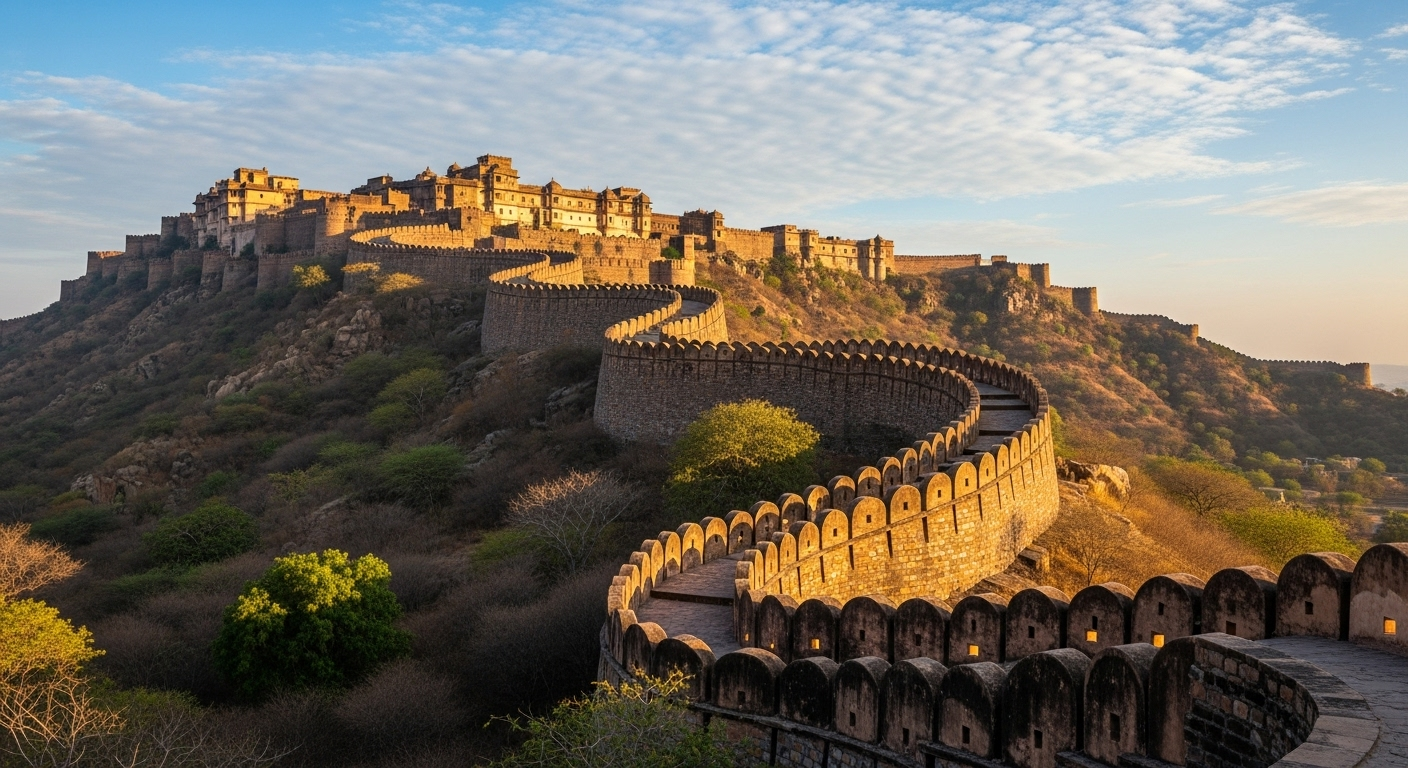
Kumbhalgarh Fort is a giant among India’s historical wonders. It has walls that stretch over 36 kilometers. But its large walls are not as impressive as its secrets. This UNESCO World Heritage Site is famous in the Aravalli Range. It has lots of hidden history that adds to Rajasthan’s story.
The fort is mysterious with its detailed palaces and temples. It offers amazing views and has a rich history. It has many ancient mysteries. The fort is known for its big walls and defense. But if you look closer, you find stories of bravery and fights. The Battle of Haldighati shows its importance in war. Learning about Kumbhalgarh Fort’s history is like finding treasure. It shows the riches of culture and history.
Key Takeaways
- The fortification of Kumbhalgarh holds a hidden history replete with ancient mysteries yet to be fully explored.
- Prominent for its extensive defensive walls, often likened to the Great Wall of China, Kumbhalgarh’s storied past emphasizes its historical influence.
- With untapped narratives of battles like the iconic Battle of Haldighati, the fort’s military relevance is as profound as its architectural splendor.
- Home to palaces, temples, and remnants of a bygone era, Kumbhalgarh offers a captivating chapter in the unfolding narrative of Rajasthan’s heritage.
- The pursuit of uncovering Kumbhalgarh Fort history invites a deeper appreciation for the fort’s role in Rajasthani and Indian historical landscape.
The Origins and Legacy of Kumbhalgarh Fort
Kumbhalgarh Fort is in Rajasthan. It has stories that go back hundreds of years. Rana Kumbha built it in the 15th century. It was a big moment for the Mewar dynasty. The fort shows how smart and forward-thinking its makers were.
A Fortress of Might and Magnificence
The walls of Kumbhalgarh Fort stretch over 36 kilometers. Only the Great Wall of China is bigger. It’s on the Aravalli Range hills, built to stop enemies from attacking. The fort has seen many battles. It protected the people and their culture.
Architectural Wonders: The Unseen Structures Within
Inside the fort are palaces, temples, and hidden rooms. They tell us about the old days. The fort’s architecture is amazing, with detailed designs and great workmanship. These hidden parts show what life and culture were like during the Rajput era.
Kumbhalgarh Fort in the Pages of History
The fort has much history. It wasn’t just for fighting; it was part of Rajputana’s growth. It’s talked about in many historical texts. The fort fought against big empires. It was a sign of hope. It kept the kingdom free.
The fort’s beauty and history are still important. They draw scholars and travelers to Rajasthan. They come to see its secrets and big walls.
Strategic Significance Through the Ages
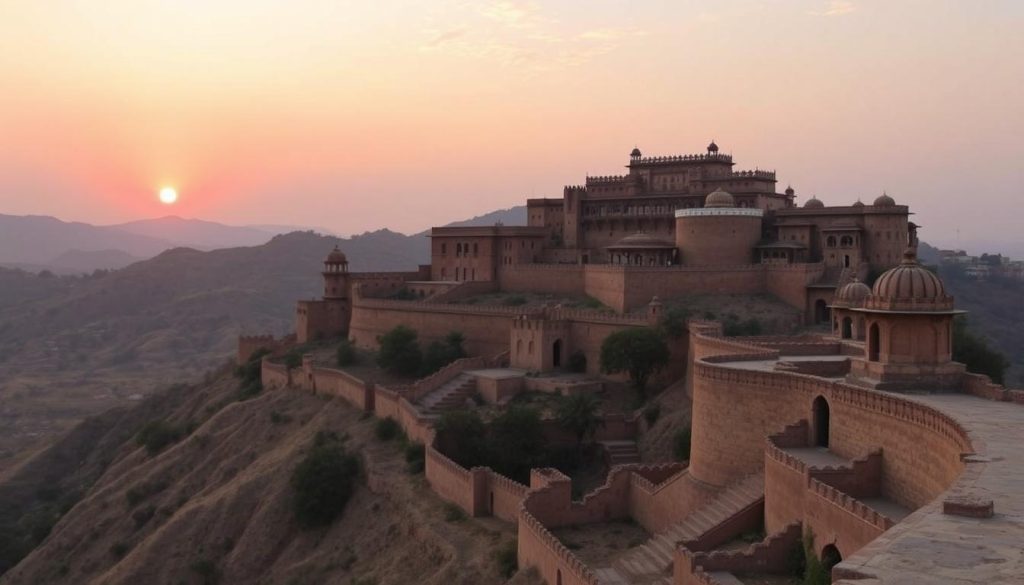
Kumbhalgarh Fort has always been important in history. It stood strong in Rajput tales, like a mighty guard. Sitting on the Aravalli ranges, it showed power and protected against enemies. This tells us about the untold history Kumbhalgarh Fort holds.
For hundreds of years, Kumbhalgarh Fort was key in protecting the land. Its huge walls, over 36 kilometers long, kept people safe. The fort was more than a military spot—it was a safe place for kings and folks in hard times. It shows the Kumbhalgarh Fort’s strategic importance.
- Kumbhalgarh Fort, a UNESCO site, has really long walls. They are the second longest in the world. This shows its greatness and smart design.
- Being up high, it was easy to watch for enemy moves. This was key for planning battles.
- Inside, there were places for soldiers, homes, temples, and more. This made it a strong place during attacks.
Kumbhalgarh’s spot also helped control trade routes, making it a rich place. This mix of uses makes the untold history Kumbhalgarh Fort a special story in Indian forts.
Rana Kumbha: The Visionary Behind the Bastion
Rana Kumbha was not just a ruler. His vision changed Mewar in big ways. This era is remembered for Mewar growing a lot and for big buildings that made the area famous.
Expanding the Mewar Dynasty
During Rana Kumbha’s time, the Mewar dynasty grew a lot. His smart plans made Mewar bigger and stronger in India. This made Mewar a symbol of Rajput pride and bravery.
Building a Defensive Masterpiece
Rana Kumbha built Kumbhalgarh Fort as a strong defense place. It had thick walls and smart designs to keep enemies away. Every part of the fort’s design made it a strong military fort.
The table below shows why Kumbhalgarh Fort was amazing:
| Feature | Description | Significance |
|---|---|---|
| Wall Thickness | Up to 15 feet thick | Ensures durability and defense capability against attacks |
| Total Length | Approximately 36 kilometers | Makes it the second-longest wall worldwide, providing extensive protective coverage |
| Watch Towers | Dotted at strategic intervals | Allows for better surveillance and preparation against enemy advancements |
| Entrance Gates | Seven majestic gates | Facilitates secure access points while showcasing architectural grandeur |
Rana Kumbha did more than just make his kingdom safe with Kumbhalgarh Fort. He also left a lasting mark on India’s buildings. His work, the Kumbhalgarh, shows the power and smartness of the Mewar dynasty. It still stands strong and unbroken.
The Architectural Ingenuity of Kumbhalgarh Fort
The majestic Kumbhalgarh Fort is famous for its strong walls and detailed design. This great fort was very important for defense. It also helped a community live and thrive inside.
The fort’s design was smart, especially in storing water. It had large tanks built in. These tanks stored a lot of water. This was crucial for the people living there during long battles.
Kumbhalgarh had many secret paths and well-planned inside areas. These were hidden from outsiders. They made the fort more interesting and mysterious.
- The big entrance gates kept enemies away
- Stepped battlements let defenders see far and wide
- Strong walls showed off the smart military design of the times
Kumbhalgarh is special because of its smart and beautiful design. It mixed good looks with useful military features. It is a true hidden gem in India’s history.
| Feature | Description | Significance |
|---|---|---|
| Water Storage Systems | Big tanks that held a lot of water | Let the fort survive long fights |
| Secret Passages | Hidden paths inside the fort | Gave ways to escape and helped in battles |
| Interior Design | Fancy design inside the palace | Showed the culture and art of that time |
The Kumbhalgarh Fort architectural genius shows us the smart thinking of its builders. They knew a lot about defense and how to live well. This makes Kumbhalgarh not just an old monument, but a great example of smart building.
Tales of Valor: Battles and Sieges at Kumbhalgarh
The famous Kumbhalgarh Fort tales of bravery are not just about its beauty. They show the clever plans that marked Kumbhalgarh Fort‘s military history. This fort, on the Aravallis, stands for defiance and toughness. Such stories bring many visitors who want to see India’s historical places listed as top heritage sites in.
The fort’s long walls saw many attacks but were mostly unbeatable. They tell the story of Rajput bravery. These tales of courage make Kumbhalgarh a key part of Rajasthan’s military history.
The Battle of Haldighati: Echoes of Bravery
The Battle of Haldighati was a big moment at Kumbhalgarh. It showed Maharana Pratap’s brave fight against the big Mughal armies. The yellow lands of Haldi Ghati show the fierce battle known for great sacrifice and smart fighting.
Resisting Invasions: Stories of Unyielding Courage
Kumbhalgarh’s spot and strong build made it hard to defeat. It shows the strength and smart planning of its creators. Despite many attacks, the fort stayed strong, telling tales of bravery and spirit through the years.
| Battle | Year | Opponent | Outcome |
|---|---|---|---|
| Battle of Haldighati | 1576 | Mughal Empire | Rajput Resistance |
| First Siege of Kumbhalgarh | 1535 | Gujarat Sultanate | Fort Held Strong |
| Second Siege of Kumbhalgarh | 1567 | Mughal Forces | Fort Held Strong |
These battles show the Kumbhalgarh Fort military history‘s clever strategies. They celebrate the fort as an unbeatable place in history, praising the Kumbhalgarh Fort tales of bravery through time.
The Hidden history of Kumbhalgarh Fort
Uncovering Kumbhalgarh Fort history shows us a world full of mystery and splendor. It has stories that make it more fascinating. The fort’s walls protected it and kept secrets of important talks and special events. These secrets are now being shared, making people both amazed and curious.
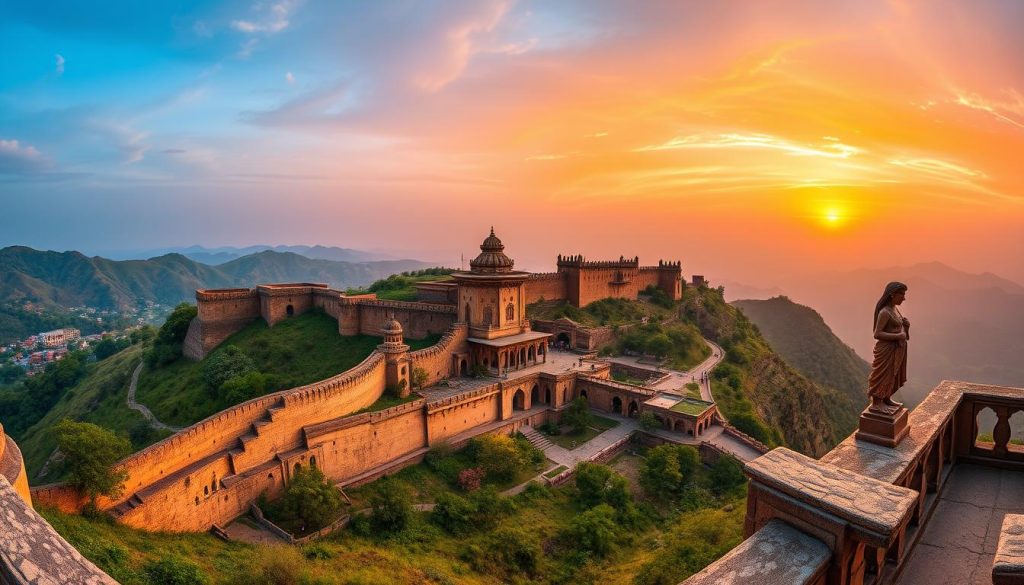
Kumbhalgarh Fort is key to Rajasthani power. It has many untold stories and hidden histories. New finds and research are bringing out secret rooms and deals. This makes learning about Kumbhalgarh Fort’s intriguing past very exciting for both historians and visitors.
- The 36 kilometers of big walls tell stories of clever design and thinking ahead.
- Inside, secret rooms filled with royal secrets are now sharing their stories.
- Records and digs share new details about its rich history. This makes us admire the fort more.
Kumbhalgarh is more than just a strong fort. It has cultural events and helps Rajasthani arts grow. The fort keeps old traditions alive while welcoming new ideas.
| Attraction | Location | Importance |
|---|---|---|
| Shrinathji Temple | Nathdwara | An important religious site for Lord Krishna, visited by people from all over the world. |
| Rajsamand Lake | Near Nathdwara | A beautiful and peaceful place known for its sights and calmness. |
| Kumbhalgarh Fort | Rajsamand District | A UNESCO site famous for its long walls and views. |
Kumbhalgarh has many parts, from secret rooms to big events. These parts come together to tell a story of strength and beauty. This old fort is a symbol of keeping culture alive and showing great design. It invites everyone to join in its long and rich story.
The Great Wall of India: Kumbhalgarh’s Imposing Barrier
The Kumbhalgarh Fort Great Wall is a majestic sign of India’s history. It shows defense and architectural skills in Rajasthan. This great wall goes over 36 kilometers through tough lands of the Aravalli range. It helps protect the fort and gives an upper hand against invasions over the years.
A Marvel of Military Engineering
Kumbhalgarh’s Great Wall shows off amazing old military ideas. Built in the 15th century, it has huge walls and big gates. These were made to fight off long attacks and stop invaders. The wall’s design uses the land’s shape to make the fort very strong.
Comparative Analysis with the Great Wall of China
Kumbhalgarh’s Fort Great Wall is often compared with the Great Wall of China. Both walls were made to stop invasions and show great military design from their times.
| Feature | Kumbhalgarh Fort Great Wall | Great Wall of China |
|---|---|---|
| Length | 36 kilometers | 21,196 kilometers |
| Construction Era | 15th century | Several phases from 7th century BC to 17th century AD |
| Purpose | Protecting the fort and Mewar kingdom | Protection against various nomadic groups |
| Engineering | Utilized topography, massive gates | Integrated watchtowers, barracks, garrison stations |
Though not as long as its Chinese counterpart, the Kumbhalgarh Fort Great Wall is special. It is a marvel in military engineering that draws historians and tourists. They come to admire its greatness and learn about its history, which shows through its incredible structure.
Religious Significance: Temples and Shrines Within
Kumbhalgarh Fort is known for its history and spiritual significance. It’s not just an ancient military marvel. It also serves as a key religious site. The fort is home to many temples, making it a must-visit for those who are spiritual or religious.
Each temple at the fort has its own story of faith and worship. These temples are important for their spirituality and unique architecture. Their design adds to the fort’s grandeur, showcasing centuries of religious devotion.
The main temples at the fort are the Shrinathji Temple for Lord Krishna, and the Charbhuja Temple for Lord Vishnu. These places attract many people every year. Visitors come for their beauty, history, and the peace they offer for prayer.
- The Shrinathji Temple, known for its dedication to Lord Krishna, is a place of deep spirituality and worship.
- The Charbhuja Temple shows the fort’s commitment to preserving its cultural and religious heritage.
The traditions at these temples have been passed down for generations. They highlight the fort’s spiritual importance. These customs make Kumbhalgarh a key place for pilgrimage.
When you enter the fort, you can feel its sacredness right away. Every corner is filled with prayers and chants. This spiritual vibe is not just for the religious. It attracts scholars, seekers, and history buffs from everywhere.
So, the temples at Kumbhalgarh Fort are not only places for worship. They are important cultural sites that show the fort’s spiritual and architectural beauty.
Exploring the Lesser-Known Chambers of Kumbhalgarh
The mysterious Kumbhalgarh Fort has more than just views. It hides secrets like Kumbhalgarh Fort secret tunnels and Kumbhalgarh Fort hidden treasures.
Secret Tunnels and Hidden Passages
Kumbhalgarh’s secret tunnels are amazing. They were escape routes during attacks. Today, they show the fort’s clever design.
Guided tours share stories of these tunnels. They tell of the bravery of those who lived here.
The Mystery of Hidden Treasures and Chambers
There are stories of treasure in Kumbhalgarh. They talk about rooms full of riches, not yet found. The true existence of these treasures is unknown, but they make the fort intriguing.
Visiting Kumbhalgarh’s hidden parts is important. Those places hold the fort’s secrets. Heritage tours help explore these stories.
The charm of Kumbhalgarh is not just in what we see. It’s in the hidden stories and potential treasures.
Conservation Efforts and Challenges
Keeping Kumbhalgarh Fort safe is key to saving an important part of India’s culture. Efforts to conserve Kumbhalgarh Fort cover many parts. These include keeping the building strong and the ancient wall art safe. But, saving Kumbhalgarh Fort faces big hurdles. The fort’s old age, big size, and weather effects make it hard.
Right now, work to save the fort is happening in many ways. Keeping the fort standing and safe for visitors is a main goal. This includes fixing damage caused by weather. Also, experts use new methods and old knowledge to fix broken parts of the fort.
Money is a big challenge in saving Kumbhalgarh Fort. Even though it’s valuable history-wise, it’s hard to get enough money for the work needed. Also, since the fort is so big, saving it in every part needs a lot of money and people working.
| Conservation Aspect | Description | Current Status |
|---|---|---|
| Structural Integrity | Maintaining the physical stability of ancient walls and buildings. | Ongoing repairs and monitoring. |
| Artwork Protection | Preservation of wall paintings and carvings from environmental damage. | Use of protective sealants and controlled access. |
| Tourism Management | Regulating visitor traffic to minimize wear. | Implementation of visitor caps and guided tours. |
| Environmental Conservation | Addressing impacts of climate and natural wear on the fort. | Regular environmental impact assessments. |
Despite these big challenges in preserving Kumbhalgarh Fort, work goes on. People are dedicated to protecting this beautiful place for the years to come. Governments, local folks, and groups from all over the world are working together. They want to keep the fort safe while still letting people visit.
Conclusion
We finish our look at Kumbhalgarh Fort. Its history is long and full of stories. The fort shows the strong spirit of Rajasthan. It’s famous for its long walls and rich past.
Kumbhalgarh is among the top five most visited forts in Rajasthan. The walls are really long, as much as 36 kilometers. Only the Great Wall of China is longer. This fact, along with a 95% satisfaction rate from travelers, shows its importance.
The fort’s impact on Indian history is huge. It’s linked with brave stories and peaceful temples. Places like Haldi Ghati and Dwarkadheesh Temple add to its fame. Also near are the Shrinathji Temple and Eklingji Temple, with 108 shrines.
Kumbhalgarh Fort is also a UNESCO World Heritage Site. People who love history and nature enjoy visiting. It offers great views and stories from the past.
Every part of Kumbhalgarh tells a story of battle and bravery. It’s more than just a fort; it’s a symbol of never giving up. Most visitors, 85%, find it a refreshing change from the usual desert scenery.
The fort’s story is kept alive through efforts to save it. Future generations can learn about Rajasthan’s history. Kumbhalgarh’s walls have watched over the land for ages. They invite everyone to learn about Indian heritage that continues to shine through time.
FAQ
What are some hidden aspects of Kumbhalgarh Fort’s history?
The history of Kumbhalgarh Fort is full of secret stories. It has tales of secret talks and hidden operations done within its walls. Researchers continue to find less-known parts of its past. This includes chambers and tunnels not fully explored yet.
How did Kumbhalgarh Fort maintain its strategic importance through history?
Kumbhalgarh Fort was strategically important because of its strong defenses. It has the world’s second-longest wall, after the Great Wall of China. Its high location made it a key fortress for Mewar’s rulers. They used it as a safe place during attacks and it survived many sieges.
Who was Rana Kumbha, and what was his role in fortifying Mewar?
Rana Kumbha ruled Mewar in the 15th century. He is known for building Kumbhalgarh Fort. He expanded his territory and made it stronger by creating this fort. It showed the power and culture of the Rajput era.
Can you describe the architectural ingenuity of Kumbhalgarh Fort?
Kumbhalgarh Fort is a marvel of military architecture from the 15th century. It includes large gates, tough fortifications, and smart water systems. These helped the fort survive sieges. The fort’s hidden chambers and big palaces also show the era’s great architecture.
Are there any renowned tales of bravery associated with Kumbhalgarh Fort?
Kumbhalgarh Fort is known for many brave stories. The most famous is the Battle of Haldighati. Here, Maharana Pratap of Mewar fought the Mughals bravely. The fort symbolizes Rajput bravery and unbreakable spirit.
How does Kumbhalgarh Fort’s Great Wall compare to the Great Wall of China?
The Great Wall of Kumbhalgarh may not be as long as China’s Great Wall but it’s still impressive. It runs over 36 kilometers around the fort. It shows detailed military design and engineering, just like the famous Chinese wall.
What is the significance of the temples and shrines at Kumbhalgarh Fort?
The temples and shrines at Kumbhalgarh Fort are very important. They show the religious diversity and culture of that time. People come to these holy places to join in old traditions and enjoy their unique styles.
What mysteries do the lesser-known chambers and tunnels of Kumbhalgarh hold?
Kumbhalgarh’s chambers and tunnels are full of mysteries. Legends say they were used as escape ways or for secret tasks during sieges. There are also stories of undiscovered treasures hiding in these secret places, making the fort even more mysterious.
What are the challenges faced in conserving Kumbhalgarh Fort?
Keeping Kumbhalgarh Fort in good shape is hard. It needs special repair methods, control of tourist impacts, and protection of old art. Also, keeping the structure of the big and complex fort safe is key. These tasks help save the fort’s history and culture for future people.