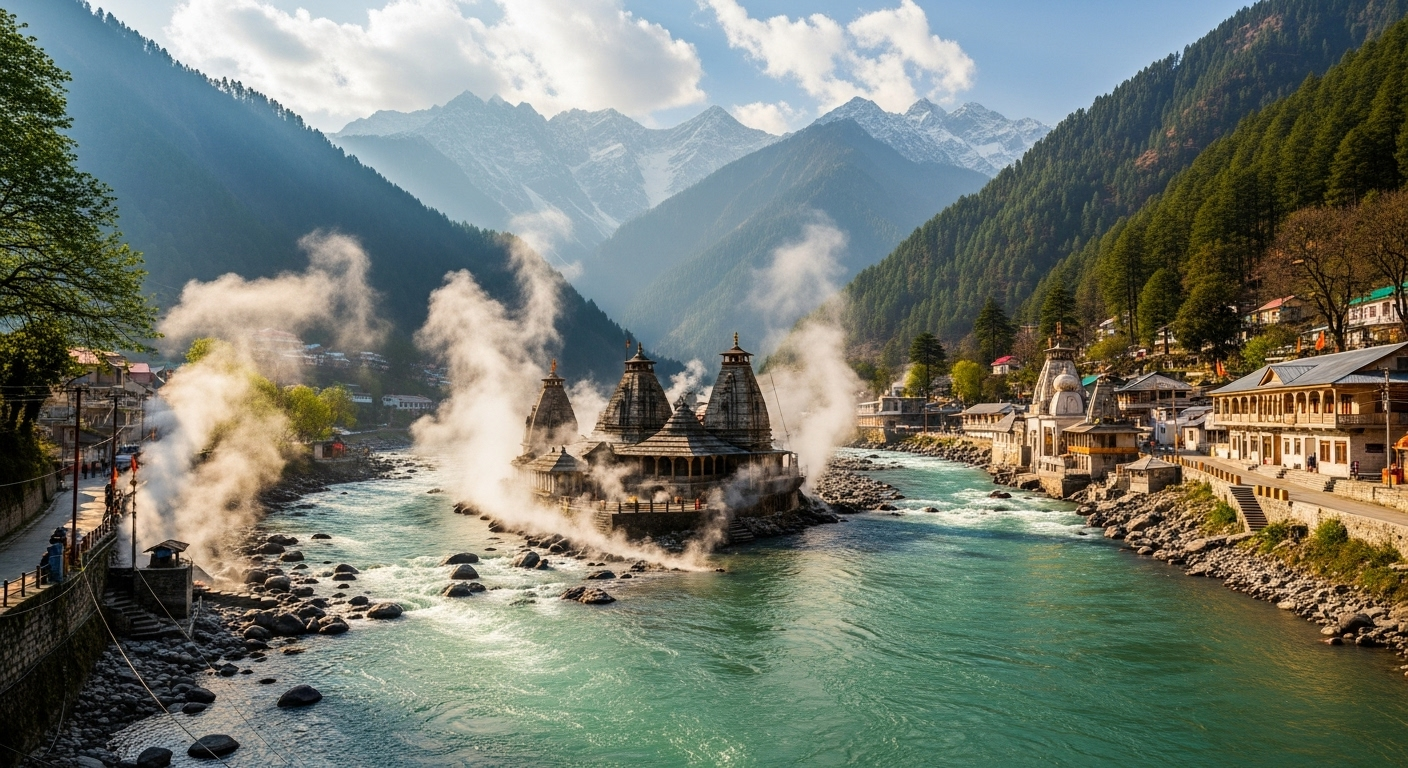
Imagine a place where ancient buildings stand tall among peaceful landscapes. This place is Manikaran, home to the Lord Ramchandra Temple. Built by Raja Jagat Singh, it’s a unique site where spirituality meets heritage. But Manikaran has more to offer, including hidden facts that catch the interest of travelers worldwide. Thermal springs and sacred stories are just the start of what makes Manikaran so special.
The Lord Shiva Temple in Manikaran symbolizes spiritual strength. It stood strong through the 1905 earthquake. This area shows the power of history, nature, and faith together. It welcomes those looking for adventure or peace.
Manikaran is full of secrets for those ready to listen. Its Great Himalayan National Park is a World Heritage site full of life. As the day ends, Manikaran changes colors, leaving memories for all its visitors.
Key Takeaways
- Manikaran, with its unique pyramidical temples, is a sanctuary of ancient spirituality and natural beauty.
- The resilience of monuments such as the Lord Shiva Temple highlights the enduring spiritual significance of Manikaran.
- Manikaran’s thermal springs and picturesque mountain vistas offer a holistic experience of rejuvenation and discovery.
- The Great Himalayan National Park, part of Manikaran’s domain, is an ecological treasure attracting adventurers and nature enthusiasts.
- Manikaran’s enigmatic blend of culture and nature provides a profound narrative that enriches every visitor’s experience.
Exploring Manikaran’s Location and Natural Splendor
Manikaran is in the beautiful Parvati Valley. It mixes natural beauty with peaceful spirituality. Visitors love its serene vibe. They enjoy the Parvati River’s sounds and the Himalayas’ views. The Manikaran hot springs are famous. They’re known for healing.
Embracing the Serenity of the Parvati Valley
Manikaran is set in Parvati Valley’s beauty. The valley runs along the river. It reaches up over 5,000 meters, showing off great views and calm feels. Tosh and Chalal are there too. They offer peaceful hikes and nature time.
The Thermal Springs: Nature’s Spa
The hot springs in Manikaran are special. They are known for healing. People from everywhere come to see them. These springs have minerals that help with many sicknesses. They are important to local beliefs too.
Stunning Vistas: Mountains and River Landscapes
The big Himalayas mountains surround the area. They make a great view with the Parvati River. This mix brings wildlife and seekers of peace. You can walk by the river or try hikes like Sar Pass. Each offers a special way to see the valley’s beauty.
Cultural Fusions: The Religious Significance of Manikaran
The holy town of Manikaran is in the beautiful Parvati Valley in Himachal Pradesh, India. It shows how Sikh and Hindu beliefs come together. This makes Manikaran a special place of worship and peace.
Sacred Sikh History: The Footprints of Guru Nanak Dev Ji
Manikaran is a sacred place for Sikhs because Guru Nanak Dev Ji visited it. He and his disciple Bhai Mardana made a hot spring here. This story is a big part of Sikh religion. Many people come here to wash in these waters and feel close to their faith.
Hindu Myths and Temples: Shiva’s Abode
Manikaran is also important for Hindus. They believe Lord Shiva and Parvati stayed here. The town has many temples, like the Ram Mandir and the Shiva Temple. These places are beautiful and draw many Hindu pilgrims.
Community Harmony: Interfaith Celebrations
In Manikaran, Gurudwaras and Temples stand close to each other. This shows how well Sikh and Hindu people get along. Both groups share their celebrations. This mix of cultures makes Manikaran special and inspiring.
Manikaran’s hot springs are famous for healing. Pilgrims of different beliefs bathe in them. They do their own prayers but share the same faith. This brings them together.
Manikaran is important for both Sikhism and Hinduism. It is a place of unity and cultural mix. Manikaran teaches us about tolerance and the beauty of diversity.
Hidden facts about Manikaran
Manikaran is known for its spiritual value and hot springs. But many miss out on the Manikaran interesting facts that make it special.
One of the best Manikaran facts is how it got its name. It’s linked to a story about Goddess Parvati’s lost jewel (Mani). It was found here, showing the area’s spiritual importance.
There are also tales and customs among the locals. Besides being a place for religious trips, Manikaran attracts those who love culture and history. This makes it full of Manikaran lesser-known facts.
Here are some interesting things about Manikaran:
- The town is near the powerful Parvati River. This shows its amazing setting and mythological tales.
- The weather in Manikaran is unique. There are boiling hot springs even with snow around.
- The local food is special. It’s cooked in natural hot springs. People say this makes the food healing.
When you visit Manikaran, you start a spiritual and cultural adventure. You’ll hear stories and follow rituals that are very old. This connects you deeply to the place. It’s not just about the views but also learning about its past and spirit.
If you come for faith or curiosity, Manikaran offers a journey of surprises. It’s the best Manikaran facts that make your trip memorable.
Hot Springs and Geothermal Activity: Unraveling the Mystery
The Manikaran hot springs in Himachal Pradesh are a beautiful natural sight. They show us how geothermal energy works. Located in the peaceful Parvati Valley, they attract many people every year. The water is heated deep under the ground, showing how active the earth’s crust is.
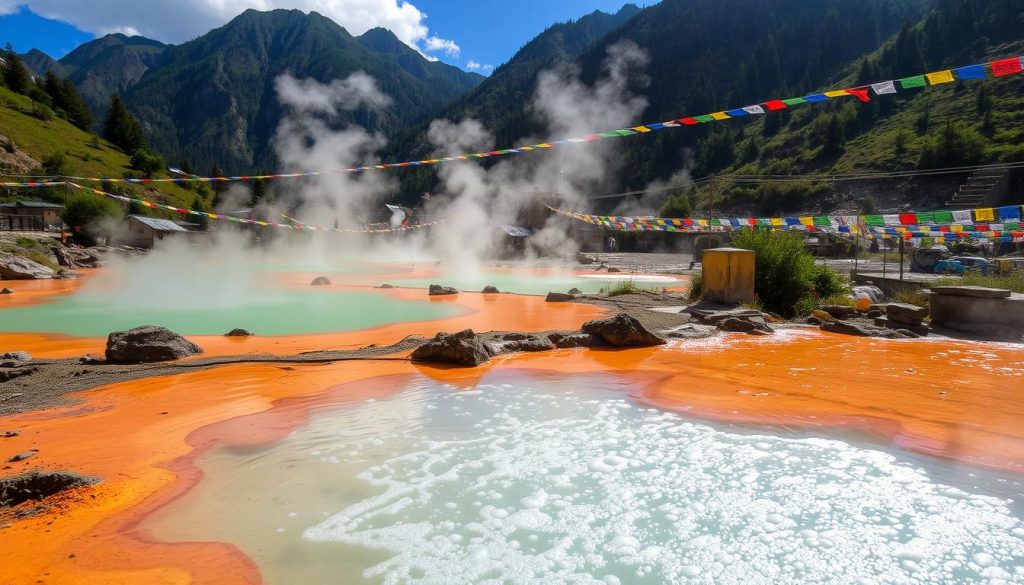
The water in these springs can get very hot, sometimes even boiling. This natural wonder is possible because of the area’s geothermal activity. Manikaran is special because people can easily visit these springs. They are important in the local culture and are sacred in Hindu and Sikh religions.
These springs are more than just a beautiful place. They are also thought to have healing powers. This makes the Manikaran hot springs a must-visit. People come for the beautiful scenery, spiritual meaning, and health benefits.
- Therapeutic Uses: People bathe in the hot spring water for its healing effects. It is believed to help with skin and joint problems.
- Spiritual Significance: The springs are important in both Hindu and Sikh stories. They are linked to tales of gods and heroes, adding to their spiritual value.
- Geological Interest: Manikaran is interesting to scientists for its geothermal activity. It offers great insight into the earth sciences.
Manikaran hot springs are a key part of Himachal Pradesh’s natural beauty. They remind us of the earth’s power and the wonders it shares with us.
Architecture and Ancient Wonders of Manikaran
Manikaran is a small town in the Himalayan foothills. It is full of architectural styles and history. This makes it perfect for people who love culture or history. The town has the sacred Gurudwara Manikaran Sahib and many old stone buildings. These show Manikaran’s mix of strength and beauty.
The Historical Gurudwara Manikaran Sahib
The Gurudwara Manikaran Sahib is important for its spirit and design. It has been a spiritual place for Sikh pilgrims. The building stands strong by the Parvati River. It has lasted through tough times. People from all over come to see its beauty and find peace.
Rustic Charm: The Old Stone Structures
Manikaran has many old stone buildings. They tell stories from the past. These buildings show the history of Manikaran’s people. The way they are made shows the skill and creativity of local builders from long ago.
Looking at Manikaran’s buildings shows how special it is. Let’s compare Manikaran Sahib Gurudwara to other famous places in Himachal Pradesh:
| Location | Distance from Manikaran | Unique Architectural Feature |
|---|---|---|
| Chamunda Devi Temple | 22.5 km | Traditional Hill Architecture |
| Shri Kalinath Kaleshwar Mahadev Temple | Nearby, by the Parvati River | Open-air structural design |
| Baijnath Temple | Within a few hours’ drive | Ancient North Indian Nagara Style |
| Tashi Jong Monastery | Considerably close | Tibetan Architectural Elements |
| Masroor Rock Cut Temple | Accessible by a day’s journey | Monolithic Rock-cut Architecture |
Each building in the list shows Himachal Pradesh’s architectural variety. They show how people used natural resources cleverly. The Gurudwara Manikaran Sahib is a key spot. It stands as a place of ancient wonders and peace in the Himalayas.
The Power of Healing: Manikaran’s Medicinal Beliefs
In the heart of Himachal Pradesh, Manikaran springs are famous. They’re known for their religious importance and healing properties. These hot springs are linked with many medicinal beliefs. People have been coming here for years to get better.
The Manikaran springs’ water is full of sulfur. This helps with skin issues and arthritis. The mix of heat and minerals is what makes these springs so healing.
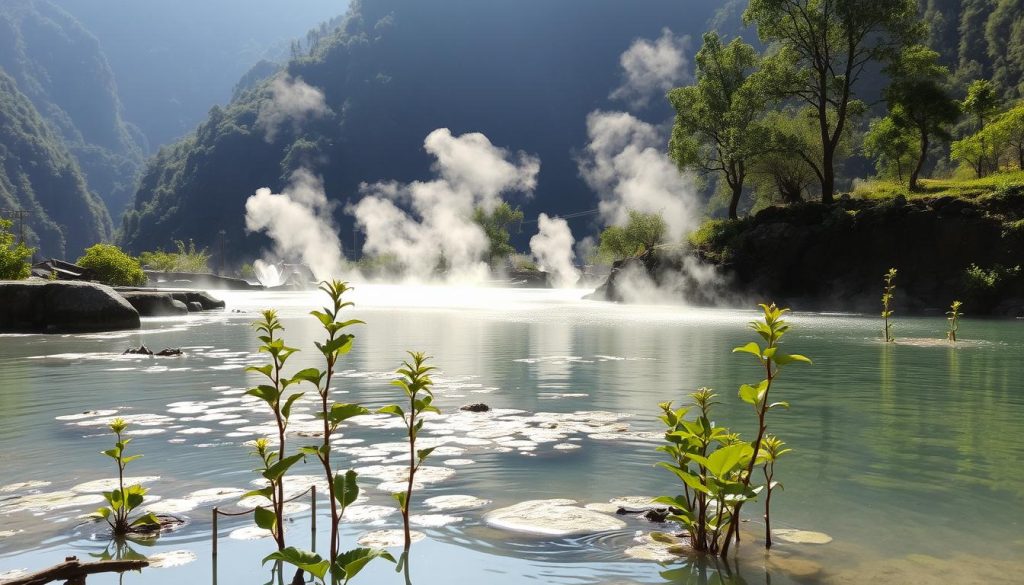
- Manikaran springs are thought to possess curative properties that alleviate skin conditions and improve joint health.
- The warmth and buoyancy of the waters are touted to offer muscular relaxation and reduced inflammation.
- Visitors often partake in bathing rituals, believing in the therapeutic benefits derived from the sacred waters.
Science is still figuring out how these waters help health-wise. But, the strong belief in Manikaran springs shows how nature, health, and spirituality come together. This makes Manikaran a special place for both physical and spiritual healing.
This place is a great mix of natural gifts and old wisdom. It draws people from all over. They come to see if the springs really do have the power to heal.
Ecological Treasures: Manikaran’s Flora and Fauna
Manikaran lies deep in the Himalayas. It’s known for spiritual peace and nature’s beauty. The area is full of Manikaran ecological treasures. These include unique animals and a variety of plants. People who love nature find this place special. It shows how life can thrive in cold mountains.
Endemic Wildlife: Exploring Biodiversity
Around Manikaran, forests and meadows are home to many special animals. You might see rare snow leopards and various birds here. Each animal plays a role in keeping nature balanced in this valley.
The Floral Diversity: Rhododendrons and Beyond
The valley shines with colorful rhododendrons during spring. But there’s more than just these flowers. Many plants grow here, high up in the Himalayas.
Seeing this place shows how plants and animals depend on each other. If you want to visit, you can find trip tips and responsible travel advice here.
| Trek Name | Distance | Duration | Highlights |
|---|---|---|---|
| Chalal | 30-minute hike from Kasol | 1 day | Accessible, scenic village path |
| Grahan | 10 km | 1 day | Spectacular views, rocky terrain |
| Mantalai Lake | Varies, part of longer treks | 9 days | Challenging, high altitude lake |
| Pin Parvati National Park | Extension from Mantalai Lake | Additional days | Snow leopards, challenging terrains |
We must protect Manikaran ecological treasures for others to see in the future. When visiting, please use refillable water bottles. Also, help with local nature projects. This helps keep Manikaran beautiful and balanced.
Manikaran in Local Folklore: Stories Passed Down Generations
The quaint town of Manikaran, nestled in the lush landscapes of the Parvati Valley, is famous for its beauty. But it’s also known for its rich Manikaran folklore. These tales fill the area with history and inspiration. They show the deep history that shapes today’s community spirit.
Epic Tales and Legends: The Historical Influence
Manikaran’s legends mix the spiritual with the amazing. Tales of gods and epic battles in the Parvati Valley have been told for ages. They capture the hearts of both young and old. They show the spiritual side of this place. They also connect cultural heritage with spirituality in Manikaran.
Folk Songs and Dances: Preserving Cultural Heritage
In Manikaran, folk songs and dances are not just for fun. They express the community’s way of life. They show the area’s rich cultural heritage. Through music and stories, locals keep their old cultures alive. They make sure Manikaran’s culture lasts for more generations.
Manikaran works hard to keep its culture and stories alive. It does this through epic tales and arts. This effort shows respect for their history and ancestors. It helps keep the spirit of Manikaran’s past alive and well. It also adds new parts to their cultural story.
The stories and traditions of Manikaran teach important life lessons. As these tales are shared, they strengthen community ties. They build a strong sense of pride and identity. This comes from sharing a heritage and memories.
So, Manikaran’s folklore does more than entertain. It also teaches and brings people together. It connects generations. It strengthens the community feeling in this beautiful place.
Culinary Secrets: The Unique Tastes of Manikaran
Exploring Manikaran’s tastes gives a glimpse into its culture. The culinary secrets here are both diverse and full of flavor. They show off ingredients and cooking ways passed down through time. This cuisine lets us taste both the history and the lively culture of Manikaran.
In Manikaran’s food culture, there’s a rich variety of dishes. The traditional meals are very nourishing. They use local produce that show what the Himalayan area and its seasons offer.
Rajma, or red kidney beans, is a main dish here. It’s cooked with lots of spices and served with hot rice. This simple meal shows Manikaran’s straightforward but fulfilling food culture.
- Trout Fish: Cooked with few spices to keep its natural taste. It shows the fresh water riches of Manikaran.
- Siddu: A wheat bread often filled with poppy seeds, walnuts, and herbs. It has a mix of nutty and aromatic tastes.
- Babru: Like kachoris, these are fried and filled with black gram paste. They offer a crunchy, spicy snack during festivals.
The region’s culinary secrets also include sweets. Bal Mithai, a fudgy sweet decorated with sugar balls, is loved here and statewide. It shows the region’s unique flavors.
Using Yak’s cheese, known locally as ‘Chhurpi’, adds a special taste to many dishes. It’s a local delicacy. This cheese tells us about Manikaran people’s food habits and cleverness in using what’s around them.
In Manikaran, each meal reflects the community’s bond with nature and old ways. The local dishes not only taste great. They also help us see the cultural and natural specialness of the area.
Local Economy and Sustainable Tourism in Manikaran
The small town of Manikaran lies in Himachal Pradesh. It’s known for its beauty and spiritual spots. It also helps sustainable tourism grow. This support helps the local economy Manikaran thrive. It focuses on saving resources and helping the community.
Local communities lead organic farming efforts. These practices lower environmental harm. They also let tourists experience Manikaran’s farm life. This boosts local money and promotes health.
Handicrafts and Souvenirs: Supporting Artisans
Manikaran’s artists are very important. The town is known for its unique crafts. They range from weaving to pottery. These items help artisans earn money. They also let visitors bring home a piece of Manikaran’s culture.
Organic Farming Practices: Community-Led Initiatives
Organic farming in Manikaran shows a commitment to being green. The locals use old, chemical-free farming methods. This protects the area’s nature. It also gives tourists fresh, organic food. This makes their visit better.
Here’s a look at organic farming and tourism in Manikaran:
| Aspect | Details | Impact on Tourism |
|---|---|---|
| Economic Boost | Increases local income through direct sales | Enhances tourist satisfaction with quality organic products |
| Environmental Health | Maintains soil fertility and reduces pollution | Attracts eco-conscious travelers |
| Cultural Preservation | Keeps traditional farming techniques alive | Offers educational experiences for visitors |
Want to know how India is attracting investors? Read Prime Minister Modi’s remarks. His words show support for what Manikaran is doing. Other places can learn from this.
By combining sustainable tourism with organic farming, Manikaran helps its economy. It also takes care of its natural and cultural sites. This helps future generations.
Conclusion
The journey through Manikaran shows us much more than we first see. It offers a mix of surprising Manikaran facts that bring together spirituality and the beauty of Earth. This small place, surrounded by big mountains, holds Manikaran hidden treasures. They deserve a good, long look. Manikaran is not just about travel tips. It shows the mix of godly tales, old healing ways, and the stunning beauty of nature. Its hot springs, old temples, and rich culture are just some of its treasures.
Manikaran draws both adventurers and those seeking peace. The teachings of Guru Nanak Dev Ji and the warmth of its hot springs make deeper bonds with each visit. The old buildings remind us of the past. The area’s nature shows the beauty of life at different heights. Manikaran balances visiting with taking care of nature. It shows how to live sustainably and travel kindly. And, the local food adds a special flavor to all experiences there.
In closing, Manikaran is wrapped in wonderful stories from the Parvati Valley. It’s rich with plants, animals, and the work of local artists. It is a beautiful escape, known for both its scenic beauty and how it brings people and nature together. Manikaran stands out in Himachal Pradesh as a unique place. For those who like exploring new places, Manikaran offers knowledge, peace, and a reason to come back.
FAQ
What are some hidden facts about Manikaran?
Manikaran’s name might come from a story about a jewel of Goddess Parvati. The town is famous for its hot springs. They are special because of the Himalayas’ geothermal activity.
How does Manikaran’s location contribute to its natural splendor?
Manikaran sits in the beautiful Parvati Valley, surrounded by mountains and next to the Parvati River. This place has lovely views and natural hot springs. They make the town charming and mystical.
What is the religious significance of Manikaran for Sikhs and Hindus?
Sikhs revere Manikaran for Gurudwara Manikaran Sahib. It marks Guru Nanak Dev Ji’s visit. For Hindus, it’s a sacred place linked to Lord Shiva. It has many temples. Both communities find it an important place for pilgrimage.
Are there medicinal beliefs associated with the hot springs in Manikaran?
Yes, Manikaran’s hot springs are thought to have healing powers. They are rich in sulfur. People believe these waters help with skin problems and arthritis.
What kinds of flora and fauna can be found around Manikaran?
Around Manikaran, you’ll find unique wildlife and plants, like rhododendrons. These show the area’s rich natural balance. They offer a peek into the Himalayas’ unique ecosystems.
How do local folk tales contribute to Manikaran’s culture?
Manikaran’s culture is rich with stories of gods and mythical figures. These stories shape the community. Folk music and dances help keep the region’s heritage alive. They are crucial to the community.
What unique culinary experiences does Manikaran offer?
Manikaran has food that reflects its local traditions and the valley’s gifts. Its traditional cuisine offers real flavors. They are a big part of the town’s culture and spirituality.
How does Manikaran support its local economy and sustainable tourism practices?
Manikaran boosts its economy with sustainable tourism. This includes selling crafts and organic farming by locals. These activities help keep the natural and cultural scene intact. They also promote responsible visiting.
What is the importance of Manikaran’s Gurudwara and other ancient structures?
The Gurudwara Manikaran Sahib and ancient buildings show Manikaran’s deep history and culture. They stand for the town’s endurance and spiritual importance. Devotees and visitors love the architecture and the tales behind it.
What ecological treasures can be explored in Manikaran?
In Manikaran, you can see amazing wildlife and plants in the valley. It’s home to different species and offers a special experience for nature lovers. This place is great for those interested in conservation.