Did you know that Jhansi got its start in 1613? It was founded by Raja Bir Singh Deo. Today, it’s the third cleanest city in Uttar Pradesh. This place is a mix of old and new. It blends history with the present day beautifully.
Famous for its role in the 1857 Indian Rebellion, Jhansi Fort is a key symbol. Here, Rani Lakshmi Bai bravely fought against the British. It stands tall as a sign of bravery and resilience.
Jhansi Fort is tangled with India’s fight for independence. It’s not just an amazing building. It tells stories of bravery and strong will. This fort is a big draw for tourists. Many people come to learn about its history and secrets.
Key Takeaways
- Jhansi was founded in 1613 by Raja Bir Singh Deo.
- The city is known for its unique architectural style and historical significance.
- Jhansi Fort played a pivotal role in the Indian Rebellion of 1857.
- Rani Lakshmi Bai’s valiancy is central to Jhansi’s legacy.
- Modern Jhansi is a blend of historical charm and contemporary developments.
The Historical Significance of Jhansi Fort
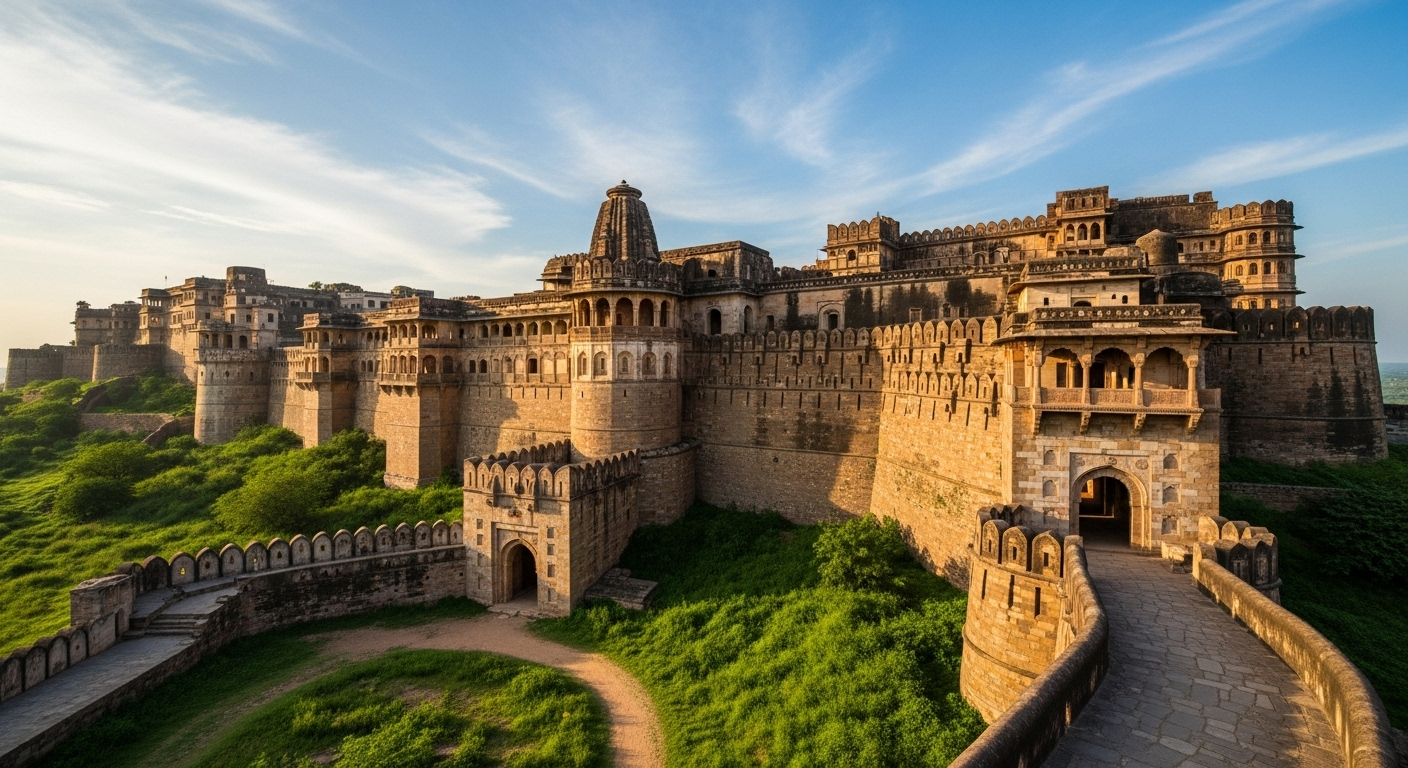
Jhansi Fort, or Jhansi ka Qila, is a huge part of India’s history. It covers 15 acres. It played a big role in the Indian Rebellion of 1857. The fort’s build is strong and big. It’s 225 meters wide and 312 meters long with really thick granite walls.
Role in the Indian Rebellion of 1857
The Jhansi Fort saw a huge moment in 1857. Rani Lakshmi Bai fought the British East India Company there. The battles at Jhansi Fort were key. It showed the fort’s strength. It has 10 big gates, like Khandero Gate and Laxmi Gate. They stood for bravery.
The Kadak Bijli Cannon at the fort shows its fighting spirit. But General Hugh Rose’s forces took it over on April 4, 1858.
Military Strategy and Defense
The Jhansi Fort was key for military plans. It connected different regions of India. Its design had 22 buildings, a moat, and huge walls. This made it hard for enemies to take over.
The fort had secret tunnels for attacks and escapes. It first went to Jiyaji Rao Scindia in 1861. But the British took it back in 1868. This shows its ongoing worth.
The fort’s story is rich. It was vital in trade and battles. Now, it attracts visitors, especially during the Jhansi Mahotsav in January-February. It’s celebrated with joy.
Architectural Marvels of Jhansi Fort
The Jhansi Fort architecture shows the great building style of Jhansi. It was built in 1613 by Raja Bir Singh Deo of Orchha. It covers 15 acres and has a 2.5 km perimeter. The design was made for defense. It has ten gates for protection and control.
Structural Design and Layout
The Jhansi Fort was carefully designed to face enemies. It has many chambers, courtyards, and walls for protection. The main gate, called Chand Gate, has a special message in Sanskrit. This shows the mix of cultures. The fort’s design helped in moving troops and supplies easily when needed.
Unique Building Materials
The fort was made mostly of granite and limestone. These materials made the fort strong and lasting. The walls were very thick. This made them strong against attacks and cannon shots. This shows how well it was built for defense.
Secret Tunnels and Hidden Passageways
One cool part of the fort is its secret tunnels and hidden paths. These were used for sneaky moves and escapes. Tunnels leading to Orchha are an example of good engineering. They were smartly made for defense. Historians and visitors find these features very interesting. They show the cleverness of people long ago.
Rani Lakshmi Bai and Jhansi Fort
Jhansi Fort is a symbol of India’s fight against British rule. Its story is closely linked with Rani Lakshmi Bai legacy. Built in 1613, it faced early struggles but flourished under King Gangadhar Rao from 1838. He was Rani Lakshmi Bai’s husband, and she became known as the Rani of Jhansi. She was born on November 19, 1828, in Banares, now called Varanasi.
She married Maharaja Gangadhar Rao Newalkar in May 1842. They had a son in September 1851, but sadly, he died four months later. The day before the Maharaja died, they adopted Anand Rao, renaming him Damodar Rao. However, in November 1853, the British denied him as heir using the Doctrine of Lapse. So, Jhansi came under British control. This led Rani Lakshmi Bai to turn the fort into a center of resistance.
In 1857, Rani Lakshmi Bai became a leading figure in the rebellion. She fought bravely from Jhansi Fort. Her actions showed the power of women in Indian history. In June 1857, rebels took over Jhansi’s Star Fort. This increased her role in the fight.
Despite a strong fight, Jhansi was captured by the British in 1858. But Rani Lakshmi Bai’s spirit stirred others to fight back. She was wounded in a battle in Gwalior in June 1858 and died. Her courage is remembered today. Jhansi Fort stands as a testament to her bravery and her vital role in seeking India’s freedom.
| Key Facts | Details |
|---|---|
| Fort Construction Year | 1613 |
| Area Covered | 15 acres |
| Important Historical Events | Indian Rebellion of 1857, Siege by British forces in 1858 |
| Entry Ticket Rates | Rs 50 for Indian citizens, Rs 300 for Foreign Nationals, Rs 15 for children aged 10-15 |
| Accessibility | Connected by major cities, located 3 km from Jhansi Railway Station |
| Best Visiting Time | October to March |
Jhansi Fort: The Architectural Insights
The Jhansi Fort was built in 1613 by Raja Bir Singh Deo. It shows a cool mix of Maratha and Mughal architecture. This mix tells us about the cultures and history of its time. The fort is known for its balance, beauty, and strong walls. It is one of the biggest and most impressive forts in India.
Influences of Maratha and Mughal Architecture
The fort’s design shows the Maratha influence in architecture and the Mughal architectural style. You can see this in the fort’s palaces, gardens, and decorations. The strong design comes from the Maratha style. The pretty ornamentation and domes come from Mughal architecture. This mix makes the fort look amazing and special.
The Grandeur of the Fort Complex
The fort’s area is huge, about 15 acres. It has a big granite wall around it and ten gates. Some famous gates are the Jharna Gate and Chand Gate. Inside, there are cool places like the Rani Mahal from the 18th century. There are also hidden tunnels that make it even more interesting. The mix of different design styles shows how important and strong the fort is through history.
Unknown Secrets of Jhansi Fort
Jhansi Fort has a rich history filled with tales and legends. It was built in 1613 by Veer Singh Ju Deo Bundela. This fort is a symbol of Indian legends, full of untold stories.
Hidden Treasures and Artefacts
Many people are fascinated by the treasures of Jhansi Fort. Bundelkhand, the fort’s home, was famous for diamond mines. Mines like Maharajpur and Rajpur added to the tales of hidden treasures. When the fort was made bigger in 1742, secret rooms were possibly made to hide these treasures.
Myths and Legends Associated with the Fort
Jhansi Fort is full of myths and legends. A famous story is about Rani Lakshmi Bai’s escape in 1857. Her brave act made her a symbol against British rule. There are also tales of secret tunnels under the fort, holding undiscovered treasures. These stories add magic to the fort’s cultural heritage.
| Historical Event | Year |
|---|---|
| Construction of Jhansi Fort | 1613 |
| Peshwa Bajirao aids Maharaja Chattrasal in defeating Mughal army | 1728 |
| British East India Company captures Jhansi Fort | 1858 |
| Rani Lakshmi Bai leads a successful assault on Gwalior | 1858 |
Historic Events at Jhansi Fort
The Jhansi Fort is a big symbol of bravery and battle history in India. It sits on a hilltop in Uttar Pradesh, named Bangira. The fort has seen many important events. These events helped shape the area’s history. The fort was built with stone, lime, and lead. It was a key place from the 11th to the 17th century. The Karhade Brahmin Kings ruled it then.
Major Battles and Sieges
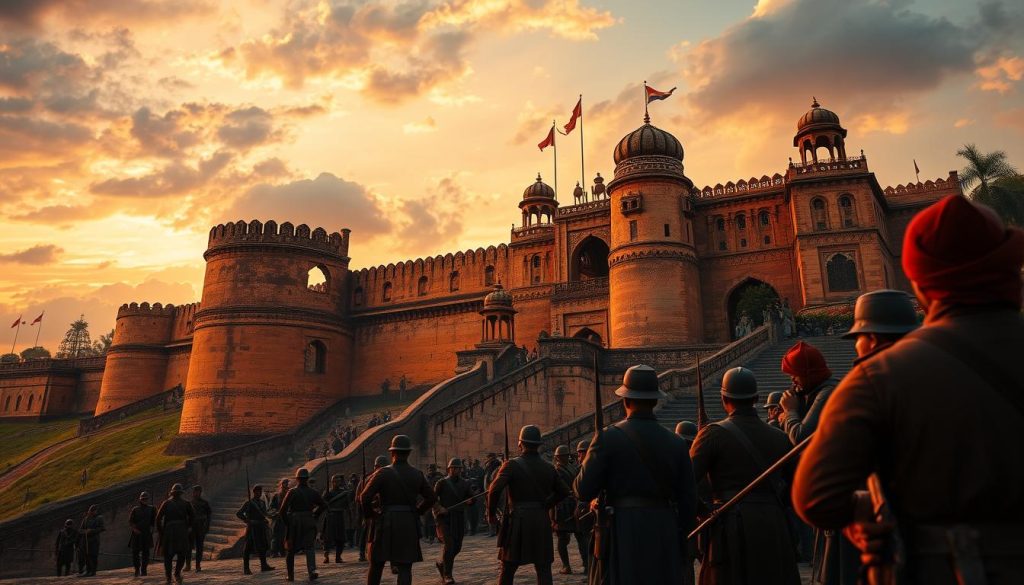
In 1857, a big battle happened at the fort during the Indian Rebellion. A Bengal infantry attacked the fort in June. Then, in March and April 1858, General Hugh Rose’s forces laid siege. The attack was fierce. It started on the third night and didn’t stop. This battle was very important in the fort’s history.
Rani Lakshmi Bai’s heroic escape happened during this time. Legends say she jumped from the fort on horseback to get away.
Key Historical Figures
Many people connected to Jhansi Fort have changed its story. Rani Lakshmi Bai is one of the most famous. She fought the British in 1857-1858. Her courage has left a lasting mark on history. Other key figures include Godse, who started his journey to North India from here in 1857. Then there’s Maharaja Jayajirao Scindia of Gwalior. The British gave him the fort in 1861, but took it back in 1886. These people show the unbreakable spirit of Jhansi Fort.
| Year | Event | Significance |
|---|---|---|
| June 1857 | Stormed by Bengal infantry | Part of the Indian Rebellion |
| March-April 1858 | Siege by General Hugh Rose | Defining conflict of the fort |
| 1861 | Ownership by Maharaja Jayajirao Scindia | British-Gwalior negotiations |
| 1886 | British reclaim fort | End of Gwalior control |
The events at Jhansi Fort are very important. They show the fort’s role in history and battles. They also show the bravery and smart strategies of the people of Jhansi. Stories of fights and brave acts are inspiring to people today. They make this old fortress a special place to visit.
The Restoration and Preservation of Jhansi Fort
Saving places like Jhansi Fort is key to keeping India’s deep culture alive. Restoration projects in India are important. They keep old monuments strong and true to their history. This ensures they last for many years.
Fixing up Jhansi Fort involves many steps. This includes fixing old walls and making ancient buildings stronger. The work aims to keep the fort’s beauty. It also makes sure it meets the needs of today’s visitors. The fort played a big role in the Indian Rebellion of 1857. It was defended by Rani Laxmi Bai and two Bengal army groups.
| Aspect of Conservation | Details |
|---|---|
| Structural Stability | Reinforcements to original walls and towers. |
| Cultural Integrity | Ensuring repairs respect historical elements. |
| Safety Protocols | Modern enhancements for visitor safety without altering the site’s authenticity. |
| Visitor Engagement | Informational placards and guided tours to educate about historical significance. |
Restoring such places in India requires teamwork. Architects, archaeologists, and historians work together. Their goal is to balance keeping things real with making the fort appealing today. By caring for these sites, we respect our history. We make it possible for future kids to learn and admire. Caring for sites like Jhansi Fort saves not just the buildings, but also their stories.
Tourist Attractions Within Jhansi Fort
Jhansi Fort stands proudly in Uttar Pradesh. It is known for its deep history and amazing architecture. People of all ages can find something interesting here. Let’s look at the best spots to see and what tourists can do at this historic place.
Significant Spots to Visit
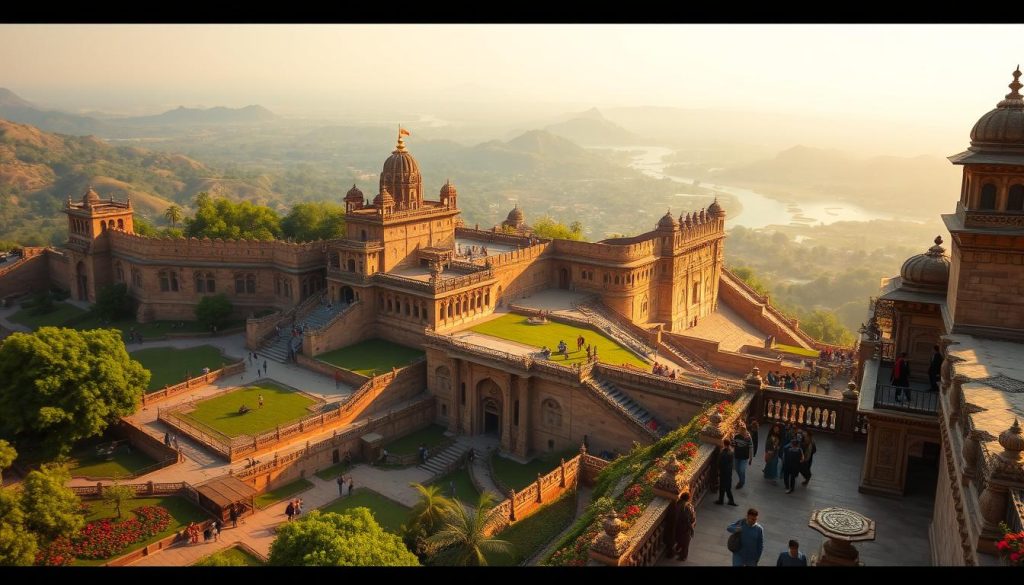
You’ll find many important places within Jhansi Fort. They all have rich histories and cultural value. Here are some:
- Rani Mahal: This was Rani Lakshmi Bai’s palace. It’s open from 6:00 am to 6:00 pm. Adults pay ₹15 to enter, but it’s free for kids under 15.
- Ganesh Mandir: This temple provides a calm place for visitors. It’s open from 6:00 am to 9:00 pm.
- Kali Mata Temple: Visit this spiritual place from 6:00 am to 9:00 pm.
- The Light and Sound Show: This show tells the fort’s history. It costs ₹50 for Indians and ₹300 for foreigners.
- Jhansi Museum: It’s open from 10:30 am to 4:30 pm, but closed on Mondays. The museum has displays about Rani Laxmi Bai, old coins, and artifacts. Entrance is ₹5 for adults and ₹25 for kids.
Tourist Facilities and Information
The fort offers great services for all its visitors. These make everyone’s visit better:
- Information Centers: You can learn a lot here. They give detailed history.
- Guided Tours: They provide a deeper look at the fort’s significant places.
- Refreshment Stalls: These are great for snacks while exploring.
- Safety Measures: There’s first aid and other emergency services for safety.
The fort’s amenities meet modern needs. They keep high standards for everyone’s happiness. Jhansi Fort is a famous spot for people who love history and adventure.
| Spot | Opening Hours | Entrance Fee |
|---|---|---|
| Rani Mahal | 6:00 am – 6:00 pm | ₹15 for adults, Free for children below 15 years |
| Ganesh Mandir | 6:00 am – 9:00 pm | Free |
| Kali Mata Temple | 6:00 am – 9:00 pm | Free |
| Light and Sound Show | Evening | ₹50 for Indians, ₹300 for foreigners |
| Jhansi Museum | 10:30 am – 4:30 pm (Closed on Mondays) | ₹5 for adults, ₹25 for children |
The Fascinating Museums of Jhansi Fort
The Jhansi Fort museums let us dive deep into the area’s history and culture. They have many exhibits and collections. These show artifacts that tell the important stories of Jhansi Fort. Each museum plays a key part in teaching visitors about Jhansi’s history and culture.
Exhibits and Collections
The exhibits in Jhansi Fort museums are full of different items. They range from old weapons to beautiful jewelry. The historical collections in Jhansi cover many times. They show the deep legacy of the fort. You can see traditional dresses, coins, and photos from the Chandela dynasty.
Historical and Cultural Significance
These cultural exhibits connect us to the past. They show how Jhansi Fort has always been important in India’s history. The artifacts share stories of the area’s history. They also show Jain, Hindu, and Islamic influences through the years. Important items include the Kadak Bijli cannon from the 1857 uprising. There are also old sculptures in the Jhansi Mahal. This was once the home of Rani Lakshmi Bai.
Cultural Heritage Surrounding Jhansi Fort
Jhansi Fort is surrounded by rich culture. It celebrates vibrant Bundelkhandi culture and traditions. This area is filled with activities and events. They show off local spirit. Tourists and locals enjoy Indian festivals, arts, and crafts. These showcase the area’s history and how people live there.
Local Festivals and Celebrations
Jhansi is famous for its fun festivals. They mix heritage with joy. The Jhansi Mahotsav is one big festival. It features traditional music, dance, and food. Thousands visit to feel the Bundelkhandi culture. There’s also Kajli Teej. It’s known for its parades, performances, and rituals. These festivals help you dive into local life.
Traditional Arts and Crafts
The Bundelkhand region is known for its craftsmanship. Jhansi is at its core. Around Jhansi Fort, markets are filled with Indian arts and crafts. You can find textiles, pottery, and metalwork. Each item shows the skills of generations. These crafts are more than souvenirs. They keep the region’s cultural identity alive. Preserving these crafts helps keep the culture around Jhansi Fort vibrant.
FAQ
What is the historical significance of Jhansi Fort?
Founded by Raja Bir Singh Deo in 1613, Jhansi Fort is a key historical site. It was crucial during the Indian Rebellion of 1857. Rani Lakshmi Bai fought against the British here.
How did Jhansi Fort contribute to the Indian Rebellion of 1857?
During the 1857 Rebellion, Jhansi Fort was crucial. Rani Lakshmi Bai led a brave fight against British forces from here.
What architectural styles are present in Jhansi Fort?
The fort shows Maratha and Mughal designs. It has palaces, gardens, and walls, showing old architectural skills.
Are there any unique architectural features in Jhansi Fort?
Yes, the fort is known for its design and secret tunnels. These tunnels were used in wars, adding mystery to the fort.
What are some of the hidden secrets of Jhansi Fort?
Stories say Jhansi Fort hides treasures and artifacts. These legends add to its rich history.
Which historical events are associated with Jhansi Fort?
Besides the 1857 Rebellion, Jhansi Fort saw many battles. These underscore its military importance in India’s history.
How is Jhansi Fort being preserved and restored?
Efforts aim to keep the fort’s history intact. They focus on restoring damage and preserving its features for the future.
What are some must-visit spots within Jhansi Fort?
Visitors should see its museums, temples, and statues. The Light and Sound Show is a highlight, making history come alive.
What can visitors expect from the museums within Jhansi Fort?
The museums offer detailed exhibits on the region’s history and culture. They help teach visitors about the city’s significance.
What cultural heritage surrounds Jhansi Fort?
Local festivals and traditions enrich the fort’s surroundings. The area is famous for its arts and crafts, showing local talents and cultural richness.