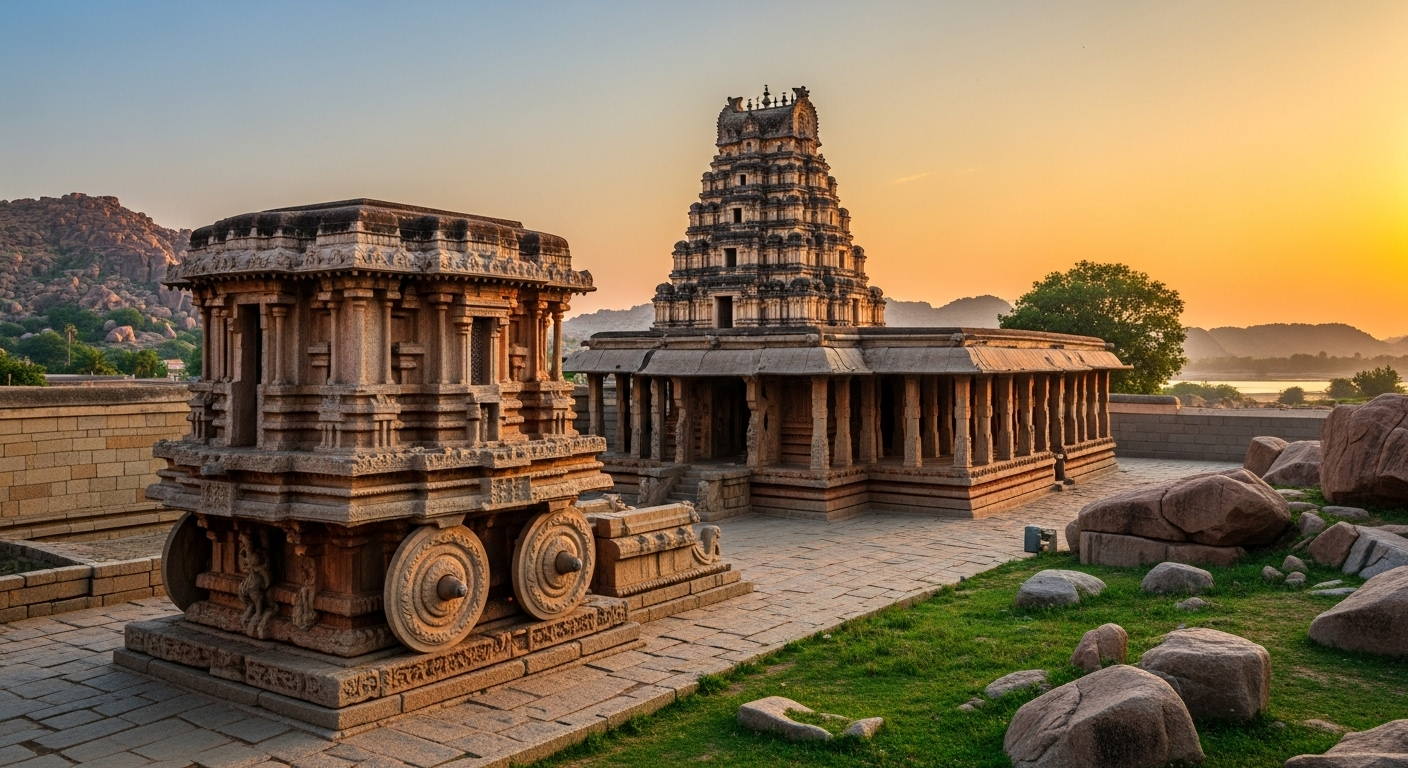
Every year, more than 1.5 million people visit Hampi. They come to see its old temples and rich history. Hampi is a top place to see in India. The Vittala Temple is very special for its architecture and history. It is a UNESCO World Heritage site. The temple honors Lord Vishnu and shows the Vijayanagara Empire’s splendor. Its detailed design has art and sculptures that share stories from long ago. Many secrets of the Vittala Temple are yet to be discovered.
Key Takeaways
- The Vittala Temple is key to understanding Hampi’s cultural history.
- More than 11 important temples are in the area, each with its own hours to visit.
- The temple shows the artistic talent of the Vijayanagara Empire.
- Hampi is a door to ancient history and stunning views.
- The temple is known for its musical pillars, which create beautiful sounds.
- Every part of the Vittala Temple’s design shows great skill and devotion.
Introduction to Vittala Temple
The Vittala Temple is an important site in Hampi, known for its beautiful art and history. It was built in the 15th century by the Vijayanagara Empire. This temple is famous for its detailed work and lovely sculptures.
The temple has a unique stone chariot that catches everyone’s eye. Its musical pillars also amaze visitors with their sound. These pillars show how clever the builders were.
Learning about the Vittala Temple helps us see the past’s architectural skills and culture. Being a UNESCO World Heritage site, it shows the artistry of its time and the deep spirituality in its design. Many people come to see its old beauty, marking it as a key part of India’s cultural wealth.
Location and Accessibility
Vittala Temple is in a special spot in Hampi, Karnataka. It’s about 340 kilometers from Bengaluru. This makes Bengaluru a good starting point for a day trip. Hospet is the nearest big town to Hampi. It helps travelers get to Hampi. From Hospet, you can find many ways to travel.
Getting to the temple is easy. You can take a local bus or an auto-rickshaw from central Hampi. You can also hire a local guide. They can show you the amazing ruins of Hampi.
If you like walking, there’s a beautiful 2.3-kilometer trail from the bus stand to the temple. This walk lets you see the lovely scenery of the area.
The best time to visit Vittala Temple is from sunrise to sunset. The weather from October to February is nice. This period also gives the best light for pictures.
Vittala Temple History
The Vittala Temple’s history is both rich and detailed. It shows the Vijayanagara Empire’s architectural genius. Built in the 15th century, it marks an era full of artistic and cultural growth. It was key in religious activities and community events, showing the empire’s vibrant life.
Significance in the Vijayanagara Empire
The Vittala Temple is a top example of the Vijayanagara Empire’s architecture. Its designs and engineering show the age’s creativity and new ideas. The temple’s detailed carvings and grand structures reflect the empire’s focus on art and faith. It became an important spot for pilgrims and cultural events.
Historical Events and Renovations
Many historical events have affected the Vittala Temple over time. After the Vijayanagara Empire weakened in the 16th century, the temple got damaged. But, recent renovations have helped fix it. It now keeps its beauty and importance. Efforts continue to keep the temple an important historical site in Hampi.
Architectural Marvels of Vittala Temple
The Vittala Temple is a stunning showcase of ancient skill. It combines devout purpose with incredible architecture. Visitors love the unique design that fits well with nature. It also shows the era’s greatness.
Unique Design and Layout
The temple has mandapas and gopurams laid out in detail, showing Vittala Temple architecture. Its design is both beautiful and functional. People feel a spiritual connection in its special spaces.
Every part, like the halls and courtyards, was carefully planned. They make the temple feel peaceful.
Use of Dravidian Architectural Elements
The temple shows off Dravidian architectural elements from the Vijayanagara Empire’s artisans. There are sculptures and carvings of gods everywhere. It makes the place artistically rich.
The stone chariot stands out. It highlights Dravidian art skills and is central in the temple. For more on Hampi’s temples, click here.
Sculptures of Vittala Temple
The Vittala Temple amazes people with its stunning sculptures. They show the complex art found at the temple. Every carving tells a story from Hindu myths, showing gods, events, and important lessons. These sculptures do more than decorate. They share deep spiritual messages with visitors.
Artistry in Stone Carvings
The temple features amazing stone carvings. Craftsmen put their skills into showing gods and myths in detail. Every piece tells a story, making people feel connected to their faith. The beauty of these carvings draws everyone’s attention, making the place even more special.
Depictions of Hindu Mythology
The temple’s sculptures bring to life stories from the Mahabharata and Ramayana. They help teach visitors about Hindu myths. By showing these stories, the sculptures help people understand ancient values and lessons. This promotes a love for temple art and its role in culture.
Musical Pillars of Vittala Temple
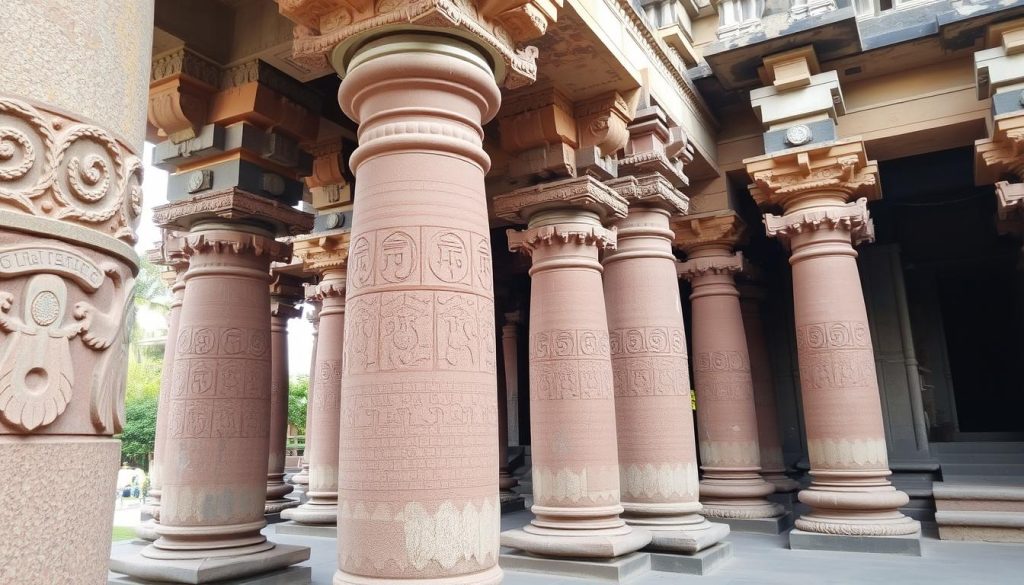
The Vittala Temple in Hampi is known for more than its architecture. It has extraordinary musical pillars. When struck, these pillars make different musical notes, showing the ancient temple’s engineering marvels. Each pillar is made from a single granite block. They show a deep understanding of acoustics. This enchants visitors with their unique sounds.
Engineering Behind the Melodic Sounds
The musical pillars’ engineering shows the artisans’ innovative spirit during the Vijayanagara Empire. The Ranga Mantapa has fifty-six pillars, each adding to a symphony of sounds. This design shows the temple’s aesthetic harmony and the builders’ craftsmanship. Striking these pillars creates musical notes. It turns an architectural feature into an auditory experience.
Cultural Significance of the Musical Pillars
The musical pillars’ cultural importance is great. In ancient India, they were key to temple festivities. Music and spirituality mixed during celebrations and rituals. This linked the divine with the artistic, making the spiritual experience richer for worshippers. Through these pillars, the Vittala Temple shares a legacy of cultural expression. It continues to touch visitors today.
Vittala Temple Chariot
The stone chariot of Vittala Temple is very special. It’s seen as the sun god’s chariot. Many people love its beauty and detail. It shows how great the Vijayanagara Empire was at making art. The chariot isn’t just a religious symbol. It also shows how important travel was in old traditions.
Symbolism of the Stone Chariot
This emblematic chariot means a lot in terms of faith and tradition. It shows how gods and humans are connected. The chariot’s design highlights its role in Hindu rituals. It helps make the temple look even more amazing. The carvings tell us about Hampi’s history and the local culture’s values.
Significance in Cultural Festivals
During cultural festivals at Vittala Temple, the chariot is very important. Especially during the Hampi Utsav. There are colorful processions, music, dance, and fun competitions. The chariot is a sign of divine blessings. It shows the community’s pride in their history. It’s the center of the festival, bringing people together.
Visitors can take part in competitions and enjoy what Vittala Temple offers. They dive into a mix of symbolism, spirituality, and art. The stone chariot shows off the temple’s great architecture. It also connects us to the lasting traditions of Hampi.
| Festival | Date | Significant Activities |
|---|---|---|
| Hampi Utsav | Ongoing | Processions, dance performances, traditional competitions |
| Vittal Pindi | August 27 | Carrying Krishna idol in golden chariot, competitive activities |
Secrets of Vittala Temple
The Vittala Temple is full of stories and secrets. Its legends seem to beat time itself, creating a rich cultural tapestry. Visitors love both its beauty and the fascinating tales that embrace it.
Legends Surrounding the Temple
Many legends make the Vittala Temple special and draw people in. A beloved tale is about a devotee who built the temple for Lord Vishnu for it to last forever. Stories of miracles also fascinate those who come, filling the place with wonder.
Unveiling Hidden Details and Features
Discovering the temple’s secrets shows amazing architectural feats, like hidden paths and detailed carvings. These details are more than art. They show the skill and thought of the ancient builders. They hold messages from the past, sparking curiosity and inviting discovery.
| Legend/Myth | Significance | Related Features |
|---|---|---|
| Constructed by a Devotee of Vishnu | Symbolizes devotion and faith | Overall temple design, sacred motifs |
| Miraculous Occurrences | Enhances spiritual connection | Carvings depicting divine interventions |
| Secret Passages | Represent architectural ingenuity | Hidden pathways, less-traveled areas |
| Symbolism in Sculptures | Conveys ancient beliefs | Detailed stone carvings with messages |
Nearby Attractions
Vittala Temple is a big part of India’s culture. It is surrounded by other temples near Vittala Temple. These add more excitement to visitors’ journeys. The area’s nature makes the temple even more stunning.
Other Temples in Hampi
Hampi has many amazing temples. They tell stories of the past. Key places to see are:
- Virupaksha Temple: It’s famous for beautiful designs and festivals.
- Achyutaraya Temple: This place is known for its great architecture and views.
- Hazara Rama Temple: It has detailed carvings of Hindu myths.
Each temple adds its own beauty and history. They make Hampi attractions special.
Natural Beauty and Scenic Views
Around Vittala Temple, the scenery is amazing. Visitors can enjoy:
- Huge rocks and hills that look stunning.
- Green plants that make the old stones look fresh.
- The calm Tungabhadra River, great for boat rides or relaxing.
This mix of old buildings and nature is magical. It invites people to see the natural beauty near Vittala Temple.

Best Time to Visit Vittala Temple
The best time to see Vittala Temple is from October to March. This is when the weather is nice and cool. These months are perfect for seeing the beautiful details of this ancient place.
Going to the temple during local festivals makes it even better. For example, the Mysore Dasara, is from October 3rd to October 12th. It has colorful shows that show the area’s traditions. Going to this festival when the weather is nice helps you enjoy the culture more.
Winter also lets visitors do outside activities and see the beauty around Vittala Temple. The great weather and cultural events make this time special for seeing Hampi’s wonders.
When planning your visit, think about crowds and special events. Here is a list of key events in the best months:
| Month | Event | Description |
|---|---|---|
| October | Mysore Dasara | A ten-day festival celebrating the victory of good over evil with grand parades and cultural programs. |
| January | Hampi Utsav | A cultural festival featuring music, dance, and drama, showcasing the traditions of Hampi. |
| February | Vasant Panchami | Celebrating the arrival of spring with various events and rituals, especially dedicated to Goddess Saraswati. |
Preservation and Conservation Efforts
Protecting the Vittala Temple is key for its history and culture. This beautiful place shows off detailed sculptures and amazing designs. They must be saved from weather and people.
If we don’t act, the temple may lose its importance in India’s history.
Importance of Preservation for Future Generations
Keeping the Vittala Temple safe makes it a treasure for learning and inspiration. Learning about its conservation significance helps us enjoy its beauty and stories. By taking care of it, we respect the Vijayanagara Empire’s history. We also teach young people to love their culture.
Current Initiatives and Challenges
There are ongoing efforts to fix and look after the temple. This work includes help from groups around the world. The temple got special attention after Hampi was named a World Heritage Site by UNESCO in 1986.
Even with some wins in fixing it, many problems need solving. More tourists and not enough money for the work are big issues.
| Preservation Initiatives | Conservation Challenges |
|---|---|
| Collaboration with UNESCO for funding | Increased tourist traffic leading to wear and tear |
| Community awareness programs | Insufficient resources for ongoing projects |
| Technical assessments for structural integrity | Balancing tourism and preservation needs |
| Training programs for local artisans | Environmental factors affecting the site |
Conclusion
The Vittala Temple is a symbol of the Vijayanagara Empire’s architecture and culture. It shows off amazing musical pillars and a stone chariot. Every part of the temple tells old and important stories.
People walking through the temple learn about history. The great work shows the talent and culture of King Krishnadevaraya’s time. This era was famous for its art. These places help keep our culture alive for the future.
Today, we work hard to keep the temple’s wonders safe. They are old but still tell powerful stories. As more people learn about these places, we hope they feel closer to history. The legacy of the Vijayanagara Empire shines at Vittala Temple. It makes us proud and inspires everyone who visits.
FAQ
What is the Vittala Temple famous for?
The Vittala Temple is known for its amazing architecture. This includes the stone chariot and musical pillars. It also has beautiful sculptures that show Hindu stories.
When was the Vittala Temple constructed?
The temple was built in the 15th century. It was during the Vijayanagara Empire. This makes it an important historical site in Hampi.
How can one reach the Vittala Temple?
You can get to the Vittala Temple from Hampi, around 340 kilometers from Bengaluru. You can take buses or auto-rickshaws from Hampi’s center.
What architectural style is the Vittala Temple designed in?
The temple shows Dravidian style architecture. It’s known for its ornate sculptures, and pillared halls called mandapas.
Why are the musical pillars of Vittala Temple significant?
The musical pillars can make different notes when you hit them. This shows how skilled the ancient builders were. It also links architecture with music from long ago.
What does the stone chariot represent?
The stone chariot represents the sun god’s chariot, as per Hindu myths. It shows the skill of the Vijayanagara Empire’s craftsmen.
Are there any legends associated with the Vittala Temple?
Yes, there are many legends. One says it was made by a Lord Vishnu follower. He wanted to make a temple that would last forever.
What other attractions can be found near the Vittala Temple?
Other temples near the Vittala Temple include the Virupaksha Temple and the Hazara Rama Temple. There are also beautiful natural spots.
What is the best time to visit the Vittala Temple?
The best time to visit is from October to March. The weather is nicer for visiting then.
What preservation efforts are being made for the Vittala Temple?
Efforts to preserve the temple focus on keeping its structure and cultural importance. They work with groups from around the world.