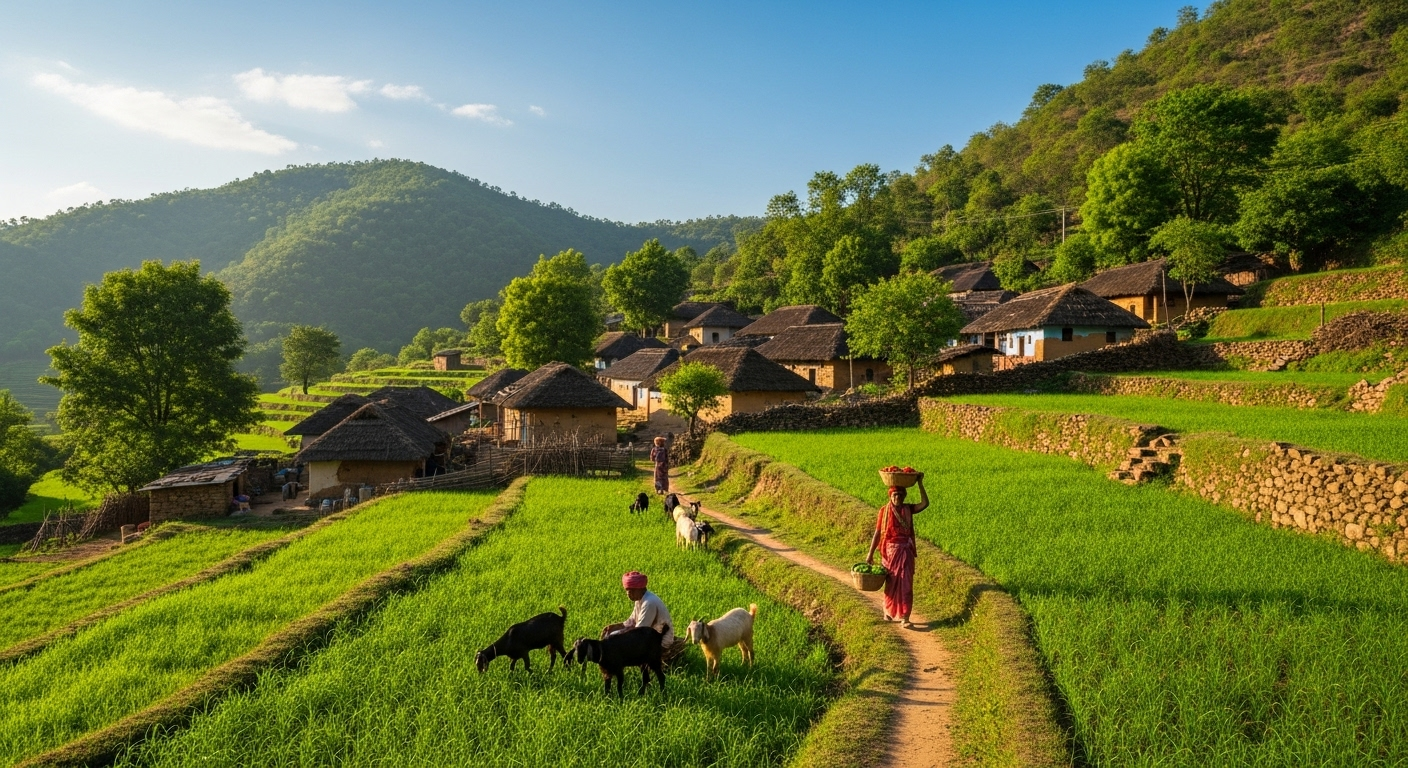
India has over 700,000 villages, each with a story. Some hidden villages hold enchanting tales unknown to the world. Mawlynnong is called the ‘Cleanest Village in Asia’. Pothanikkad Village in Kerala has 100% literacy. These villages show India’s diversity and cultural richness.
Places like Mawphlang keep their Khasi roots alive. They set an example for cultural preservation. Sunderban villages in West Bengal show how people and nature can coexist. These places remind us of India’s ability for sustainable progress and living with nature.
Key Takeaways
- Discover the pristine beauty and cultural richness of secluded villages in India.
- Learn about Mawlynnong, recognized for its exceptional communal dedication to cleanliness.
- Experience how Sunderban villages illustrate the delicate harmony with nature at the edge of a UNESCO World Heritage Site.
- Unearth the historical significance of Khimsar village’s grand Khimsar Fort and the artistry of its Havelis.
- Witness the unique and defensive customs of the Apatani tribe within Ziro Valley’s sustainable environment.
- Explore Pragpur and Garli, Himachal Pradesh’s tranquil heritage villages that transport visitors to a bygone era.
- Understand the eco-positive transformation within Piplantri Village, Rajasthan, celebrating the birth of daughters with the planting of trees.
Unveiling the Enigmatic Charms of Meghalaya’s Mawlynnong and Mawphlang
Exploring the lesser-known villages in India leads us to Meghalaya. Here, Mawlynnong and Mawphlang lie. These places are not just peaceful but also care deeply about the earth and culture.
Mawlynnong cleanest village was named Asia’s cleanest in 2003. Everyone here works hard to keep the village clean. Mawphlang lets visitors dive into the Khasi heritage. It’s a place full of tradition and spirituality.
Asia’s Cleanest – Mawlynnong: A Testament to Community Efforts
In Mawlynnong, keeping the village clean is key. They use bamboo dustbins and say no to plastic. These steps help keep Mawlynnong cleanest village title. Everyone in the village works together for a healthier planet.
Mawphlang’s Cultural Resonance – The Khasi Heritage Experience
Mawphlang celebrates Khasi traditions with great pride. It’s known for the Mawphlang Sacred Forest and its special rituals. These practices show how close the Khasi people are to nature. It’s a deep dive into Khasi heritage.
Living Root Bridges: Nature and Ingenuity Intertwined
The Living Root Bridges show how smart people and nature can work together. These bridges are made from rubber tree roots. They are not only cool to see but also protect our planet. They are a key part of the local way of life and even recognized by UNESCO.
| Location | Distance from Shillong’s City Center (km) | Importance |
|---|---|---|
| Mawphlang Sacred Forest | 25 | Cultural and spiritual significance in Khasi heritage |
| Mawjymbuin Cave | 12 | Geological and religious interest |
| Living Root Bridges | 90 (near Mawlynnong) | Example of Khasi engineering and UNESCO site |
| Elephant Falls | 12 | Scenic natural beauty |
Visiting these villages shows how nature and culture can thrive together. Mawlynnong and Mawphlang prove we can grow and still protect our planet. They are perfect examples of living in balance.
Discovering West Bengal’s Sunderban Villages – A Mangrove Wonderland
The remote Indian villages of West Bengal’s Sunderban are beautiful. They show a perfect harmony between people and nature. Located in dense mangrove forests, they open a door to the Sunderban National Park. They also show the strength of traditional fishing communities. These locals live in harmony with nature. They share their home with the majestic Bengal tiger.
In these villages, life is deeply connected to the forest and rivers. Fishing and farming must be done in a sustainable way. This close relationship offers lessons on conservation. It showcases the unique creatures of the Sunderban National Park.
The unity of community and nature in Sunderban is a powerful example of environmental stewardship.
Visitors can take part in many activities in these villages. They can enjoy the beautiful nature and rich culture. You might even see the rare Bengal tiger. Every experience is unique and eye-opening.
Here is how life in Sunderban villages supports their culture and nature. It helps protect one of India’s prized national parks.
| Aspect | Details | Impact on Environment |
|---|---|---|
| Fishing Techniques | Use of traditional non-invasive nets | Minimal impact on marine life |
| Agriculture | Organic farming methods | Prevents land degradation |
| Energy Use | Reliance on solar panels | Reduces carbon footprint |
| Waste Management | Local recycling practices | Limits pollution, supports ecosystem |
Conservation in the Sunderban National Park is essential for the Bengal tiger. It also protects the unique mangrove habitat. Understanding the role of these communities can inspire us all. They show us how to live in a way that cares for our world. This teaches us about the balance needed for conservation.
Embracing the Desert’s Solace in Khimsar, Rajasthan’s Oasis Village
Khimsar Rajasthan is a top spot for village tourism in India. It invites you to see its calm deserts and rich culture. This village has traditional crafts and lets you explore desert safaris.
Khimsar Fort: Where History Whispers among the Sands
The mighty Khimsar Fort is on the Thar Desert’s edge. It guards the stories of the past. Surrounded by sand, it gives you a wide desert view. You feel like you’re back in time, seeing old building skills. The fort shows Khimsar’s long history and strength.
Artisanal Crafts: Preserving Khimsar’s Artistic Inheritance
In Khimsar, narrow lanes are full of traditional crafts. Artisans make beautiful textiles and pottery. They show the stories of this place through their work. These crafts keep Khimsar’s culture alive and well.
Desert Safaris: Experiencing the Rustic Elegance of Khimsar
Desert safaris in Khimsar are perfect for nature lovers. Riding camels, you’ll see the peaceful desert and its golden light. The safari shows the beauty and tradition of Khimsar Rajasthan. It’s a true village experience in India.
Hidden villages in India: Ziro Valley’s Timeless Appeal
Ziro Valley is in Arunachal Pradesh. It’s beautiful and full of culture. The Apatani tribe lives here. They work closely with nature. The terraced rice fields are amazing. They show how the tribe uses land wisely to feed many people.
This valley is known for its stunning views and indigenous festivals. These festivals are very important. They show love for community and earth. This is key to the Apatani’s life. Visitors feel peaceful and far from city noise here.
One big event here is about farming. It shows how the Apatanis and their land work together. It’s not just a place. It’s a lesson in living with nature.
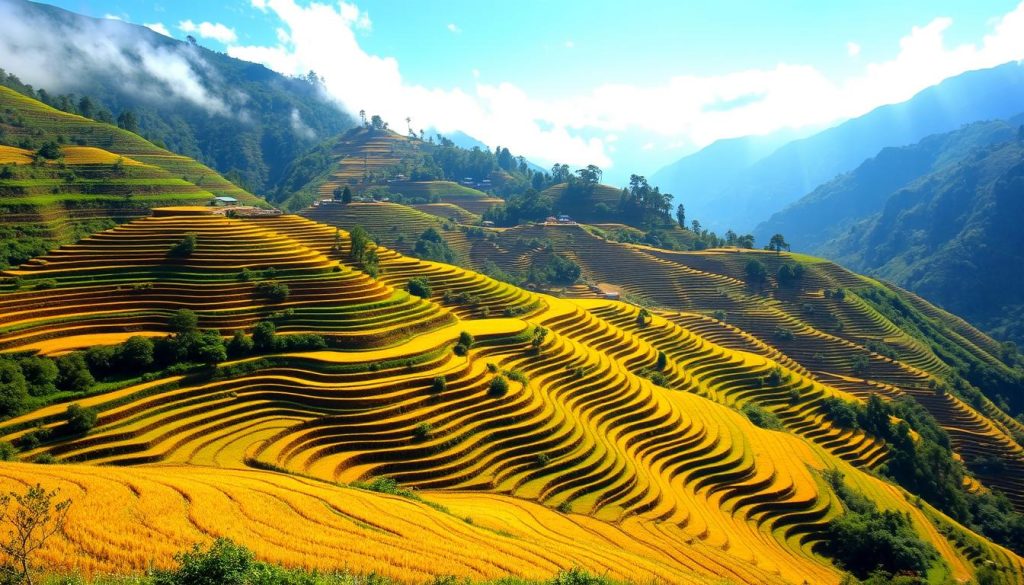
If you love nature and learning about people, Ziro Valley is a must-visit. Meeting the Apatani tribe is special. You learn how they live in balance with the earth.
Going to Ziro Valley Arunachal Pradesh is like entering a new world. Every valley, path, and village has a story. It’s a mix of past and present. It’s perfect for those who love to explore cultures. It’s one of the best off-grid villages in India.
In summary, Ziro Valley is more than a place to visit. It’s a deep dive into Arunachal Pradesh’s heritage. You meet people who live closely with nature. It’s beautiful and very special.
Pragpur and Garli – Himachal Pradesh’s Preserved Historical Gems
In the peaceful Himachal Pradesh, Pragpur and Garli are shining examples of preserved historical villages. These two places, nestled in the Kangra Valley culture, take you back in time.
Pragpur was created in the 16th century. It’s known as India’s first heritage village. With cobblestone streets and old houses, its charm is stunning. Garli is less known but equally amazing. It shows off unique buildings that are part of the heritage villages India loves.
Pragpur: India’s First Heritage Village
Pragpur is known for its ancient buildings like The Judge’s Court. This heritage hotel from 1918 lets guests feel colonial elegance. The village keeps its unique look thanks to hard work by the local panchayat.
Pragpur also has the Taal, a historic pond. Since before 1868, it’s been a lovely spot for everyone.
Garli: Exploring Architectural Splendors in the Kangra Valley
Garli is filled with stunning Havelis and mansions. These show the rich past of this area. Lovers of architecture and history will enjoy ancient Kangra wall paintings that are being fixed.
The Chateau Garli mixes history with today’s comforts. Here, guests can sit by a fire next to a small pool. This place shows how architectural wonders India is known for can meet modern tastes.
Pragpur and Garli do more than keep Kangra Valley’s culture. They also show how tourism can respect and keep nature beautiful. By visiting these heritage villages India has saved, you become part of their story. This experience is both eye-opening and moving.
Rajasthan’s Piplantri Village: Where Eco-Friendly Initiatives Blossom
In the heart of Rajasthan lies Piplantri Village. It’s a place where eco-friendly initiatives India are a huge part of life. This village shows how sustainable villages India can live in harmony with nature. It also empowers local people. A big part of this is the tree-planting traditions linked to the birth of each girl.
When a girl is born in Piplantri, 111 trees are planted. This tradition shows care for the environment. It also promises a bright future for the community’s girls. Money is gathered from different places. This money grows as the trees grow.
These efforts to grow trees go hand in hand with other sustainable actions. They keep a herbal medicine park and use a watershed model. So, Piplantri is more than a village. It’s a light showing how to develop in an eco-friendly way.
| Indicator | Data |
|---|---|
| Average number of girl births per year | 60 |
| Trees planted per girl child | 111 |
| Initial funds per girl child (INR) | 41,000 |
| Estimated future fund value | 1 Crore and 11 Lakhs |
| Additional eco-projects | Herbal Medicine Park, Watershed Model |
Piplantri is a no-alcohol zone. This adds to its healthy, sustainable life model. It is in Rajsamand district, close to Udaipur and Jaipur. This village doesn’t just survive. It thrives by making ecological awareness part of its culture.
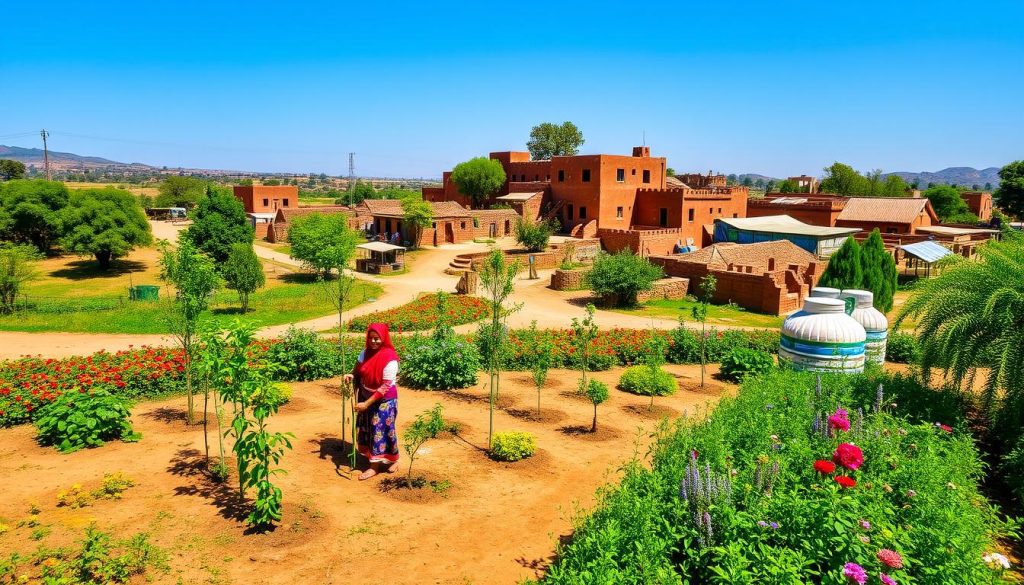
This model offers great ideas for other Indian villages. Piplantri doesn’t just protect the environment. It links each girl’s future to a growing ecosystem. This creates a legacy of sustainability and power.
Malana, Himachal Pradesh: A Isolated Enclave with Ancient Traditions
Malana is a beautiful place in the Himalayas. It shows the old Indian democracy and Himachali culture. About 1,700 people live there. They keep their way of life from changing for many years.
The people of Malana speak a special language called Kanashi. Only they understand it. This helps keep their culture safe. Kanashi is taught by speaking, not writing.
The Enigmatic Lifestyle of Malana – Cloaked in Secrecy
Malana governs itself with a unique system. It has a lower and upper house. This is like very old democracies. They make big decisions with advice from three important people. One of these people stands for the local god, Jamlu Devta.
Malana: Trekking into a Historical Solitude
To get to Malana, you need to trek for four hours from Jari. There are no roads for cars. This trek lets you see beautiful nature. It feels like traveling back in time.
Malana has very specific rules. For example, you can’t touch the people there. They marry only within Malana. This keeps their village private and self-reliant.
They grow barley, wheat, and Malana Cream, a special cannabis. Malana Cream is known worldwide. Even though Malana is small, it is very important. It attracts people who love ancient cultures and quiet mountain places.
Iconic Villages of India: A Kaleidoscope of Unique Cultures
India’s countryside is full of culture and cool ways of life. Its off-grid villages protect the country’s old traditions. These places offer special cultural experiences far from busy cities. They show us living art, timeless traditions, and how people and nature live together.
In places like Meghalaya and Kerala, every village has its own story. You can see eco-friendly living in Khonoma or feel the mystery of twins in Kodinhi. Cultural festivals and local habits bring these stories to life. You can join in the Durga Puja or see art in Rajasthan’s royal backdrop. Each experience is both rich and different.
The quiet of the Kerala Backwaters and the spirit of Varanasi show how varied India’s countryside is. These places offer both peace and adventure. They let us see deep into India’s heart.
| State/Region | Cultural Highlight | Unique Experience |
|---|---|---|
| Meghalaya | Khasi Tribal Culture | Visiting living root bridges in Cherrapunji |
| Kerala | Backwater Lifestyle | Houseboat stays in Alleppey |
| Rajasthan | Royal Heritage | Exploring palaces and participating in desert safaris |
| Varanasi, Uttar Pradesh | Spiritual Rituals | Evening aarti along the Ganges |
| Ladakh, Jammu & Kashmir | Buddhist Monasteries | Exploring Himalayan topography and cultural festivals |
Conclusion
India is like a colorful quilt, and its villages bring this to life. Most people live in rural areas, keeping traditions alive. Villages show India’s ability to be self-reliant and great in food production. They are run by local councils and adapt to changes while being close to nature. Village tourism lets you see the real Indian way of life and offers unique experiences.
In places like Mawlynnong in Meghalaya, they lead in eco-friendly tourism. Then, Ziro in Arunachal Pradesh opens windows to culture with its music festival. Villages show that caring for the environment and keeping culture alive can go hand in hand with tourism. Some places are filled with old stories, while others are perfect for adventure seekers. Each village has its own story of culture and heritage.
India’s villages face challenges like getting to education and healthcare. Yet, they show the beauty of India’s evolving story. They invite travelers to learn and appreciate their simple beauty. The countryside offers not just beautiful views but stories of strong communities, festivals, and caring for nature. It makes village tourism a true and deep experience.
FAQ
What makes India’s hidden villages unique for travelers?
India’s hidden villages are special. They are filled with real culture, beautiful nature, and old traditions. These spots let visitors really see India’s heart, away from crowded tourist places.
Why is Mawlynnong referred to as “Asia’s Cleanest”?
Mawlynnong is called “Asia’s Cleanest” because the people there love to keep it tidy. Their hard work makes the village a great example of being clean, loving nature, and living sustainably.
What is the significance of the Khasi Heritage in Mawphlang?
Mawphlang is famous for its Khasi culture. It has sacred forests, traditional rituals, and a deep spiritual bond with the earth. The Khasi Heritage Village lets people explore this culture and how they respect nature.
How do the Living Root Bridges represent a confluence of nature and ingenuity?
The Living Root Bridges show how the Khasi people and nature work together. They guide tree roots to make bridges over rivers. This shows amazing skill and care for the environment.
Why are Sunderban’s villages considered a critical part of the region’s ecosystem?
Sunderban’s villages are key to the mangrove forest’s life cycle. They show how to live in harmony with nature. The local fishers protect the area’s animals, like the famous Bengal tiger.
What makes the safaris in Khimsar, Rajasthan special?
Khimsar safaris are a true desert adventure. You ride camels over sand dunes, see beautiful places, and learn about the village’s history. This adds a charming touch to the journey.
What sustainable practices are implemented by the community in Piplantri Village?
Piplantri Village plants 111 trees for every girl born. This celebrates life, supports gender equality, and helps the environment. It’s made the area much greener and healthier.
What is the cultural significance of the Pragpur and Garli villages in Himachal Pradesh?
Pragpur and Garli showcase valuable history with their preserved old buildings. They are recognized for keeping their heritage alive. This gives people a direct link to the past.
Can visitors participate in local traditions and festivals in Ziro Valley?
Yes, in Ziro Valley, visitors can join in local Apatani tribe’s festivals. These celebrate their close bond with nature, their culture, and their unique lifestyle.
How can travelers contribute positively to the hidden villages in India?
Travelers help by supporting local businesses and learning from the local people. By joining in sustainable activities, they aid in keeping the environment and traditions intact.
What are the off-grid experiences available in the remote Indian villages?
Remote villages offer simple yet rich experiences. You can enjoy nature, try organic farming, taste local food, learn about customs, and help in community projects.
Why is Malana considered one of the world’s ancient democracies?
Malana is known as an ancient democracy because of its old self-rule system. It follows its own unique laws, separate from mainstream politics.