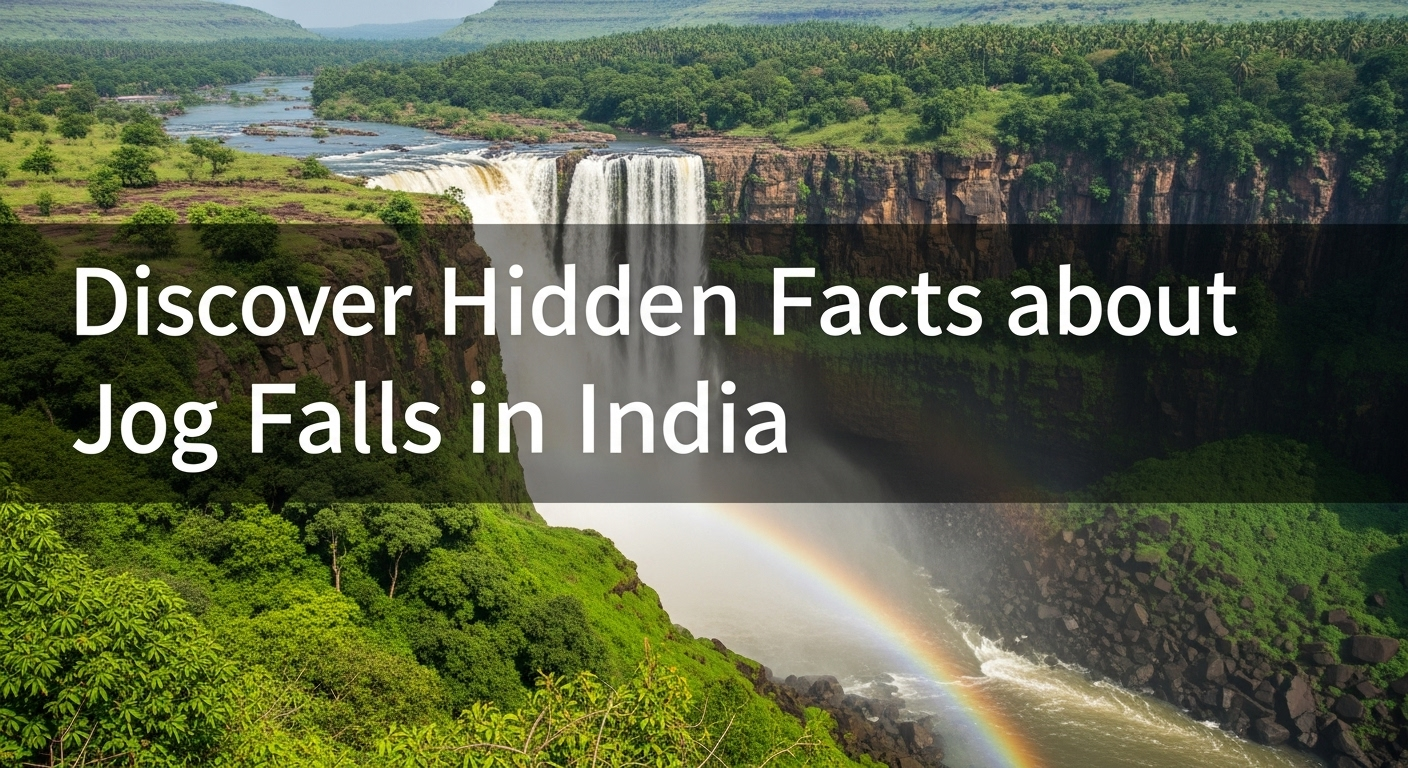
Did you know Jog Falls in Karnataka is the second-tallest waterfall in India? It has a height of 253 meters (830 feet). This waterfall draws in lots of visitors each year. It’s not just its size that’s amazing, but also its hidden stories.
The Sharavati River makes Jog Falls. It splits into four beautiful parts named Raja, Rani, Roarer, and Rocket. The tallest is Raja at 254 meters (833 feet). With water falling from such great heights, Jog Falls is truly a wonder. This is especially true during the rainy season.
The Vijayanagara Empire’s history overlaps with Jog Falls’ story. Notable figures like Sir M. Visvesvaraya contributed to it. The Linganamakki Dam nearby makes the scene prettier in the rainy season. It also powers a big hydroelectric station in India, with 240 MW capacity.
To see Jog Falls at its best, visit during the monsoon season. You can easily travel there, with stations like Talaguppa, Sagara, and Honnavar not far. Nearby places like Gokarna, Karwar, and Honnavar are also worth visiting. These spots add to a great trip.
Want to know more about this wonderful waterfall? Dive further into the secrets of Jog Falls.
Key Takeaways
- Jog Falls is the second-highest plunge waterfall in India at 253 meters (830 feet).
- The falls split into four distinct cascades: Raja, Rani, Roarer, and Rocket.
- Formation is due to the Sharavati River, with a tremendous water flow rate of 153 m³/s.
- The Linganamakki Dam enhances the water flow during monsoon, contributing to its beauty.
- A hydroelectric station near Jog Falls, initially built in 1948, now generates 240 MW of power.
- The best time to visit is during the monsoon season when the waterfall is at its peak.
- Key transport options include nearby railway stations: Talaguppa, Sagara, and Honnavar.
The Majestic Beauty of Jog Falls
Jog Falls is hidden in the Western Ghats of India. It stands tall at 464 meters. The Sharavathi River makes this waterfall. It shines in the monsoon season. With its drop from 829 feet, it’s India’s second-highest plunge waterfall.
Overview of Jog Falls
Jog Falls is a wonder with four cascades named Raja, Rani, Roarer, and Rocket. Each one adds unique beauty. They merge into a deep chasm, showing nature’s force and beauty. It ranks as the 11th highest in India and the 13th worldwide.
It’s near Shimoga, 100 kilometers away, and easy to reach by road. The best visit time is June to September. Visitors enjoy hiking, bird watching, and kayaking for 2-3 hours. It’s open from 7:30 a.m. to 9:30 p.m. daily.
The Four Cascades: Raja, Rani, Roarer, and Rocket
The four cascades of Jog Falls are unique. The Raja falls from 830 feet. The Rani flows gently. The Roarer makes a loud sound. The Rocket shoots up like a jet. Together, they amaze all who come.
Jog Falls is not just beautiful. It also matters for ecology and culture in India. A power station there can make 120 MW of power. It was named after a Mysore king. This mix makes Jog Falls a must-see in India.
Formation and Geography of Jog Falls
Jog Falls is in Karnataka’s Shimoga district. It is among India’s highest waterfalls, standing at 830 feet. The Sharavathi River creates it, dividing into four parts: Raja, Roarer, Rocket, and Rani.
The Sharavathi River’s Role
The Sharavathi River starts near Ambutirtha. It flows over rocks, then drops into a deep chasm. This creates Jog Falls, a stunning waterfall in India.
Topographical Features
Jog Falls’ beauty comes from its surroundings. The Linganmakki Dam affects its flow and look during monsoon season. This makes the waterfall a grand sight from June to September.
“Jog Falls has inspired numerous poets and writers over the years, captivating them with its mystical allure and breathtaking beauty.”
Jog Falls is great for trekking, camping, and taking pictures. It attracts those who love nature and adventure. Places like Dabbe Falls and the Sharavathi Wildlife Sanctuary are nearby, too.
| Feature | Details |
|---|---|
| Height | 830 feet (253 meters) |
| Seasonal Peak | Monsoon (June to September) |
| Cascades | Raja, Roarer, Rocket, Rani |
| River | Sharavathi |
| Topographical Influence | Linganmakki Dam |
Hidden Facts about Jog Falls
Jog Falls in Karnataka is a stunning natural wonder. It has deep historical and cultural importance. Let’s explore some mysteries about Jog Falls that make it even more fascinating.
Historical Significance
The history of Jog Falls goes way back to the Vijayanagara Empire. It was not just a beautiful site. Jog Falls was important for marking territories back then.
It was famous for its role in history. Kings and writers talked about it as a special place.
Lesser-known Historical Tales
There are stories about Jog Falls marking borders. Historians love these stories. They show how Jog Falls influenced Karnataka’s politics.
Ancient texts also talk about its importance. It’s a big part of the area’s history.
Local Legends and Myths
There are also magical stories about Jog Falls. Locals believe gods blessed the falls. These myths make Jog Falls more than just a pretty place.
Legends explain how the falls were created. They tell of magical events, thrilling those who hear them.
| Aspect | Details |
|---|---|
| Historical Significance | Part of the Vijayanagara Empire, served as a strategic landmark. |
| Lesser-known Historical Tales | Stories of border demarcation and significance in regional narratives. |
| Local Legends and Myths | Believed to be blessed by divine entities, surrounded by mystical tales. |
Jog Falls: A Hydroelectric Powerhouse
Jog Falls is famous for its stunning beauty and green energy role. The Linganmakki Dam shows India’s push for clean power.
Started in 1948, the Mahatma Gandhi hydro project began with the Mysore King’s help. It has grown a lot since then. Now, it boasts a 240 MW capacity, merging nature’s beauty with tech progress.

The Linganmakki Dam uses the Sharavathi River’s power well. It boosts Jog Falls’ Hydroelectric Power. It’s key in India’s green energy goals.
It’s interesting to compare Jog Falls with other hydropower giants. For example:
| Region | Hydroelectric Contribution |
|---|---|
| Washington State, USA | Over 70 percent |
| US National Average | Approximately 7 percent |
| India (Jog Falls) | Significant regional contribution |
The table shows Jog Falls’ impressive power compared to others. It aligns with global hydropower trends. Jog Falls is part of global clean, affordable energy efforts.
Jog Falls is not just beautiful. It also boosts our energy security and safeguards nature for the future.
The Best Time to Visit Jog Falls
If you’re thinking about visiting the amazing Jog Falls, knowing the best time is key. Located in Karnataka, the falls look different in each season. Whether you go during the monsoon for the drama or after for calm beauty, it’s always great.
Monsoon Magic
The monsoon months, from July to early October, are perfect to see Jog Falls’ grandeur. The non-stop rains make the Sharavathi River’s water levels rise. This is when Jog Falls is most wild and impressive.
The monsoon truly transforms the landscape, making the best time to visit Jog Falls during these months for an overwhelming and breathtaking natural display.
The fee then is only ₹10 per person, making it easy to see this wonder. The falls open from 7:30 AM to 9:30 PM, giving visitors lots of time to explore. You can also go on nature walks and watch birds as the area is full of life.
Post-Monsoon Beauty
After the monsoon, from October to November, Jog Falls gets a peaceful charm. The water is still beautiful but calmer. It’s safer to hike down the 1,400 steps to the bottom, perfect for trek lovers.
In the post-monsoon, the place turns very green, adding to its beauty. You can do stuff like fish, boat, and camp then. The hike offers awesome views and takes about two hours.
| Best Time to Visit Jog Falls | Activities |
|---|---|
| Monsoon (July – Early October) | Trekking, nature walks, bird watching, witnessing the highest water flow |
| Post-Monsoon (October – November) | Hiking to the base, fishing, boat rides, camping, rejuvenated landscape views |
| Winter (November – February) | Trekking, photography, enjoying cooler climate, peaceful explorations |
The best time to go to Jog Falls depends on what you’re looking for. The monsoon brings powerful beauty, while after the monsoon, it’s peaceful and pretty. Anytime you visit Jog Falls, it will surely be unforgettable.
How to Reach Jog Falls
Jog Falls is one of India’s most famous waterfalls. It’s easy to get there by different transports. Located in the Western Ghats, it stands at 464 meters. It gives amazing views all year.
By Air
The closest airports are Hubli and Mangalore International Airport. Hubli is about 160 kilometers away. This makes it handy for visitors. Mangalore is further, 180 kilometers away. Both airports offer many flights. This makes reaching Jog Falls easy and simple.

By Train
Trains are a good choice too. The nearest stations are Talaguppa and Sagar. Talaguppa is just 30 kilometers from the falls. Sagar is about 28 kilometers away. Both link to big cities like Bengaluru and Mysuru. This means a pretty, comfy trip to the falls.
By Road
Driving is the most scenic route to Jog Falls. It’s linked by lots of buses from places like Bengaluru, 400 kilometers away, and Chikmagalur, 200 kilometers away. For drivers, good roads pass through lovely Western Ghats scenes.
No matter if you fly, take a train, or drive, getting to Jog Falls is easy. This makes sure this stunning natural place is easy for everyone to visit. Check out more about Jog Falls here.
Cultural and Historical Significance of Jog Falls
Jog Falls is more than just a beautiful spot in Karnataka, India. It’s full of culture and deep history. Since the 16th century, when Raja Keladi Shivappa Nayaka found it, it has been special. Its water from 1493 feet up tells ancient stories and myths.
The falls have big cultural events. They connect to the land spiritually. From June to August, local festivals are celebrated with old rituals. Stories tell of kings and wise men seeking peace by the water, making it even more magical.
Talking about its history, there’s also the early 1900s power plant built by the British. It marked a big change, making the area important for energy. Sir M V Visweshwaraiah’s push led to Linganamakki Dam on Sharavati River, boosting its value.
The falls split into four parts: Raja, Rani, Roarer, and Rocket. Each has its own charm. They’re a major reason Jog Falls is loved by many. With lush greenery, it’s a top place to see in Karnataka. Places like Sigandur, Gokarna, and Murudeshwar add more reasons to visit.
You can stay in luxury or cozy homes near Jog Falls. There’s Jog Falls Viewpoint Resort, Shobha Residency, and Sharavathi Adventure Camp. Whether you love history, nature, or festivals, Jog Falls invites everyone to explore its beauty and stories.
Top Things to Do in Jog Falls
Jog Falls is a top spot for thrill-seekers and camera buffs. It’s one of India’s tallest waterfalls, towering at 830 feet. The best time to see its beauty is between July and September. A trip here offers fun and peace.
Trekking Adventures
For those who love a challenge, heading to the base of Jog Falls is a must. The trek down takes about 45 minutes. You’ll get close to the falls’ natural beauty. The path is medium to hard, but the view is worth it.
Going during winter (November-February) is wise. Also, consider a local guide for a safe and full experience.
Photography Spots
Photographers find Jog Falls heavenly. Morning light makes the waterfalls shine in pictures. You can take great photos from viewpoints near Hotel Mayura and the Inspection Bungalow. The view captures the falls’ steep drop, especially when it rains hard.
Local Guided Tours
Try a local tour for a deeper look at Jog Falls. Guides share stories of the falls and keep you safe. These tours usually include other cool sites like the Linganamakki Dam and ancient temples. It’s a way to learn more about the area’s culture and ecology.
FAQ
What is the significance of Jog Falls?
Jog Falls is famous as a stunning landmark in India. It’s very tall and helps make electricity. It also shows off India’s beautiful nature and history.
What are the distinct cascades of Jog Falls?
Jog Falls has four different waterfalls—Raja, Rani, Roarer, and Rocket. Raja drops straight down. Rani flows softly. Roarer makes loud sounds. Rocket shoots down fast.
How is the Sharavathi River significant to Jog Falls?
The Sharavathi River starts near Ambutirtha and leads to Jog Falls. It falls into a deep hole, making a beautiful waterfall. The Linganmakki Dam also plays a part.
What are some hidden historical facts about Jog Falls?
Back in the Vijayanagara Empire, Jog Falls was really important. It’s in old stories and was by the empire’s edge. It also has links to myths.
How does Jog Falls contribute to hydroelectric power?
With the help of the Linganmakki Dam, Jog Falls helps make 240 MW of clean energy. This shows how important Jog Falls is for India’s green energy.
When is the best time to visit Jog Falls?
Visit Jog Falls during the rainy season for lots of water. After the rains, it’s still beautiful and full of life.
How can one reach Jog Falls?
You can fly to Hubli and Mangalore, take a train to Talaguppa and Sagar, or catch a bus from places like Bengaluru. It’s easy to get there.
What is the cultural and historical significance of Jog Falls?
Jog Falls is very important in Karnataka’s culture and history. You’ll find it in stories about old kings and wise men. It’s celebrated in many festivals.
What activities can tourists do at Jog Falls?
You can go trekking, take beautiful photos, or join guided tours. These activities let you really see the beauty of the place.