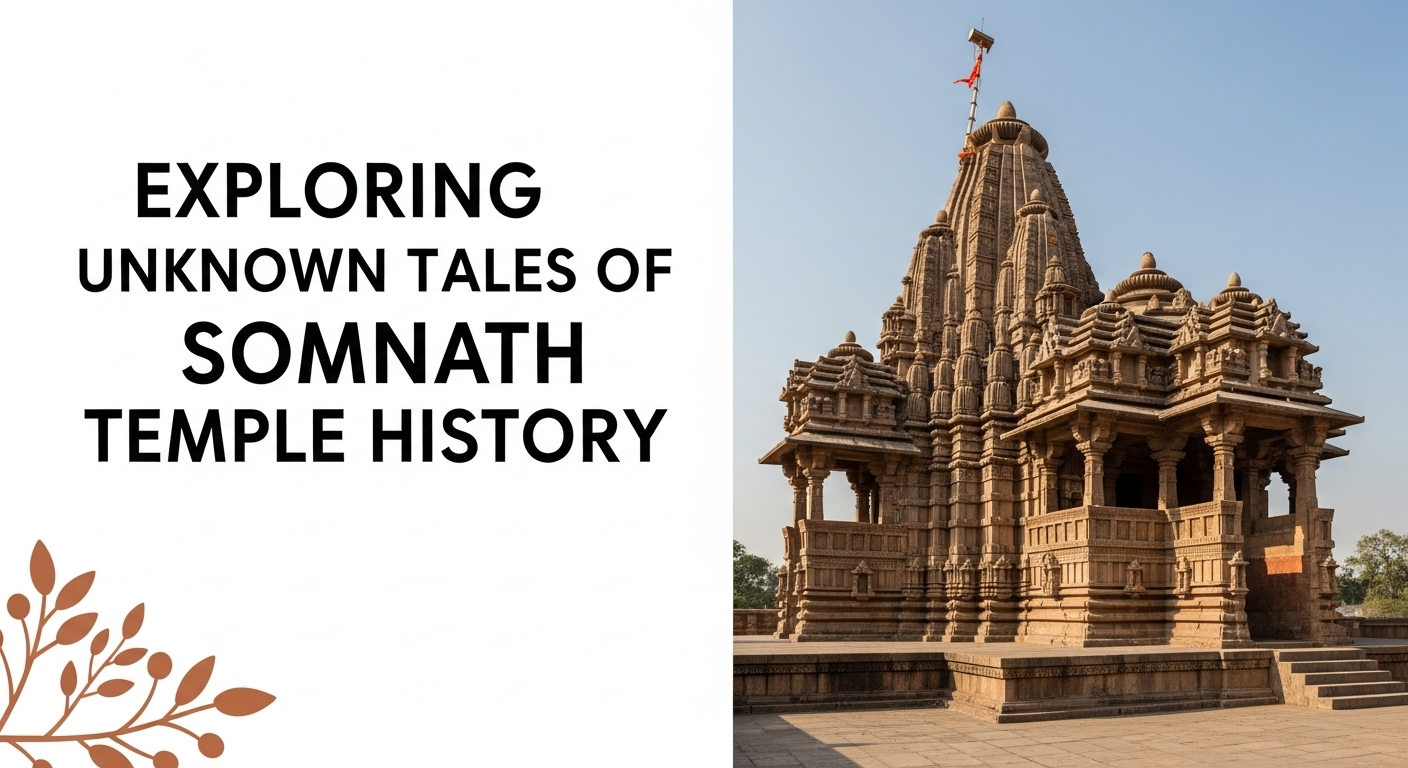
Every year, millions visit the Somnath Temple. It’s a top spiritual spot in India. This sacred place has faced many ups and downs over 1,500 years. It has seen many rebuilds and attacks. Each stone tells a story of strong faith.
Looking into the *unknown tales of Somnath*, we find old stories. They tell of courage, worship, and heavenly help. These tales have shaped the temple’s big legacy.
The Somnath Temple in Gujarat, India, is not just for prayer. It’s a mix of legends and stunning design. Today, it still touches the hearts of many who visit. This article will explore the myths and history of this famous temple.
Key Takeaways
- The Somnath Temple has a history that spans over 1,500 years, marked by resilience and religious significance.
- Unknown tales of Somnath highlight the intersection of mythology and spirituality.
- The architectural grandeur of Somnath reflects its historical and cultural importance.
- Legends surrounding the temple often involve divine interventions and miraculous events.
- Various dynasties have influenced the narratives and restoration of Somnath Temple throughout history.
The Enigmatic Beginnings of Somnath Temple
The origins of Somnath Temple are full of mystery, mixing truth and legend. Many believe it started in the 5th century. It honors the god Somnath, also known as “Shiva of the Moon.” The moon god himself worshipped Shiva here. This spot is key in ancient stories of Somnath.
The temple’s past is a story of coming back stronger. It has been rebuilt many times, especially after attacks. Mahmud of Ghazni’s raids in the 11th century are famous. Yet, each rebuild shows the strong faith of its followers. Thus, the temple stands as a symbol of hope through tough times. These enigmatic tales of Somnath inspire many worshippers even today.
The temple serves as a link between the past and present beliefs. Every visit brings to life the ancient stories of Somnath. It calls for deep thought and respect. This makes it a fascinating place to learn about and admire.
Architectural Marvels of Somnath
The Somnath Temple is a key part of India’s history. It shows off amazing Somnath Temple architecture. This place combines art and smart building from the past. The temple was first made of sandstone. It shows the beautiful ancient design of Somnath Temple, which follows the Chaulukya style.
The temple’s tower, called shikhara, ends with a golden dome. This dome is a high point of Somnath’s design. It links earth to the sky. The walls have detailed carvings and statues. These show stories from Hindu myths, drawing in those who visit.
https://www.youtube.com/watch?v=o2UOrNwsz_0
The temple has big halls and special rooms that mix well together. They make the temple both pretty and useful. The design of Somnath is more than about religion. It has inspired many other temples in India. Its making technique still affects temple designs today.
In all, the Somnath Temple architecture is an amazing piece of history. It keeps alive traditions from long ago. People keep respecting this beautiful building. It shows how important it is to India’s culture and faith stories.
Historical Significance Behind Somnath Legends
The Somnath Temple is more than its beautiful looks. It captures the heart of Indian culture and faith. It appears in old stories and records, like the Skanda Purana and Aihole inscription. These texts highlight its role as a key pilgrimage spot.
Many leaders and invaders have influenced the story of Somnath Temple. It has been destroyed and rebuilt many times. This shows the strong faith and culture of people through ages. The temple’s story shows how belief can survive tough times.
Stories about Somnath Temple show how important it is to different groups. These stories bring people together, sharing in its long history. The temple is a place of worship and a symbol of common values and beliefs.
Unknown Tales of Somnath
The story of Somnath is full of tales about its rebuilding. Over time, many leaders worked to bring back the temple’s beauty. This journey mixes cultural narratives and design styles, adding to the unheard history of Somnath. Each rebuild tells of determination and pride in culture. Different dynasties helped make the temple what it is today.
Legends of Reconstruction Through the Ages
The reconstruction legends of Somnath are more than just stories of repair. They show art coming together under great leaders. After Mahmud of Ghazni destroyed it, the temple was rebuilt many times. The Chalukyas and Solankis added their own touches. Their work showed the devotion of the followers and a promise to keep their heritage alive.
Influence of Various Dynasties on Somnath’s Narrative
The effect of each dynasty on Somnath isn’t just about the building. Every ruler brought new cultural and architectural changes. For example, the Chlukyas added detailed carvings that amaze people even now. The British also left their mark with their style. Somnath has become a mix of many stories, showing both local and wider histories.

| Dynasty | Impact on Somnath | Architectural Style |
|---|---|---|
| Chalukyas | Introduced intricate carvings | Dravidian style |
| Solankis | Enhanced temple structure | Indo-Aryan style |
| British | Restored temple with colonial elements | Neo-Classical style |
Mysterious Past of Somnath: Myths and Realities
The mysterious past of Somnath Temple invites intrigue and curiosity. It draws historians and enthusiasts who seek to uncover its legendary narrative. Throughout centuries, many myths about Somnath Temple have emerged. They tell of divine interventions and miraculous events mixed with human struggles. These tales enrich its complex history but often clash with real accounts, highlighting the reality vs. legend in Somnath.
One fascinating story is linked to the moon god Chandra, known for his curses and divine interactions. Such tales add mysticism to the temple. They attract both spiritual seekers and cultural scholars. Despite historical texts trying to record the temple’s journey, the charm of these old tales stands strong.
Exploring this mysterious past of Somnath, one finds a wealth of stories. They show human reverence and divine presence. Each myth invites us to dive deeper into the collective memory and spirituality of the place. The mix of legend and true history may shape Somnath’s perception today. Yet, the dynamic nature of its story continues to inspire awe.
Secret Narratives of Somnath Temple
The ancient rituals at Somnath Temple hold many secrets. They are key to Hindu journeys of faith. Every year, many visit this sacred place. They come for its history and deep spiritual practices.
Connections to Ancient Rituals and Traditions
Somnath is famous for its ancient rituals at Somnath Temple. Every day, people worship in special ways. They join in festivals that show their love for the divine. These rituals bring people together, strengthening their bond. Big festivals have special events that attract visitors from far away. This shows the temple’s importance in keeping traditions alive.
The Role of Somnath in Hindu Pilgrimages
Somnath is one of the twelve Jyotirlingas, making it very special. Pilgrims come here with hope and respect. It’s part of their dream to visit. The temple connects many sacred places in India. It invites them to see the big picture of their faith. Somnath is as important as holy places like Badrinath and Varanasi. It makes people feel they belong as they walk its paths.

Cultural Depictions in Somnath Folklore
The Somnath Temple has many stories in Indian tales. These stories show strength and love for the temple. Legends at Somnath are shared from one generation to the next. They tell of a sacred power at this holy place.
People use art to show what Somnath tales mean. There are stories of brave kings and fighters tied to the temple. Poems of bravery and giving also talk about the temple. It shows the temple is not just for prayer. It’s a symbol of what people are proud of.
The temple is also key in local festivals and special times. It shows its lasting mark on the people there. Stories of Somnath are shared when people come together. This makes the temple central to who they are and their shared history.
| Aspect | Description |
|---|---|
| Folklore Origins | Stories often reflect themes of divinity, valor, and love. |
| Artistic Influence | Significant source of inspiration in literature and visual arts. |
| Cultural Events | Integral in celebrations and local festivals, fostering community bonds. |
| Symbolism | A representation of resilience and cultural pride within Indian heritage. |
Modern Day Significance of Somnath
Somnath Temple is very important today. It’s not just an old place; it’s a key pilgrimage spot. Thousands come here every year. This place is about more than faith. It helps with tourism and helping others too. People visiting help the local places make money. They enjoy the cultural richness. Today, Somnath stands for never giving up and keeping history alive. It shows the powerful spirit of Hindu traditions.
The temple is a big cultural spot. It is easy to get to because it’s near major travel paths. This brings people from all over. They come for blessings and experience the lively culture. This brings people together, making strong cultural bonds.
Also, the temple starts a lot of good projects in the area. These projects help with schools and healthcare. The temple is like a light of hope. It shows how spiritual places can make society better but stay holy.
| Aspect | Details |
|---|---|
| Historical Importance | Home to the revered Shivling, linked to numerous mythical tales. |
| Tourism | Attracts over a million visitors annually, benefiting local economies. |
| Community Initiatives | Supports local health and education programs. |
| Spiritual Atmosphere | Provides a serene environment for reflection and devotion. |
| Cultural Events | Hosts various festivals celebrating Hindu traditions. |
Somnath in Contemporary Indian Heritage
Somnath Temple is key to understanding Indian heritage. It combines great architecture and history. This makes it a symbol of pride for many in India today.
The temple is more than a worship place. It’s also for tourism and learning about Indian heritage. The government is working to fix it up. This lets more people enjoy and respect this holy place.
Today, the temple hosts festivals and events. These attract visitors and promote cultural talks. By taking care of the temple, it stays a symbol of strength. It helps show the rich culture of modern India.
| Aspect | Description |
|---|---|
| Architectural Heritage | Displays intricate designs and historical significance |
| Cultural Significance | A center for pilgrimage, festivity, and tourism |
| Government Initiatives | Efforts to preserve and promote the temple as a heritage site |
| Visitor Engagement | Encourages educational tourism and local community participation |
| National Pride | Symbolizes resilience and unity in modern Indian identity |
Conclusion
The mysterious stories of Somnath Temple are quite fascinating. They span a rich history and spirituality that beckons exploration. Many phases of building and fixing, along with cultural tales, have shaped the story of Somnath. We see this from the grand Brihadeeswarar Temple, made between 1003 and 1010 CE. It stands tall at 66 meters. To the sacred Kedarnath Temple which sits high at 3,583 meters in Uttarakhand. These temples watch over both time and tradition like guard.
The story ends on Somnath Temple as more than a work of building skill. It shows the never-give-up spirit of cultural traditions through rough times. The legends of these places show many beliefs. Their importance today still draws visitors and worshipers, linking them to India’s spiritual roots. For more stories, click here.
The ending thoughts on Somnath’s tales tell us to keep appreciating India’s building work and its place today. As new generations visit these holy places, our hope is that their stories will live on. This ensures their spiritual and cultural value stays through the ages.
FAQ
What is the historical significance of Somnath Temple?
Somnath Temple shows resilience. It was rebuilt many times after being destroyed by invaders. This includes attacks by Mahmud of Ghazni. It is a key place for pilgrims and is mentioned in ancient texts. This shows its role in Hindu culture.
What architectural styles are represented in Somnath Temple?
The temple is famous for its beautiful design. It has amazing carvings and Chaulukya architecture. It had a tall tower and a golden dome. These showed Hindu temple design elements.
How has Somnath Temple influenced contemporary Hindu worship?
Somnath Temple is a source of modern Hindu worship. It is one of the twelve Jyotirlingas. Many pilgrims visit every year. The ceremonies and festivals there are based on old traditions. This shows its spiritual value.
Can you elaborate on the legendary tales associated with Somnath?
Many legends surround Somnath. They mix history with tales of gods. One story is about the moon god Chandra. These tales add depth to its history.
What role does Somnath Temple play in Indian culture?
It is a key place for culture, seen in writing, poetry, and art. Its stories of gods and heroes are part of local and national stories. Somnath is important in Indian history.
How has the modernization of Somnath Temple affected its heritage?
Modern work has made the temple easier to visit. But there is a focus on keeping its history and culture. Somnath blends old traditions with new importance. This builds national pride and keeps culture alive.