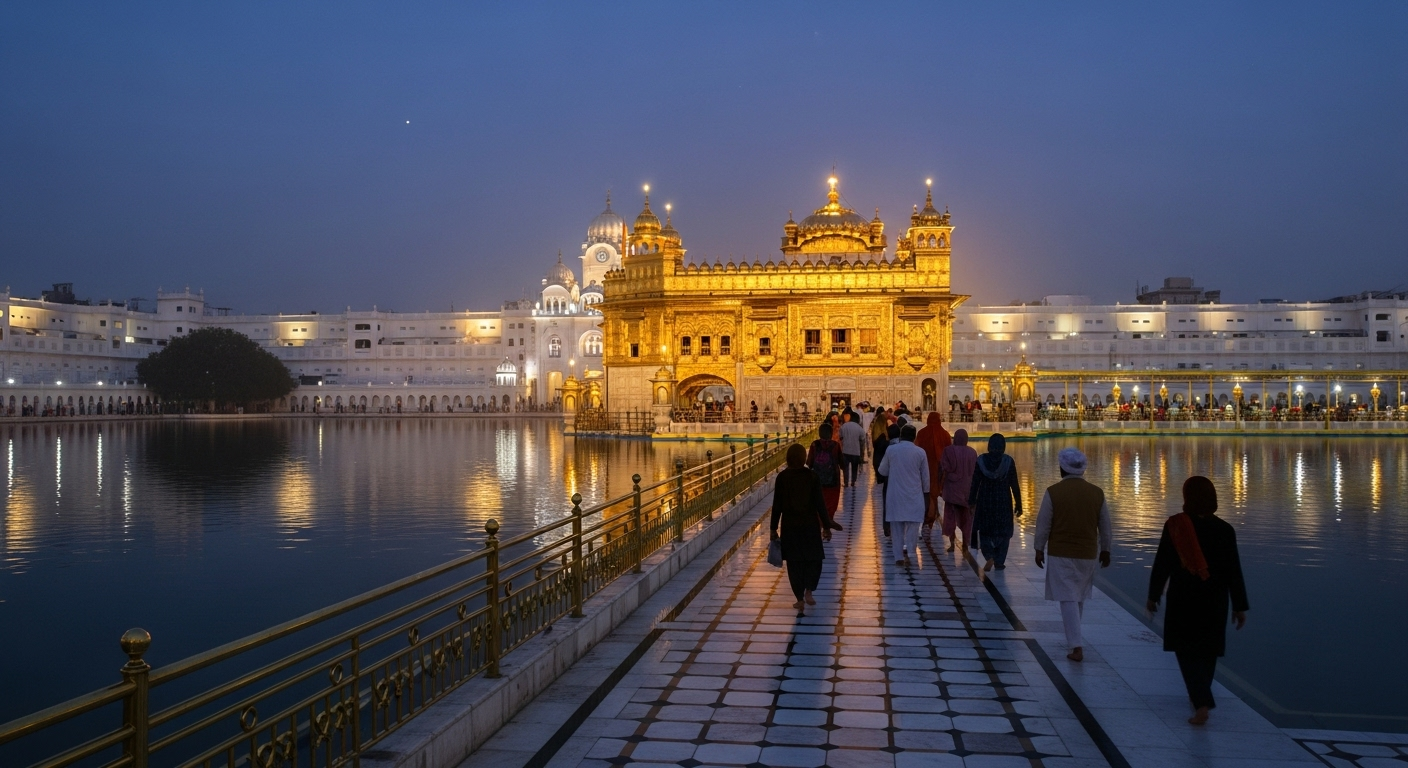
In the busy streets of Amritsar, there’s a sacred site loved by millions. It’s not just for worship. It’s a symbol of hope and a spiritual haven. The Golden Temple, known as Harmandir Sahib, sees over 100,000 visitors each day. This shows its importance in the world. But it’s not just the gold that makes it special. There’s a deep history and spirituality here, filled with stories and secrets.
The Golden Temple was started in the 16th century by Guru Ram Das, the fourth Sikh Guru. It has always been a special place for Sikhs and others looking for peace. The secrets of the Golden Temple share lessons of strength. They show how Sikh culture and religion have grown and changed.
The temple has wise words from poets like Guru Nanak. Its design shows everyone is equal. This place in Amritsar shows the Sikh community’s strength and unity. Here, pilgrims and visitors find ancient wisdom. It helps them connect deeply with the divine during their visit.
Key Takeaways
- Harmandir Sahib is not just a place of worship but encapsulates a narrative of courage and devotion.
- The site serves as a focal point for visitors seeking to delve into Sikh history and spirituality.
- Guru Ram Das’s establishment of the Golden Temple marks a cornerstone of Sikhism’s evolution.
- The architecture of Harmandir Sahib represents far more than aesthetic grandeur; it symbolizes the Sikh ethos of inclusivity.
- Understanding the secrets of Harmandir Sahib grants pilgrims a profound experience of Sikhism’s core values.
- Effective Sikh pilgrimage tips enrich the spiritual journey, fostering a deeper connection with the sacred.
The Serene Inception of Guru Nanak and the Birth of Sikhism
The life of Guru Nanak is key to starting Sikhism, a major world religion. His journey for spiritual truth started it all. He taught that all people are one under a divine creator. This challenged old social norms. It was a new way to see spirituality and equality. This moment was big in Harmandir Sahib history.
Guru Nanak’s Early Life and Spiritual Quest
Guru Nanak was born in 1469 in what is now Pakistan. He loved learning about divine subjects as a kid. His nature was deep and thoughtful. He wanted to know more about the spiritual side of life. This led him to travel far. He went across South Asia and the Middle East. He talked with many religious leaders and learned from them. This made his spiritual understanding richer.
The Foundational Teachings and Universal Message
Guru Nanak’s ideas were the base for Sikhism. They went beyond the caste system of his time. He spoke of unity, equality, and helping others. These ideas became Sikhism’s main beliefs. They show up in how Gurudwara Harmandir Sahib is built and used. This place is open to everyone, showing Sikhism’s welcoming heart.
Guru Nanak’s way started a spiritual line that still touches many. It’s not just for Sikhs. It affects culture and spiritual thinking still today. His influence shows up a lot in Amritsar, home of the Golden Temple. This temple is a symbol of hope and spirituality. Its story and the devotion it gets share the deep Amritsar spiritual secrets. These secrets draw in millions every year.
Looking at Guru Nanak’s life shows us more than Sikhism’s start. It shows us the big changes in the Indian area back then. His legacy of understanding and empathy crosses human divides. It keeps inspiring a world seeking spiritual and community peace.
Guru Angad to Guru Arjan Dev: The Shaping of a Faith
The journey of Sikhism from Guru Nanak to Guru Arjan Dev was full of growth. It was a time of deep spiritual meaning and community strength. The Sikh Gurus’ family tree became very important. It helped keep and share the faith’s main teachings.
Guru Angad, the second Guru, made the Gurmukhi script. This was very important for writing down Sikh scriptures. It saved Sikh teachings and helped the Sikh community read and come together. Because of this script, more people learned about Guru Nanak’s teachings. This laid the groundwork for the Guru Granth Sahib.
Gurus like Guru Amar Das and Guru Ram Das helped the faith and community grow stronger. Guru Amar Das made big changes. He worked on making society fair, getting rid of caste differences, and supporting women’s rights.
Guru Ram Das started building Amritsar and the Harmandir Sahib, also known as the Golden Temple. This place wasn’t just a holy site. It became a center for the growing Sikh community.
Guru Arjan Dev finished the work his earlier family started. He put together the Adi Granth, Sikhism’s first sacred book. His time also saw Sikhs becoming warriors. This was because they faced more and more threats. Becoming warriors helped them protect themselves and their beliefs.
- Golden Temple facts: The cornerstone of Harmandir Sahib was laid by a Muslim saint. This shows Sikhism’s open-hearted spirit.
- Sikh community militarization: Started by Guru Hargobind, this was a key move. It helped protect Sikhs from danger and unfair treatment.
The Sikh community becoming warriors changed northern India’s social and political scene. This was key in making a safe space for Sikhs to live and practice their faith.
The story from Guru Angad to Guru Arjan Dev is very important. It was a time of both cultural growth and the start of defense tactics. These steps were crucial for the Sikh faith and community.
| Guru | Contributions | Impact on Sikhism |
|---|---|---|
| Guru Angad | Standardization of Gurmukhi script | Enhanced scriptural access and literacy |
| Guru Amar Das | Formation of Sikh code of conduct | Social structure and equality |
| Guru Ram Das | Foundation of Amritsar | Established a spiritual center |
| Guru Arjan Dev | Compilation of Adi Granth | Canonical scripture defined |
This full story shows the early Sikh Gurus’ spiritual and practical work. It led to the strong Sikhism identity we see today.
Secrets of Harmandir Sahib
The Golden Temple is very special to Sikhs. It’s not just a place to pray. It shows the beauty of Sikh architecture. The temple blends Hindu and Islamic styles. This mix shows how Sikhism welcomes everyone. The Golden Temple has many stories in its design. These stories add to Sikh history.
The Architecture and Symbolism of the Golden Temple
The Golden Temple’s design is full of meaning. Its marble base has beautiful flowers carved into it. These flowers remind us that God is everywhere in Sikhism. The top part is gold and looks amazing. It shows that spiritual things are more important than material things. This thoughtful design makes the temple very important to Sikhism.
Hidden Chambers and Historic Artifacts
People have always whispered about secret rooms in the Golden Temple. These rooms are thought to hold special Sikh items. The things kept here tell stories of bravery and faith. They include old writings and items from the Sikh Gurus.
Many people come to learn about these secrets. Historians, scholars, and those looking for spiritual insight all visit. They hope to learn about the temple’s hidden legacy. But these secrets are still a mystery. They call out to those who truly wish to understand the Golden Temple.
The Harmandir Sahib is more than just a religious spot. It shines a light on Sikh heritage and faith. People feel they are on a special journey when they visit. This is why the Golden Temple is key to understanding Sikhism. It’s an important part of their history.
Guru Hargobind and the Akal Takht: A New Direction for Sikhism
Guru Hargobind marks a key change in Sikh spiritual leadership. As the sixth Guru, he started the Akal Takht. It grew to be more than just a religious building. It stood for Sikh freedom and was key in Sikh resistance against being oppressed. His move highlighted the Akal Takht significance. It mixed spiritual advice with real-world power, a blend known as Miri-Piri.
Under his lead, the Akal Takht was where defense plans and community care were thought out. It pushed the Sikh community to really get involved in social and political matters. This created a strong, independent community. His time is seen as a turning point. It added a sense of being ready to fight to the spirituality of Sikhism.
To really understand these spiritual places, one might visit Gurudwaras in Punjab. These are key in seeing the huge cultural aspect of Sikhism.
| Gurudwara | Location | Visiting Hours | Significance |
|---|---|---|---|
| Gurudwara Harmandir Sahib | Amritsar | 3 AM – 10 PM | Architectural grandeur and spiritual heart of Sikhism |
| Takht Sri Kesgarh Sahib | Anandpur Sahib | 24 hours | Birthplace of the Khalsa |
| Gurudwara Shri Tarn Taran Sahib | Tarn Taran | 5 AM – 9 PM | Symbol of Sikh resistance against Mughal rule |
| Gurudwara Shri Fatehgarh Sahib | Fatehgarh Sahib | 3 AM – 11 PM | Commemorative site of the martyrdom of Guru Gobind Singh’s sons |
Each Gurudwara tells its own story. They share a deep spiritual meaning. They teach about the bold past of Sikh resistance and leadership.
The Tenacious Spirit of Guru Gobind Singh and the Khalsa
In 1699, Guru Gobind Singh created the Khalsa. This event was key in Sikh history. It set the spiritual foundation and symbols of Sikh identity that we know globally today. The Khalsa aimed to awaken the spirit and stand against oppression. It taught unity, ethics, and preserving personal integrity.
Guru Gobind Singh’s legacy lives on through his unique take on inclusivity and justice. The Khalsa gave his followers specific symbols and a sense of community. These symbols, or the Five Ks, have both spiritual and practical roles. They create a unique shared identity.
Creating the Khalsa: A Definitive Moment in Sikh History
The Khalsa’s start was groundbreaking. Sikhs vowed to live up to high moral standards. They aimed to defend their faith and rights. This event showed Guru Gobind Singh’s commitment to a unique community. It stood for core Sikh values and offered resilience against injustice.
Preservation of Identity: The Story Behind the Five Ks
Each of the Five Ks has deep meaning. They show the wisdom of Sikhism. Kesh, or uncut hair, respects God’s creation. Kangha, a wooden comb, stands for cleanliness. The iron bracelet, Kara, is a sign of eternity and control.
The Kachera, a cotton undergarment, supports modesty. The Kirpan, a small sword, promotes justice and protection of the innocent. These symbols strengthen the Sikh community. They reflect the Khalsa’s principles, inspired by Guru Gobind Singh’s ideas of equality and good behavior. His legacy continues to move people worldwide.
The Enlightened Patronage of Maharaja Ranjit Singh
During Maharaja Ranjit Singh’s reign, the Sikh Empire’s golden age was born. It turned Punjab’s wealth into real growth and stability. Under his rule, Lahore became a global city, full of wealth and culture.
Ranjit Singh welcomed all religions and built better roads and buildings. This led to a big boost in trade, farming, and the arts. Punjab’s economy grew strong, and its culture got a new life.

The era was known as the Sikh Empire’s golden age. Maharaja Ranjit Singh made a place where different religions lived together in peace. He also supported many public projects and religious places, showing his love for Punjab’s prosperity.
Maharaja Ranjit Singh loved the arts and building, which created famous landmarks. These landmarks show Punjab’s rich history even today. His support kept the spiritual and cultural identity of his people alive.
- Strengthening of the Sikh Empire
- Enhanced economic prosperity
- Flourishing arts and culture
- Religious tolerance and harmony
This all shows the golden age of the Sikh Empire. Maharaja Ranjit Singh was a forward-thinking ruler. His work helped Punjab’s wealth and influenced the whole area for a long time.
Harmandir Sahib History: The Mughal Confrontation and Beyond
The Golden Temple, also known as Harmandir Sahib, has a tough history. It faced many challenges from the Mughals. These encounters show a story of struggle and strength over many years.
Testimonies to Resilience: Encounters with the Mughal Empire
Guru Arjan Dev Ji, the fifth Sikh Guru, was very brave. He stood strong against Mughal rule. This set a powerful example of fighting against unfairness. It deeply influenced the Sikh way of life.
Chronicles of Preservation and Restoration
The Sikh community always fixed the Golden Temple after it was damaged. These repairs were acts of faith and a way to show their identity. Even when times were hard, the temple remained standing tall. Its rebuilding showed the Sikh spirit.
| Event | Impact on Harmandir Sahib | Restoration Initiatives |
|---|---|---|
| Martyrdom of Guru Arjan Dev Ji | Catalyzed Sikh consolidation and fortification | Faith-driven restoration post-destruction |
| Mughal decline (1707-1857) | Periodic destructions amidst power vacuums | Multiple reconstructions, enhanced architectural resilience |
| Operation Bluestar (1984) | Significant damage to structure and sentiment | Community-led rebuilding, modern enhancements |
The Golden Temple symbolizes hope and spiritual freedom for Sikhs worldwide. It stands for the community’s unbreakable spirit and faith during hard times.
Understanding Sikh Rituals and Traditions within Harmandir Sahib
Harmandir Sahib is the spiritual heart of Sikhism. It draws millions of people every year. It is central to Sikh religious events. One key event is the Prakash ceremony in the morning. It celebrates the Guru Granth Sahib. This event shows deep respect for it as the everlasting guru.
The Sacred Prakash Ceremony and Eternal Guru Granth Sahib
Every morning, the Guru Granth Sahib is moved to the main shrine with care. Flowers decorate its palanquin during the march. This act is more than tradition. It shows the power and wisdom of the Sikh gurus. It is the core of Sikh rituals at Harmandir Sahib.
The Langar: Culinary Traditions of Selflessness
The Langar at Harmandir Sahib is about equality and helping others. Anybody can eat there, no matter who they are. This shows Sikh values in action, focusing on giving and unity.
Langar is about more than food. It’s a holy service. Volunteers cook, serve, and clean. Their work shows a great sense of community and willingness to help.
Harmandir Sahib teaches respect, equality, and service through its rituals and Langar. These values touch both those who practice them and visitors.
Every part of these ceremonies is full of history and deep meaning. They make Harmandir Sahib more than a worship place. It’s a lively center of Sikh culture and life.
Amritsar’s Spiritual Secrets: Beyond the Golden Temple
Amritsar is not just a city. It’s an Amritsar sacred site. It offers more than the stunning Golden Temple. The city is a spiritual center for Sikhism. It also brings vibrant Punjab cultural experiences. Visitors can dig deep into its spiritual and historical stories.

Every corner of the city tells stories of Sikh spiritual heritage. It starts at the sacred Harmandir Sahib. The streets around it are alive and busy. The city’s buildings share tales of endurance in faith and life. The Akal Takht stands out. It shows Sikh’s strong spirit next to the peaceful Harmandir Sahib.
The people of Amritsar make its story special. They are known for being welcoming. They live by Sikhism’s values: selflessness and serving others. The tradition of Langar is a great example. It’s a community kitchen open to all. It shows equality and brings people together.
To truly know this place, you should visit the local markets and food spots. These places are full of Punjab cultural experiences. You can find tasty food and beautiful crafts. Each one tells part of Amritsar’s rich culture.
Many important people, like Indira Gandhi, have praised Amritsar’s spirit. The city blends history and peace beautifully. It influences many people, even those far away.
| Guru | Years | Contribution |
|---|---|---|
| Guru Nanak | 1469–1539 | Founded Sikhism; established the Sant tradition as a base. |
| Guru Angad | 1504–1552 | Introduced Gurmukhi script. |
| Guru Amar Das | 1479–1574 | Propagated equality, rejecting caste segregation. |
| Guru Ram Das | 1534–1581 | Founded Amritsar; established Harmandir Sahib. |
| Guru Arjan | 1563–1606 | Compiled Adi Granth, faced martyrdom by Mughal forces. |
| Guru Hargobind | 1595–1644 | Introduced martial training, emphasized temporal authority. |
Amritsar is a soulful journey in Punjab. It’s full of spiritual and cultural discoveries. Every corner, every smile, and every meal share the Sikh spirit. They show the strong values of the community.
Insider’s Guide: Sikh Pilgrimage Tips and Mindful Visits
Starting your visit to Harmandir Sahib right means knowing how to be respectful. Whether you’re exploring Sikh teachings or the culture, these tips make your trip better.
Etiquette and Practices for the Respectful Traveler
Visiting the Golden Temple is special and requires respect. You should cover your head, take off shoes, and wash up before going in. These steps show respect and keep the place pure.
The weather in Amritsar can change your plans. There’s lots of humidity from July to September and cold nights from November to February. Dress right to stay comfortable and respect the local customs.
Discovering Harmandir Sahib’s Hidden Gems
There’s a magical feel in the air at Harmandir Sahib. Early mornings or dusk are perfect to see the Golden Temple shine over Amrit Sarovar. Look for less known spots to see amazing art and history.
The Golden Temple also has the world’s biggest free kitchen, serving over 100,000 meals daily. Helping out or watching the Langar teaches a lot about selflessness. Every moment here lets you learn from the simplicity and humility around.
Visiting this sacred place teaches you so much. Following these tips, respecting the culture, and finding hidden spots makes your trip very rewarding. It’s a journey that touches your heart deeply, made for those who care.
Golden Temple Facts: Myths and Legends Unraveled
The storied walls of Harmandir Sahib, more popularly known as the Golden Temple, whisper tales of miracles and divine encounters. These Golden Temple myths and Sikh legends show us the deep spirituality there.
| Event | Description | Significance |
|---|---|---|
| Foundation Laid by a Muslim Saint | According to lore, Hazrat Mian Mir, a Muslim saint, laid the foundation at Guru Arjan Dev’s request. | This event shows Sikhism’s inclusivity and belief in interfaith harmony. |
| Healing Waters of Amrit Sarovar | The Golden Temple’s surrounding pool, Amrit Sarovar, is believed to have healing powers. | Pilgrims worldwide bathe in it, seeking physical and spiritual healing. |
| Guru Nanak’s Enlightenment | Guru Nanak is said to have found enlightenment after disappearing into a river for three days. | This event is central to Sikh legends, marking Sikhism’s beginning. |
| The Eternal Guru Granth Sahib | Before his death, Guru Gobind Singh made the Adi Granth the Sikhs’ eternal Guru. | This act made the Adi Granth the final and everlasting Sikh leader. |
These narratives around Harmandir Sahib lore are not just stories. They carry deep ethical and spiritual meanings. They highlight Sikh values like service, humility, and devotion, following the Gurus’ path.
Exploring these myths and legends makes the Golden Temple experience richer for visitors and devotees. It’s a journey of discovery that shows Sikhism’s monumental history and its teachings’ daily importance.
Conclusion
Harmandir Sahib is an everlasting symbol of faith. It shows the unbreakable spirit and kind heart of Sikhism. Every year, millions of visitors come here for a spiritual journey. They find more than just sights. They step into a place where history and spirituality meet.
This place’s story isn’t just about its beauty. It’s also about Amritsar’s divine link, shown in brave and good deeds from the past. From exploring sacred areas to feeling peace near its waters, Harmandir Sahib has seen many ups and downs of its people.
Recently, Vinesh Phogat was honored by Takht Damdama Sahib’s Jathedar. Even Prime Minister Narendra Modi showed his respect. This reminds us of its cultural importance and personal meaning to many. People like Manish Sisodia and Bhagwant Mann also visit. Their visits mix politics with personal faith, adding to a larger story. This story is part of Sikhism and its values.
Being part of the Sikhism journey shows how followers keep their culture alive, no matter what. Even during tough times, like the challenges Sisodia faced, they stay strong. This strength and unity shine in everyone who visits Harmandir Sahib. So, for anyone looking for comfort or togetherness, the Golden Temple is a guiding light. It invites us all to understand Amritsar’s divine link and the lasting legacy of a truly inspiring spiritual path.
FAQ
What are some secrets of Harmandir Sahib?
Harmandir Sahib, also known as the Golden Temple, may have secret chambers. Inside, historical Sikh artifacts are hidden. Its design, mixing Hindu and Islamic styles, shows Sikhism’s open spirit.
What is the significance of Guru Nanak in Sikhism?
Guru Nanak started Sikhism and taught about unity under one God. He challenged social norms and pushed for equality.
How did the Sikh Gurus shape their faith?
Each Sikh Guru, from Guru Nanak to Guru Arjan Dev, helped Sikhism grow. They gathered teachings, made the Gurmukhi script, and built the Golden Temple as a worship place.
What are the hidden gems of Harmandir Sahib?
Beyond its main area, the Golden Temple showcases beautiful art and marble. At dawn and dusk, its image on the Amrit Sarovar during Gurbani is stunning.
What is the role of the Akal Takht in Sikhism?
The Akal Takht, started by Guru Hargobind, is where Sikhism’s worldly justice comes from. It stands for Sikh freedom and makes important decisions.
Who created the Khalsa, and why is it important?
In 1699, Guru Gobind Singh formed the Khalsa, a group of devoted Sikhs. It’s key for its role in Sikh identity and values, known by the Five Ks.
How did Maharaja Ranjit Singh contribute to the Sikh Empire?
Maharaja Ranjit Singh brought Sikh groups together, creating a strong empire. His rule brought peace, wealth, and acceptance of all religions.
How has Harmandir Sahib faced historical challenges?
Harmandir Sahib has been attacked and rebuilt many times. These attacks came from Mughal and Afghan forces. These tough times show the Sikh spirit and their dedication.
What role does the Guru Granth Sahib play in daily ceremonies at Harmandir Sahib?
The Guru Granth Sahib is very important in Harmandir Sahib’s daily life. Each morning, it is brought to the shrine in a special ceremony, showing deep respect.
What should visitors keep in mind when visiting Harmandir Sahib?
Visitors should follow local traditions at Harmandir Sahib. This means covering their head, no shoes, and cleaning up before going in. This helps keep the place sacred.
What myths and legends are associated with the Golden Temple?
The Golden Temple has many myths and legends. These stories talk about miracles and divine moments seen by the Gurus, adding to its spiritual value.