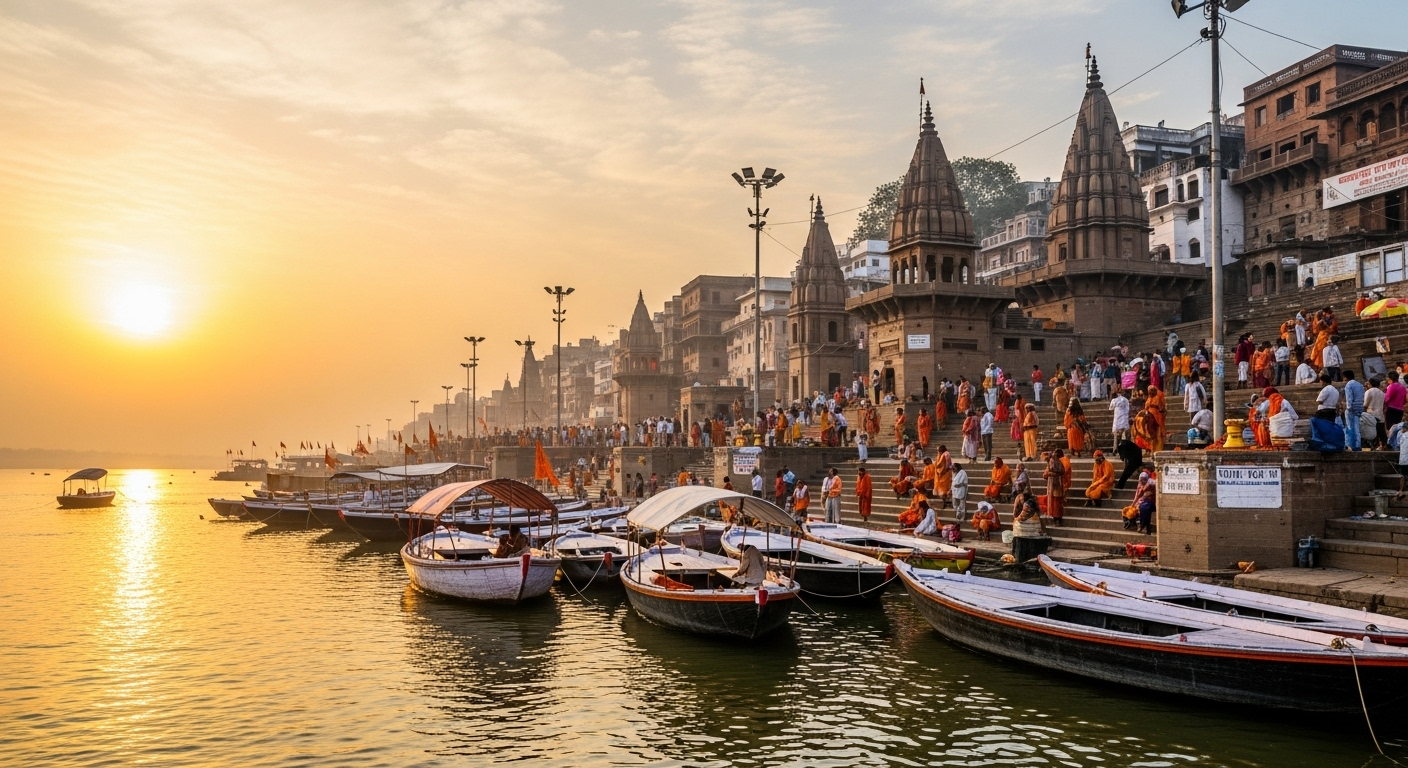
When you step into Varanasi, it’s like blending the past and present together. Walking along the ghats, you witness life in its purest form. Pilgrims chant and dip in the sacred Ganges. Ancient temples host timeless rituals. Varanasi, or Kashi, draws those who love spirituality and history. Its sacred river, ancient temples, and narrow alleys share deep stories with everyone.
Exploring Varanasi offers an unforgettable experience. You’re wrapped in a tapestry of life and divine thoughts. Key sights like the Kashi Vishwanath Temple, the Ganga Aarti at Dashashwamedh Ghat, and Ramnagar Fort are mesmerizing. Varanasi’s blend of spirituality and modernity creates unique experiences. It connects deeply with those who wander its riverfronts and streets.
Key Takeaways
- Varanasi boasts around 84 ghats that provide access to the Ganges River for religious rituals and bathing.
- The Kashi Vishwanath Temple features an 800-kilogram gold-plated tower.
- The Ramnagar Fort was built in the 18th century and serves as a historical residence for Maharaja Anant Narayan Singh.
- The Ganga Aarti at Dashashwamedh Ghat is a nightly ritual attracting hundreds of devotees.
- Dhamek Stupa in Sarnath, near Varanasi, dates back to the 6th century BC and was expanded during Emperor Ashoka’s reign.
Kashi Vishwanath Temple: A Spiritual Journey
Varanasi is one of the world’s oldest cities. It is home to many special places. Among them, Kashi Vishwanath Temple is the most famous. This temple is not just a place to worship. It is where people feel a deep spiritual connection.
Historical Significance
The Kashi Vishwanath Temple is very important in history. It is dedicated to Lord Shiva. This temple is one of the 12 Jyotirlingas. It means Shiva showed himself here. Legends say it is over 3,500 years old.
The temple is the heart of Varanasi. It has seen many changes and survived many attacks. It has been rebuilt many times. Yet, it still stands as a symbol of faith and tradition.
Architectural Features
The temple’s architecture is stunning. Maharaja Ranjit Singh gave a lot of gold for it. About 800 kilograms of gold cover the temple. It shines with spiritual wealth.
Beautiful carvings and statues decorate the temple. They make the temple look amazing. Every detail makes people feel more respect and amazement.
Darshan Timings
Many pilgrims visit the Kashi Vishwanath Temple every day. They come to see the sacred Jyotirlingas. The temple opens at 2:30 AM and closes at 11:00 PM. This gives everyone a chance to visit.
There are different aartis during the day. Each one offers a special way to feel connected to the divine. Visit during these times for a full spiritual experience.
Dashashwamedh Ghat: Witness the Magnificent Ganga Aarti
Dashashwamedh Ghat is one of the oldest and most loved ghats in Varanasi. It is known for the beautiful Ganga Aarti every evening. This event is done by priests to honor the River Ganges. It shows the city’s deep spiritual side.
Importance of Ganga Aarti
The Ganga Aarti at Varanasi’s Dashashwamedh Ghat is a sight full of devotion. It includes brass lamps moving in a special way, with chanting and bells. This creates a scene of light and sound on the water. It draws both tourists and pilgrims.
This Aarti helps clean the soul. It makes the bond with the Ganges stronger.
Best Time to Visit
The best time to see the Ganga Aarti is before sunset. It starts at around 7:00 PM in summer and 6:00 PM in winter. This offers a magical view as the sun goes down.
Many visitors take boat rides from Dashashwamedh Ghat. This gives a different view of the ceremony. There are rowing boats, motorboats, and both shared and private boats. These trips can last one to two hours.
Visiting Dashashwamedh Ghat takes about 2 to 3 hours. This gives you enough time to look around and see the Ganga Aarti. The ghat is also near the Kashi Vishwanath Temple. This makes it a key spot for many seeking spiritual peace. Varanasi’s Dashashwamedh Ghat is essential for experiencing the city’s culture.
Ramnagar Fort: A Glimpse into Royal Heritage

Ramnagar Fort is a stunning site in Varanasi. It sits proudly by the Ganges River. Covering 20,000 square meters, its large size shows its importance. Built in the 18th century by Maharaja Balwant Singh, it is a key historical site. This fort shows the rich cultural past and royal beauty of Varanasi.
Historical Background
The fort was made with bright red sandstone. This makes a beautiful contrast with the surrounding green. It still houses the Maharaja of Varanasi, with Anant Narayan Singh becoming Maharaja in 2009. The fort highlights Varanasi’s royal history. It tells old stories through its design and treasures.
Key Attractions within the Fort
There are several amazing places to see inside Ramnagar Fort.
- Museum: The museum has many items like vintage cars and old weapons. It is open from 10 am to 5 pm but closed on Mondays and public holidays.
- Astronomical Clock Tower: Called “Dharam Ghadi,” it shows the scientific skills of the past. It is still a big draw for visitors.
- Temples: There are temples for Lord Vishnu and Ved Vyasa in the fort. They add to the fort’s holy feel.
- Annual Ramnagar Ramlila Festival: This festival is a big draw. It is known for its tradition and grand celebrations.
Touring the fort takes a lot of time because it is so big. Places like Ramnagar Ghat, Chunar Fort, and Vindhyachal Temple are also close by. The entrance cost is Rs. 15 for Indians and Rs. 200 for others. The best months for a visit are from October to March. This time is ideal for a good visit.
Tourist Places in Varanasi: Unveiling Hidden Gems
Varanasi is full of hidden treasures. Each is filled with history and faith. Exploring them takes you deep into Varanasi’s culture and spirit. It shows places in Varanasi that many don’t see.
Dhamek Stupa
The Dhamek Stupa is in the peaceful Deer Park of Sarnath. It marks where Buddha gave his first sermon. The area around is green and calm.
It’s perfect for thinking deeply. This stupa was built in 500 CE. It’s a must-visit for those wanting to know more about Buddhism. To discover more of Varanasi’s hidden spots, go to this link.
Manikarnika Ghat
Manikarnika Ghat is important for cremation in Varanasi. It’s at the heart of Hindu beliefs about reaching moksha.
Seeing the ceremonies connects you deeply to Varanasi’s spiritual side. This makes it one of Varanasi’s must-see places.
Bharat Mata Temple
The Bharat Mata Temple stands out because it’s not like other temples. It honors Mother India instead. Inside, there’s a special map of India.
This temple celebrates India’s unity and pride. You can visit it from 7:00 AM to 5:30 PM. It gives a special view of India’s geography and culture.
| Attraction | Significance | Visiting Hours |
|---|---|---|
| Dhamek Stupa | Site of Buddha’s first sermon | All day |
| Manikarnika Ghat | Primary cremation ghat in Varanasi | All day |
| Bharat Mata Temple | Relief map of India | 7:00 AM – 5:30 PM |
Assi Ghat: A Fusion of Spirituality and Serenity
Assi Ghat sits at the southern end of Varanasi’s ghats. It’s a place where spirituality meets calm. The poet Tulsidas is believed to have found his final freedom here. This spot is a key tourist place in Varanasi, attracting people worldwide.
Daily Rituals
At dawn, people start their day at Assi Ghat with holy baths in the Ganges. They follow with prayers and offerings. This ghat buzzes with spiritual activity. It’s essential for those seeking growth in devotion. Morning chants and evening aartis here are a must for visitors seeking spiritual activities in Varanasi.
Activities for Tourists
Assi Ghat isn’t just for spiritual seekers. It also welcomes adventurers. Tourists enjoy boat rides on the Ganges here. They get amazing views of the ghats. The ghat now offers hot air balloon rides too. These blend spirituality with adventure perfectly.
For a cozy yet cultural stay, tourists pick Live Free Hostel near Assi Ghat. It’s close, letting guests easily join in ghat rituals. It’s a top pick for diving into Assi Ghat’s experiences.
FAQ
Which are the top Varanasi attractions?
Top Varanasi attractions include Kashi Vishwanath Temple and Dashashwamedh Ghat. Ramnagar Fort, Dhamek Stupa, Manikarnika Ghat, and Assi Ghat are also must-sees.
What is the historical significance of Kashi Vishwanath Temple?
Kashi Vishwanath Temple is a special place. It is one of the 12 Jyotirlingas of Lord Shiva. It has a long history of over 3,500 years and is a key spiritual site.
What are the architectural features of Kashi Vishwanath Temple?
Kashi Vishwanath Temple dazzles with 800 kilograms of gold on its top, thanks to Maharaja Ranjit Singh. This golden touch adds to the temple’s majesty for all who visit.
What are the darshan timings for Kashi Vishwanath Temple?
You can visit Kashi Vishwanath Temple from 2:30 AM to 11:00 PM. They have special aartis like Mangal Aarti, Bhog Aarti, and Sapta Rishi Aarti through the day.
What is the importance of Ganga Aarti at Dashashwamedh Ghat?
The Ganga Aarti at Dashashwamedh Ghat is a beautiful ceremony. It honors the River Ganges with lights and chants. This shows Varanasi’s deep spirituality.
When is the best time to visit Dashashwamedh Ghat for Ganga Aarti?
Evening is the best time for Ganga Aarti at Dashashwamedh Ghat. It starts at 7:00 PM in summer and 6:00 PM in winter. The view and vibe are amazing.
What is the historical background of Ramnagar Fort?
Ramnagar Fort was built in the 18th century with red sandstone by Maharaja Balwant Singh. It has temples and a museum showing Varanasi’s rich history.
What are the key attractions within Ramnagar Fort?
Inside Ramnagar Fort, you’ll find temples and a museum. They showcase history and royal stories of Varanasi. It’s a peek into the past.
Why should tourists visit Dhamek Stupa?
Dhamek Stupa is a peaceful spot where Buddha first taught. It’s a place for quiet and learning, making it a must-visit in Varanasi.
What is the importance of Manikarnika Ghat?
Manikarnika Ghat is very important for cremations in Varanasi. It teaches us about life’s cycle and hopes for freedom after death.
What is unique about Bharat Mata Temple?
Bharat Mata Temple stands out because it’s for India itself, with a map to show the country. It reflects a love for the nation, away from usual temple themes.
What daily rituals can be observed at Assi Ghat?
Assi Ghat wakes up to daily rituals like dips and prayers. It’s also where poet Tulsidas found peace. A place wrapped in devotion and history.
What activities can tourists engage in at Assi Ghat?
At Assi Ghat, tourists can enjoy boat rides or view Varanasi from a hot air balloon. It’s a mix of calm and thrill by the Ganges.