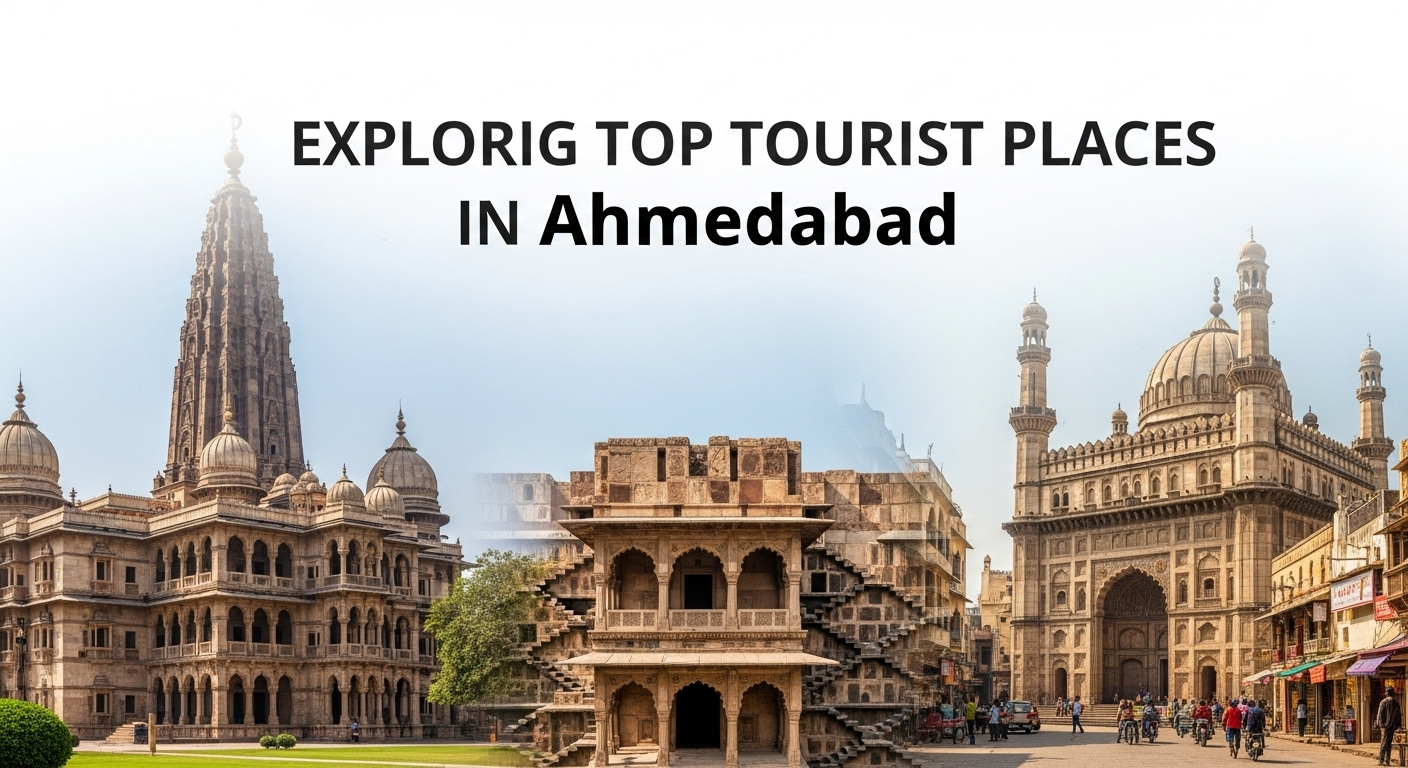
As you step into Ahmedabad, you feel its unique charm. This city is a mix of old and new. It’s filled with lively markets, calm ashrams, and big mosques. Each place tells a part of India’s rich history. Ahmedabad is known for its culture and history. It was created by Sultan Ahmed Shah.
It’s a UNESCO World Heritage City. In the first eight months of 2023, lots of tourists visited Gujarat. About 353,000 picked Ahmedabad. It’s the top choice in the state.
In Ahmedabad, you find many things to do. It’s home to the Sabarmati Ashram and Bhadra Fort. The Jama Masjid is also here. These places touch your heart and soul. They show why Ahmedabad is great for all who love history or just exploring.
Key Takeaways
- Ahmedabad is a UNESCO World Heritage City with a perfect blend of historical and cultural attractions.
- The city was founded by Sultan Ahmed Shah and remains rich in heritage and architectural marvels.
- Sabarmati Ashram offers a peaceful retreat, preserving the legacy of Mahatma Gandhi.
- Bhadra Fort and Jama Masjid provide a glimpse into the city’s architectural brilliance and cultural history.
- A must-visit destination for history buffs, cultural enthusiasts, and casual tourists alike.
- Best places to visit in Ahmedabad range from serene lakes to bustling markets, creating diverse sightseeing opportunities.
Sabarmati Ashram: A Peaceful Haven
Sabarmati Ashram, known as Gandhi Ashram, is a historic site in Ahmedabad. It’s tied closely to Mahatma Gandhi’s life and ideals. Located by the Sabarmati River, it was where Gandhi lived from 1917 to 1930. Today, it’s a major landmark in Ahmedabad.
Historical Significance
The Ashram is key to India’s freedom story. It was where the Dandi March began in 1930. Covering 36 acres, it has buildings and exhibits about Gandhi’s life and teachings. This makes it a must-visit spot in Ahmedabad.
Key Attractions
- Hriday Kunj: Gandhi and Kasturba’s quaint home, with their personal belongings.
- Gandhi Smarak Sangrahalaya: A museum with over 35,000 books on Gandhi’s philosophy and the freedom movement.
- Vinoba Kutir and Mira Kutir: Named after Gandhi’s disciples, reflecting their simple living.
- Upasana Mandir: A prayer ground for morning and evening prayers, offering peace.
- Events: Festivals like Gandhi Jayanti and the Salt March Anniversary, celebrating Gandhi’s legacy.
Visitor Information
Guests often explore the Ashram for 2-3 hours. It’s open daily from 8:30 AM to 6:30 PM with free entry. To get there, a taxi from Ahmedabad’s center costs about Rs. 100-150. A bus ride costs Rs. 10-20, depending on the start point.
The Ashram is near Sardar Vallabhbhai Patel International Airport, 7.5 kilometers away. It’s also close to Ahmedabad Junction, about 6 kilometers off. Visit from October to March for the best weather. Photos are mostly allowed, and guided tours are available. You’ll find many hotels and guesthouses nearby for a comfy stay.
Historic Bhadra Fort
The Bhadra Fort is a must-see in Ahmedabad. Built in 1411, it shows off Ahmedabad’s history. It has elements from both Islamic and Hindu cultures.
Architectural Marvel
The fort is a stunning piece of art. The Teen Darwaza or Three Gates is especially impressive. The gates have beautiful carvings and designs. Ahmedabad’s rich history can be seen in them.
Built with red stone, the fort looks amazing. The Clock Tower, added in 1849, makes it even more grand. Installing the clock tower cost just 8000 Indian rupees.
Cultural Blend
Bhadra Fort is a place of history and culture. It’s close to the Siddi Saiyed Mosque and the Swaminarayan Temple. This shows cultures living together in peace. The Bhadra Kali Temple inside attracts many people.
The fort is special on Independence Day and Republic Day. It’s open from 9 AM to 5 PM daily, with free entry. It’s a top place for visitors.
Visitor Information
Bhadra Fort is close to major transport hubs. It’s 2.5 km from Ahmedabad Junction and 11 km from the airport. The fort is open Monday to Saturday, with free entry for all.
If you want to learn more, guides are available. Remember to bring water, especially on hot days. Bhadra Fort is an important part of Ahmedabad’s story.
Below is a list of places near Teen Darwaza and their distances:
| Attraction | Distance from Teen Darwaza |
|---|---|
| Siddi Saiyed Mosque | 600 meters |
| Manek Chowk | 650 meters |
| Swaminarayan Temple | 1 km |
| Rani Rupmati Mosque | 1 km |
| Jhulta Minara | 2 km |
| Sabarmati Riverfront | 2 km |
| Hutheesing Jain Temple | 3 km |
| Kankaria Lake | 4 km |
| Shah-e-Alam’s Roza | 4 km |
| Dada Harir Vav | 4 km |
| Calico Textile Museum | 5 km |
| Sabarmati Ashram | 6 km |
The Majestic Jama Masjid
Sultan Ahmed Shah built the Jama Masjid in 1423. It’s a top example of Islamic art. It’s also a key historic spot in Ahmedabad. The mosque mixes Hindu and Islamic styles, showing the city’s Islamic roots.
Architectural Features
The Jama Masjid is known for its yellow sandstone and fine carvings. It has about 15 domes held up by 300 stone pillars. The front has three big archways called ‘Teen Darwaza’. They remind people of the Ranakpur Jain Temple, says historian James Fergusson.

Historical Context
The mosque was started in 1424 and took 13 years to finish. It’s among India’s biggest mosques. The large prayer hall is held up by 260 columns. It offers a calm but impressive space for both worshippers and visitors.
Visitor Information
The Jama Masjid is open every day from 6 AM to 8 PM. There’s no entry fee. Visitors must take off their shoes and cover their heads before going in. While only men can enter the prayer hall, everyone can see the rest of the site. It’s near places like Teen Darwaza and Manek Chowk. You can get there by train at Kalupur railway station. Or fly in through Sardar Vallabhbhai Patel Airport.
| Feature | Details |
|---|---|
| Construction Year | 1423 |
| Domes in Sanctuary | Nearly 15 |
| Pillars in Sanctuary | 300 |
| Opening Hours | 6:00 AM – 8:00 PM |
| Entry Fee | None |
| Architectural Style | Blend of Hindu and Islamic designs |
| Remarks | Resembles Ranakpur Jain Temple (James Fergusson) |
Sarkhej Roza: Tombs and Pillars
The Sarkhej Roza complex is a key part of Ahmedabad’s Islamic history. It is in the village of Makarba, 7 km southwest of Ahmedabad. Here, visitors see a mix of ancient Ahmedabad architecture and Indo-Saracenic styles.
Muhammad Shah II started its building in 1445, and it was finished in 1451. It used to be 72 acres but is now 34 acres. This area blends beauty with calm, giving people a deep look into Ahmedabad’s Islamic past.
The complex has many royal buildings and tombs. This includes the tombs of Mahmud Begada and his family. It also includes the mausoleum of Shaikh Ahmed Khattu Ganj Bakhsh. The mix of Islamic, Hindu, and Jain designs shows the rich culture of ancient Ahmedabad architecture.
The center tank, made by Sultan Mahmud Begada, is 17 acres big. People love the Indo-Saracenic architecture here. The mosque’s five big domes and 120 pillars are very special. This shows why Sarkhej Roza is a top place to see in Ahmedabad.
The Jama Masjid inside the complex has a famous pillared hall. This hall shows how architecture and spirituality come together. Sarkhej Roza mosque is open from 9 am to 6 pm every day. There is no entry fee. This lets everyone explore this historical wonder.
Sarkhej Roza is important for many reasons. It shows off ancient building skills and is a quiet place for thinking. The beautiful history and peaceful gardens make Sarkhej Roza a top spot in Ahmedabad’s Islamic history.
Tourist Places in Ahmedabad
Ahmedabad is a colorful mix of attractions for those who visit. It showcases centuries-old monuments and peaceful spots. These best places share the city’s rich past.
Sabarmati Ashram
Sabarmati Ashram is a key place in Ahmedabad. It tells a part of India’s independence story. Mahatma Gandhi set it up. It has a museum with lots of books. It’s great for people wanting to explore Ahmedabad.
Bhadra Fort
Built in 1411 by Sultan Ahmad Shah I, Bhadra Fort is important in Ahmedabad. It’s famous for architecture and the Bhadra Kali Temple. This fort shows the city’s rich history and culture.
Jama Masjid
Made in 1423 at Manek Chowk, Jama Masjid is amazing. It has over two hundred pillars with great designs. It mixes Hindu and Islamic styles. This mosque is important for history lovers and architecture fans.
Exploring these landmarks gives a deeper understanding of Ahmedabad. It makes visiting these places very special.
In short, places like Sabarmati Ashram, Bhadra Fort, and Jama Masjid in Ahmedabad are unique. They blend history and beauty. They offer a glimpse into Ahmedabad’s rich past and culture.
Enchanting Kankaria Lake
Kankaria Lake is the second-largest in Ahmedabad. It’s a great place for families. You can enjoy the zoo, balloon rides, Kids’ City, and many food stalls.
Family Activities
Since the 15th century, this lake has been a spot for fun. At Kankaria Zoo, you’ll see many animals. There’s a toy train and boat rides to Nagina Wadi too.
Kids will love the theme park. It lets them try out different jobs.
Visitor Information
The lake is open from morning to evening. Kids below 12 pay Rs 5, and others Rs 10. This makes it easy and safe to check out Ahmedabad.
Near Kankaria Lake, there are over 85 places to visit. These include hill stations and museums. It’s a great starting point for exploring.
Don’t miss the Auto World Vintage Car Museum. Or a walk along the Sabarmati Riverfront. These spots show the city’s past and present.
FAQ
What are the best places to visit in Ahmedabad?
In Ahmedabad, visit Sabarmati Ashram, Bhadra Fort, and Jama Masjid. Don’t miss Sarkhej Roza and Kankaria Lake too.
What is the historical significance of Sabarmati Ashram?
Sabarmati Ashram was Mahatma Gandhi’s home. It was key in the Dandi March. It reflects India’s freedom fight and Gandhi’s ideas.
What are the key attractions at Sabarmati Ashram?
Visit Gandhi’s relics, Hriday Kunj, his home, at Sabarmati Ashram. There’s a museum with many books and items on his life and India’s independence.
What is the visitor information for Sabarmati Ashram?
Visit Sabarmati Ashram between 8:30 AM and 6:30 PM. Enjoy free entry.
What makes Bhadra Fort a must-see place in Ahmedabad?
Bhadra Fort shows Islamic and Hindu architecture. Created in 1411, it has Teen Darwaza and Bhadra Kali Temple.
How can tourists explore Bhadra Fort?
See Bhadra Fort from 9 AM to 5 PM with no fee. It has palaces, gardens, and old sites.
What is the architectural significance of Jama Masjid in Ahmedabad?
Jama Masjid, made in 1424, has a yellow stone build. It features over 260 pillars and mixes Hindu and Islamic styles.
What are the visitor details for Jama Masjid?
Jama Masjid welcomes visitors every day from 6 AM to 8 PM. No fee is needed, but it’s closed during prayers.
What can visitors expect at Sarkhej Roza?
Sarkhej Roza includes palaces, tombs, and a water tank. It has Islamic and Hindu styles.
Are there any family-friendly attractions at Kankaria Lake?
Kankaria Lake is great for families. Enjoy a zoo, kids’ city, balloon rides, and tasty food stalls.
What are the visiting hours and entry fee for Kankaria Lake?
Kankaria Lake is open from morning till night. A small fee is needed for entry.
How does Kankaria Lake blend heritage with modern activities?
Kankaria Lake, from the 15th century, mixes history with new fun activities. It shows Ahmedabad’s growth.