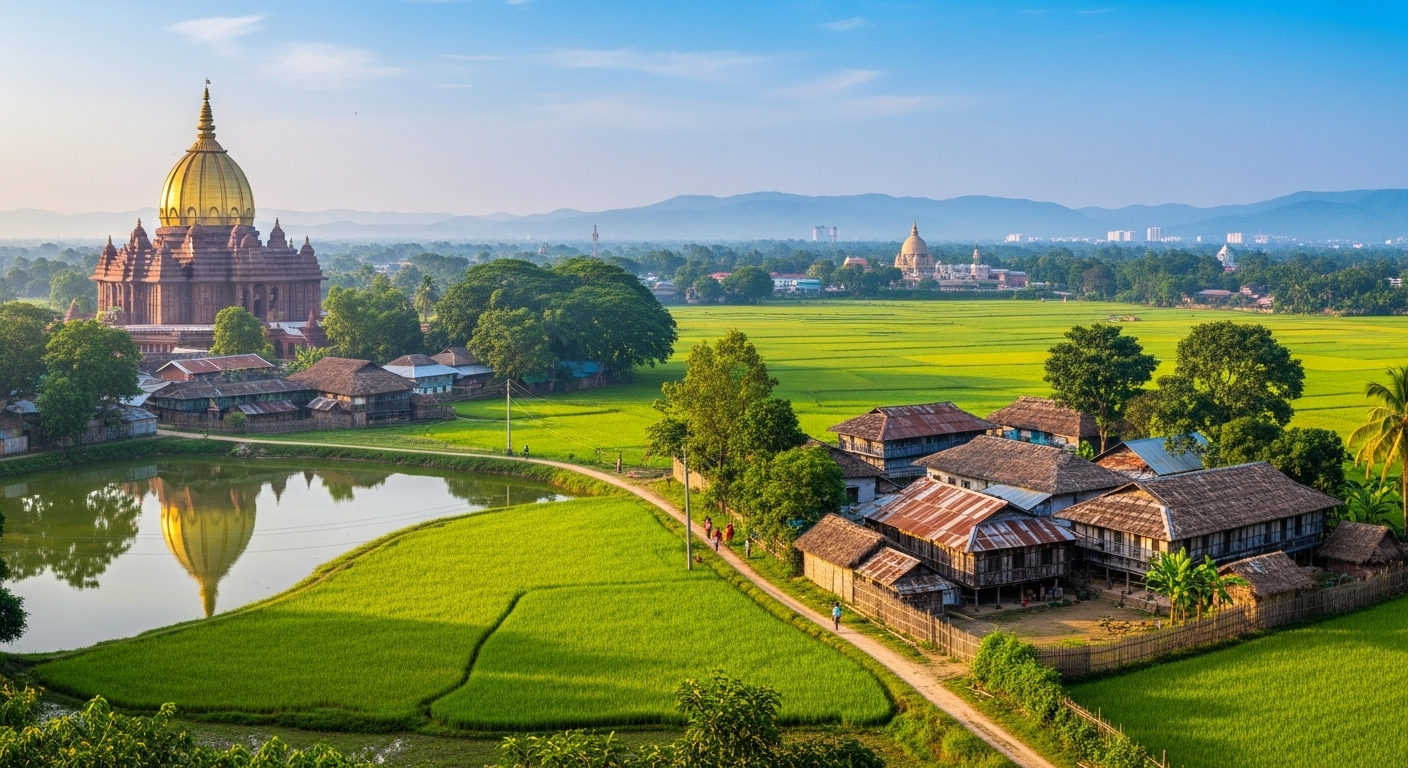
Sibsagar, India, is known since the 17th century. It boasts the Dhekiakhowa Bornamghar Temple, a sign of long-lasting faith and great architecture. The temple not only serves as a place for prayer. It also holds Assamese traditions dear.
Each day starts early at the temple, at 5:00 AM. People are greeted with day-long rituals and calming songs by dusk. Festivals like Ras Purnima and Janmashtami make the area lively. They show the heart of local celebrations. Besides faith, Sibsagar is a gate to Assam’s rich culture. Places like Joysagar Tank and Sivasagar Sivadol are must-sees.
The temple is easy to get to, thanks to nearby Jorhat Airport and Mariani Junction. This connects history to today. Also, places like Kaziranga National Park and Majuli Island show off Assam’s natural beauty and cultural mix.
The Asiatic Society of Bengal has spread knowledge since 1784. Founded by Sir William Jones, it explored Asia’s vast knowledge fields. This covered everything from farming to music, showing a wide range of interests.
Key Takeaways
- Sibsagar’s Dhekiakhowa Bornamghar Temple is an enduring symbol of Assam’s historical and cultural lineage.
- The temple heralds the day with early morning rituals and ushers in the evening with serene Aartis, marking a cycle perpetuated for centuries.
- Festivals like Bihu and Janmashtami transform the temple into a nucleus of celebration and regional heritage.
- Nearby landmarks and transportation hubs ensure Sibsagar’s treasures are within reach for pilgrims and explorers.
- The Asiatic Society of Bengal and its scholarly vestiges serve as a testament to the scholarly pursuits that have thrived in the region.
- The surrounding diversity of wildlife sanctuaries and natural wonders like Kakochang Waterfalls paint a picture of Assam’s ecological grandeur.
- The fusion of Hinduism and indigenous beliefs that characterizes Sibsagar has fostered a unique spiritual landscape across the city.
The Enigmatic Origins of Sibsagar: A Historical Overview
Sibsagar is a city with a grand history in Assam. It reminds us of the Ahom dynasty. They ruled for nearly 600 years. The city’s story is filled with bravery, faith, and amazing architecture. Its name means ‘the ocean of Lord Shiva’. This shows its deep spiritual importance.
The Ancient Seat of Ahom Royalty
Sibsagar became the capital with King Sukaphaa in 1228. This city saw many key events and cultural growth during the Ahom rule. The Ahoms came from China’s Yunan province. They set up a strong and smart kingdom. It lasted through many attacks and troubles.
Sibsagar’s Role in the Expansion of Vaishnavism
Sibsagar greatly influenced Vaishnavism. This Hindu sect worships Lord Vishnu. The Ahom kings helped make the city a key place for Vaishnavism. They built many monasteries. This helped spread its ideas across Assam. This movement merged religious beliefs with local art and dance.
Sibsagar shows us a rich blend of history and culture. It highlights the Ahom dynasty’s lasting impact on Assam. This makes Sibsagar an essential part of India’s story.
Hidden Facts About Sibsagar: Unveiling The Untold
Sibsagar’s history is full of surprises beyond its famous monuments. It has secrets about the enigmatic Ahom dynasty and amazing archaeological finds. These stories go deep, waiting for us to find them.
Mysteries of the Ahom Dynasty Unearthed
For nearly 600 years, the Ahoms ruled Sibsagar. Their reign shaped its culture and politics. Recent studies show new facts about their rule. They had smart ways of governing and social setups before others did.
Intriguing Archaeological Discoveries
Recent digs have uncovered things suggesting the Ahoms were great engineers and architects. These findings make us rethink Northeast India’s history before the Europeans.
Among these discoveries are underground networks. They were used for water management, helping in farming and defense. This shows Ahom engineers’ skill and strategic thinking.
| Discovery | Description | Implications |
|---|---|---|
| Underground Water Networks | Complex series of tunnels and canals | Indicates advanced hydro-engineering capabilities and strategic planning |
| Ancient Weaponry | Artifacts including swords and shields with unique metallurgical techniques | Suggests a highly skilled approach to warfare and metal craftsmanship |
| Religious Monuments | Structures with intricate carvings depicting both Hindu and indigenous deities | Points to a syncretic blend of religious practices under the Ahom rule |
Sibsagar’s stories add to our knowledge of the area’s history and culture. These finds question old beliefs. They help us learn more about the Ahom dynasty and its impact.
Architectural Marvels: Sibsagar’s Lesser-Known Gems
Sibsagar is not just rich in history. It also has amazing architectural sites from the Ahom dynasty. These sites give us a deep look into the town’s past. Enthusiasts and tourists love to explore them.
The Sivasagar Tank, or Borpukhuri, is one standout site. It covers about 129 acres, making it the biggest man-made tank in the area. It shows off architect skills and the social and religious life years ago. The Gaurisagar Tank is also impressive. Queen Phuleshawari Devi built it in the 18th century. It spreads over 150 acres and has many temples around it.
Hotels near these sites offer modern comforts with a touch of old charm. Places like Hotel Piccolo, Hotel Brahmaputra, and Hotel Shiva Palace are options. They let guests enjoy local culture comfortably. Prices range from INR 1,500 to INR 2,500 per night. This makes exploring Sibsagar’s sights soothing and rich.
For more on Sibsagar’s history and architecture, check out this detailed blog on Sibsagar tours. It’s perfect for those wanting to learn about the Ahoms. The blog uses stories and pictures to make history come alive.
In short, Sibsagar invites you to deeply explore Assam’s regal past. It has awesome architecture, comfy hotels, and rich history. It’s a must-see for history lovers and travelers.
Sibsagar’s Unknown History: Legends and Folklore
In the heart of Assam lies Sibsagar. This town is full of history and stories. It’s known for its old landmarks and rich tales. Many tales of Ahom royalty remain untold here. They show the deep culture beyond just facts.
Mythological Influences on Local Culture
The Ahom dynasty came from South China in 1228 CE. They brought their myths to Assam. Over time, their stories mixed with local beliefs. You can see this blend in Sibsagar’s buildings and sacred spots. The Siva Dol temple is a key example. Its design shows mythological importance. This may affect local spiritual customs seen in rituals today.
Forgotten Tales of Rebellion and Bravery
Tales of bravery shine in Sibsagar’s history. This includes the story of the Talatal Ghar. Built by Swargadeo Rudra Singha in 1698, it used local materials. They even made a special paste from rice and swan eggs. Talatal Ghar has secret tunnels. These tunnels tell stories of daring escapes and rebellion. Such stories are often missed in popular accounts.

Looking into Sibsagar’s architecture, mythology, and rebellion offers a rich cultural view. Each story gives a glimpse into the past. They show how the city’s hidden stories shaped its history. This makes Sibsagar a key part of India’s history.
Sibsagar’s Covert Insights: The Impact of Colonial Rule
Exploring Sibsagar shows how colonialism impacted its history and looks. This city thrived under the Ahom kings but changed during colonial times. These changes affected everything from old buildings to how the city was run and how people lived.
The care and overlook of Sibsagar’s historic sites present a tale of two sides. In colonial times, some old places were kept safe. Others were forgotten or used for different needs. This has led to both repair and ruin in Sibsagar today. For example, Rang Ghar and Talatal Ghar, key to Ahom rulers, got different levels of attention from the British.
Adding to this, the British brought in new ways of governing. They tried to mix with the local ways, yet they also set up new systems that changed old traditions. This can be seen in the blend of British and Ahom designs in buildings around the area.
- The Namdang Stone Bridge, a marvel of Ahom engineering, saw changes in colonial times. This affected its original look.
- Charaideo Maidam, like ancient pyramids, shows a balance of respect and neglect. These burial sites were somewhat preserved but also overlooked during and after colonial rule, affecting their condition today.
The effects of colonial rule in Sibsagar are complex. They brought advancements in how things were run but also put pressure on cultural sites. This period led to both improvements and harm to the city’s old treasures.
Explore Sibsagar Secrets: The City’s Spiritual Tapestry
In Sibsagar, Hinduism and local beliefs create a spiritual mix. This mix touches both the heart and mind. It’s seen in historical sites where sacred Ahom kings’ rituals happened.
Sacred Spaces and Practices of the Ahoms
The Ahoms ruled Sibsagar for almost 600 years. They left behind buildings and spiritual lessons that still amaze people.
At the heart of their beliefs are the Moidams – the royal burial mounds in Charaideo. These are sacred places where people honor gods and ancestors. They are not just graves but homes for spirits, connecting us to the heavenly.
The Confluence of Hinduism and Indigenous Beliefs
Hinduism and local beliefs blend uniquely in Sibsagar. This is shown in festivals and everyday worship. It joins complex Hindu rituals with the simple ceremonies of native tribes.
This mix makes the culture of Sibsagar richer and brings its people closer.
Learning about Sibsagar’s spiritual past and present helps keep these customs alive for the future. Even as the city changes, its spiritual heritage shows its rich history and cultural strength.
Sibsagar Mysteries Uncovered: The Rich Tapestry of Arts
In Sibsagar, history and art come together. They show the area’s diverse and rich background. This northeastern spot is known for its traditional arts. These include classical dance and detailed handicrafts, shaped by the region’s history.
The art legacy in Sibsagar lives on in local performances and in its monuments and festivals. Textile arts, like silk weaving, are very important here. They use special local methods and have been around for generations. These textiles have designs that share stories of old legends and royal families.
Classical dance in Sibsagar tells the area’s myths. These dances use detailed moves and expressions. You can see dancers in traditional clothes performing at historical sites. It connects today with past spiritual and artistic practices.
Sibsagar’s craftspeople also show great skill in their work. They make pottery, bamboo craft, and woodwork. These artists often use designs from nature and local culture. Each piece they create helps keep their culture alive.
| Art Form | Description | Cultural Significance |
|---|---|---|
| Textile Weaving | Intricate designs on silk using traditional looms | Preserves ancient weaving techniques and folklore motifs |
| Classical Dance | Expression of historical and mythological narratives through dance | Keeps the stories of the Ahom dynasty alive |
| Handicrafts | Artisanal pottery, bamboo, and wood crafts | Supports local economy while maintaining ecological sustainability |
Sibsagar’s art and history are deeply connected. They help visitors understand the region better. They ensure the ancient Ahom kingdom’s spirit is still alive today. For those interested in Indian art and history, Sibsagar is a must-visit place.
Sibsagar Revelations: The Untold Story of Its People
The rich tapestry of Sibsagar is woven through its historical places and people. These people keep a deep cultural heritage alive. This becomes clear when seeing the important roles various communities play.
Life in the Shadows: The Unseen Faces of Sibsagar
Many know Sibsagar for its beauty and history. But, few know the personal stories of its people. These people, often overlooked, share a resilience that strengthens the community. Concerns about safety, like ULFA(I) activities, affect life and the overall area. People work together with authorities for peace when threats arise.
Cultural Heritage Preserved by Tribal Communities
Tribal groups around Sibsagar help keep native knowledge alive. They pass down traditions that are key to Assam’s culture. The variety of languages and literary works is celebrated, thanks to groups like the Sahitya Akademi. A major effort by Sivasankari aims to share the richness of these languages with more people.

Sibsagar’s people help keep their heritage alive, even when facing challenges. Their efforts ensure traditions continue among new generations. Youth and leaders work to protect cultural sites and help the community grow. The Chief Minister, Himanta Biswa Sarma, talks about combining tradition with progress.
| Community | Role in Cultural Preservation | Key Languages |
|---|---|---|
| Mising Tribe | Folk narratives and traditional crafts | Mising, Assamese |
| Karbi People | Ritualistic music and dance | Karbi, English |
| Assamese General | Historical documentation and modern literature | Assamese, English |
Sibsagar’s communities not only keep their own culture strong but enrich the whole society. They offer a more diverse view of India’s heritage.
Sibsagar Surprising Facts: Natural Wonders and Biodiversity
The beauty of Sibsagar and its nearby areas is like a hidden gem. It’s known for history but also for its green landscapes. A place you must see is Dibrugarh, very close to Sibsagar. It’s full of beautiful natural spots wrapped in green.
Starting in Dibrugarh, you can see magical tea estates like Holland Tea Estate. These places look like they’re from another world in the morning mist. Then there’s the Jeypore Rainforest, home to many animals and plants. Places like Dibru-Saikhowa National Park protect rare animals like the white-winged wood duck and the red panda.
Local markets like Lalchowk Market show the area’s culture through arts and crafts. But the best part for visitors might be the calm views from places like Lalupathar. Here, nature paints a beautiful picture. The food and hotels also make tourists love the real Assamese experience. In Dibrugarh, visitors find a mix of history and natural beauty. This place offers a full experience of Northeast India’s heart.
FAQ
What ancient royalties are associated with Sibsagar’s history?
Sibsagar, known too as Sivasagar, was where the Ahom royalty lived. They ruled Assam for six centuries till the early 19th century.
How did Vaishnavism expand in Sibsagar?
The Ahom kings helped Vaishnavism grow in Sibsagar. They did this by supporting monasteries and temples of this Hindu tradition.
What mysteries of the Ahom Dynasty have been unearthed in Sibsagar?
New historical documents and archaeological finds have been discovered. These include ancient manuscripts and relics. They tell us more about the Ahom Dynasty’s life and war strategies.
Can you name some intriguing archaeological discoveries in Sibsagar?
Many archaeological finds have been made in Sibsagar. These include old artifacts, palace ruins, and old fort remains. They show the Ahom civilization’s skill in engineering and architecture.
What are some of Sibsagar’s lesser-known architectural gems?
Sibsagar has many unknown buildings. The Rang Ghar Pavilion and Talatal Ghar are examples. They show a mix of Mughal and local architecture.
What are the mythological influences on Sibsagar’s local culture?
Mythology affects Sibsagar’s culture. This shows in local stories, traditional rituals, and art. Myth-based patterns are common in local art.
Are there any forgotten tales of rebellion and bravery associated with Sibsagar?
Sibsagar has tales of brave heroes like Lachit Borphukan. He fought against the Mughals. His story is told locally but not widely known.
How did colonial rule impact Sibsagar?
British rule changed Sibsagar a lot. It brought tea plantations and railroads. This changed the region’s culture deeply.
What are some sacred spaces and practices of the Ahoms in Sibsagar?
The Ahoms built many temples in Sibsagar. They had unique rituals. This included ancestor worship and animal sacrifices. They mixed Hindu and their ethnic practices.
How does Hinduism converge with indigenous beliefs in Sibsagar?
Hindu and local beliefs mix in Sibsagar. This mix shows in festivals, worship, and the deities people honor there.
What does the rich tapestry of arts look like in Sibsagar?
Sibsagar has a rich art scene. This includes classical dances, crafts like cane and bamboo, and folk music. The art tells the region’s stories and history.
How does the untold story of Sibsagar’s people shape the city?
The people of Sibsagar add to its culture with their daily lives and jobs. But this is often missed next to its historic sites.
What is the role of tribal communities in preserving Sibsagar’s cultural heritage?
Tribal groups play a big part in keeping Sibsagar’s culture alive. They keep old traditions, dances, and languages going.
What are some surprising facts about Sibsagar’s natural wonders and biodiversity?
Sibsagar has lots of nature and rare animals and plants. Places like the Dikhow River and Pani Dihing Wildlife Sanctuary are home to unique creatures of Northeast India.