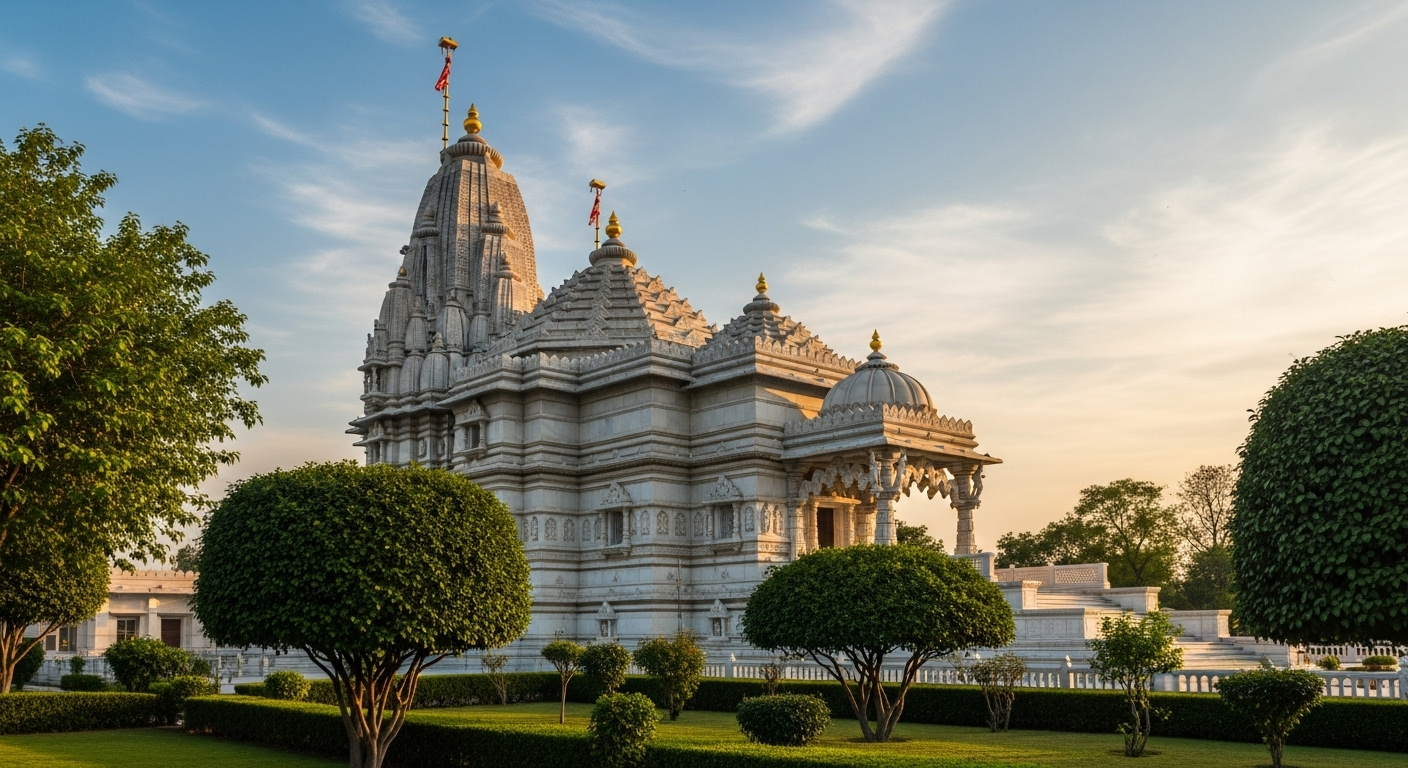
Did you know the Laxminarayan Temple, or Birla Mandir, is huge? It covers over 7.5 acres. Built in 1939 by BD Birla and JK Birla, it’s a famous spot in Delhi, India. The temple beautifully mixes old and new designs, attracting people worldwide.
Its amazing white marble look isn’t just for show. The temple is a place for spirituality and culture.
The temple honors Lord Vishnu and Goddess Lakshmi. It welcomes everyone, no matter their faith. With its sculptures and tall spires, it celebrates India’s rich culture.
Key Takeaways
- The Laxminarayan Temple blends modern and traditional styles and covers 7.5 acres.
- Constructed in 1939, it features elements of North and South Indian temple design.
- The temple promotes inclusivity, welcoming people of all faiths.
- Its white marble structure enhances its ethereal appearance.
- The temple is a vibrant center for culture and social welfare initiatives.
The History of Laxminarayan Temple
The Laxminarayan Temple sits in New Delhi, India. It is famous for its stunning architecture and deep history. This temple is a spiritual place. It shows the rich culture and Hindu stories of India.
Foundation and Construction
The temple’s creation began in 1933. It was started by Baldeo Das Birla and his son Jugal Kishore Birla. It took seven years to build, finishing in 1939. Mahatma Gandhi opened the temple. It was among the first big Hindu temples in Delhi.
This temple covers 7.5 acres and has shrines, fountains, and gardens. The main building features the Nagara style, with a tall 49-meter shikhara. Artists from Benares, led by architect Sris Chandra Chatterjee, worked on it. They used marble and stones from many places in India.
Significance in Hindu Mythology
The Laxminarayan Temple is very important in Hindu religion. It is dedicated to Lord Vishnu and Goddess Lakshmi. They stand for wealth and luck. The temple’s pictures tell stories from ancient Hindu texts.
It is a place filled with spiritual stories and beliefs from Hinduism. The art and sculptures here tell important Hindu legends. This temple does more than just show history. It helps keep Hindu traditions and teachings alive.
Architectural Brilliance of the Temple
The Laxminarayan Temple, also known as Birla Mandir, is a beautiful mix of new and old Indian temple designs. Built between 1933 and 1939, it shows off amazing skills and deep religious meaning. It covers 7.5 acres and has many shrines, fountains, and sculptures that are important for the nation and religion.
Modern and Traditional Design Elements
The Laxminarayan Temple combines new techniques with the old Nagara style. The main part of the temple has high spires that are typical of North Indian temples. It also has small shrines for gods like Lord Shiva, Lord Krishna, and Lord Ganesha, making it spiritually rich.
The Use of Pure White Marble
The temple is special because it uses a lot of pure white marble. Both outside and inside of the temple shine with this lovely material. This makes the temple look elegant and is a peaceful setting for big events like Diwali and Janmashtami.
The Intricate Sculptures and Frescoes
The detailed sculptures and frescoes at the Laxminarayan Temple impress visitors. These artworks show stories from Hindu myths with great skill and beauty. The bright colors and careful details add to the spiritual feeling of the place.
| Features | Details |
|---|---|
| Construction Period | 1933-1939 |
| Area | 7.5 acres |
| Architectural Style | Nagara |
| Main Materials | Pure White Marble |
| Key Features | Intricate Sculptures, Frescoes |
| Nearby Attractions | India Gate, CP, Jantar Mantar |
Dedication to Lord Vishnu and Goddess Lakshmi
In Shekhawati, Rajasthan, there’s a special place called the Laxminarayan Temple. It honors Lord Vishnu and Goddess Lakshmi. This temple, built in the Nagara style, stands for prosperity and well-being. These are important in Hindu belief. The temple’s art tells stories from Hindu myths and shows many gods.
Symbolism and Cultural Importance
The Laxminarayan Temple is very important culturally. It works hard to keep old traditions alive. Every day, there are poojas and rituals for Lord Vishnu and Goddess Lakshmi. These bring joy and richness to those who come. It’s a place where people come together. They celebrate big festivals like Diwali and Vishnu Jayanti with prayers and being together.
This temple has a big courtyard and a quiet hall for praying. There you can see beautiful artwork from long ago. Anyone visiting should wear modest clothes and take off shoes before entering. Sometimes, you can’t take pictures to keep the place holy. Always ask first if you want to take photos.
The temple is easy to get to and welcomes everyone. It’s open all day but has special times for certain rituals. You can get there by road. The closest train stations are in Sikar and Jhunjhunu. Jaipur’s airport is not too far, about 200 kilometers away. So, many people visit for a peaceful experience.
Lately, more people come to the Laxminarayan Temple looking for peace and wisdom. They are drawn by its rich culture. The temple keeps offering cultural programs and talks about faith. This helps everyone feel closer to Lord Vishnu and Goddess Lakshmi. Their stories and lessons will always be shared here.
The Birla Family’s Contribution
The Birla family is famous industrialists in India. They have deeply impacted India’s culture and spirituality. They did this by building temples like the well-known Laxminarayan Temple, or Birla Mandir.
This temple got started in 1939 by Baldeo Das Birla. He was a key figure in the family. The temple shows their success in business and their love for giving back.
The Birla Mandir construction was a big dream brought to life by the Birlas. They gave a lot of money and hard work to make it. The land for it was bought for just one rupee from a Maharaja. This shows how important this temple was for everyone. The temple was finished in 1988. It’s made of beautiful white marble.
- Construction Timeline: Began in 1939, completed in 1988.
- Material: Pure white marble.
- Official Opening: February 22, 1988.
This temple stands out because of its amazing design. It has stained glass windows that show Hindu stories. It also has statues of gods like Lakshmi, Narayan, and Ganesh. The outer walls have figures from different religions. This shows the temple welcomes everyone.
The Birla family started helping others back in the 1880s. They have always tried to help through education and social efforts. They created places like the Birla Institute of Technology and Science in Pilani. They also made many Birla Mandir temples all over India. This shows their dedication to making society better.
| Key Facts | Details |
|---|---|
| Three Towers Representation | Symbolize the three main faiths of India: Hinduism, Jainism, and Buddhism |
| Additional Shrines | Dedicated to Lord Shiva, Lord Ganesha, and Hanuman |
| Birla Family Origin | Pilani, Jhunjhunu, Rajasthan, India |
| Birla Family Prominent Members | Ghanshyam Das Birla, Baldeo Das Birla, Aditya Vikram Birla |
| Philanthropic Beginnings | 1880s, with donations for goshalas in Kolkata |
| Educational Contributions | First high school in Pilani, Birla Education Trust |
The Birla family’s work in building the construction of Birla Mandir is inspiring. It combines their business strength with their love for giving. It shows their lasting promise to improve India’s spiritual and cultural heritage.
A Blend of Odishan and Northern Styles
The Laxminarayan Temple in Delhi blends Odishan architecture with the Northern Indian style. This mix showcases a rich cultural heritage through its design.
Tall Spires and Distinctive Features
The temple’s spires soar up to 160 feet, showcasing the Northern Indian style. It blends Odishan and Northern influences into a standout design. This makes the temple a marvel in India’s architecture.
Red and Ochre Stonework
Its red and ochre stones mixed with white marble highlight Odishan roots. This choice boosts its look and shows a lasting legacy and devotion. Over a hundred artisans from Benares added beautiful carvings.
Acharya Vishvanath Shastri helped merge Odishan and Northern Indian styles. This ensured a special design that attracts both devotees and admirers.
Facts about Laxminarayan Temple
The Laxminarayan Temple Delhi, also known as Birla Mandir, is a marvel. It sits on Mandir Marg. This place reflects Nagara style architecture. It is a key spot in New Delhi.
It was built between 1933 and 1939. Baldeo Das Birla and his son Jugal Kishore led the project. The temple covers 7.5 acres. It has a built-up area of 2,100 square meters. A tall shikhara rises about 160 feet high, making the temple stand out.
This temple welcomes everyone. It shows unity among different faiths. More than 100 artisans from Benares worked on it. Their work includes scenes from the golden yuga. The building materials show the Swadeshi movement’s impact.

The main building has beautiful carvings and gold ceilings. It has many shrines inside. These shrines are for gods like Shiva, Ganesha, Hanuman, and even Buddha. This makes the temple feel peaceful and spiritual.
The temple is more than a place for prayer. It has the Geeta Bhawan Hall for events. The temple is open every day from 5:00 AM to 9:00 PM. It closes for lunch from 1:30 PM to 2:30 PM.
The temple is lively during festivals like Janmashtami and Diwali. Many people come to celebrate. It has beautiful gardens and pools. This makes it a peaceful spot in nature too.
The Laxminarayan Temple is full of culture and history. Its impressive architecture and welcoming spirit attract many people. It is a symbol of faith and heritage in New Delhi.
Gardens and Reflecting Pools
The area around the Laxminarayan Temple is very peaceful. It makes visitors feel calm. The gardens of the Laxminarayan Temple add to its spiritual feel. They have beautiful landscapes that go well with the temple’s look and its green surroundings.
Pristine Landscaped Areas
The gardens are lovely and have many plants. They add color and shade, making the place calm. The lawns and paths are great for walking. They invite people to feel close to nature. The mix of old and new garden designs looks stunning and pleasing.
Serene Atmosphere Around the Temple
The quiet pools make the place even more serene. They reflect the temple and the greenery. These pools add to the temple’s calm vibe. People enjoy the peace near the water. They find quiet and connect spiritually in this calm place.
| Aspect | Details |
|---|---|
| Laxminarayan Temple gardens | Meticulously landscaped with a variety of flora |
| Reflecting pools | Calm waters offering serene reflections |
| Tranquil temple surroundings | Perfect ambiance for relaxation and contemplation |
Role in Social Welfare Initiatives
The Laxminarayan Temple does more than just spiritual activities. It helps the community in big ways. It focuses on education and health services for those in need.

Educational Programs
The temple offers lots of Laxminarayan Temple social initiatives to help locals learn. They have after-school help and tutoring for kids who need it. Many volunteers help make this happen.
They work with other groups to help even more. This makes the temple’s education efforts stronger.
Healthcare Services
Health is another big part of the temple’s work. They hold health camps and offer medical aid. They do check-ups, blood drives, and wellness events to keep the community healthy.
People of all ages help out. This makes the health projects really effective.
| Initiative | Details |
|---|---|
| Food Distribution | Provides meals to the underprivileged on a regular basis. |
| Environmental Cleanups | Volunteers engage in drives to keep the local environment clean. |
| Festival Celebrations | Hosts Indian festivals, fostering cultural unity and volunteer participation. |
Education and health work shows the temple’s deep care for people. These actions help now and in the future. They bring people together for a better world.
Cultural and Festival Celebrations
The Laxminarayan Temple in Chamba is a lively place for Hindu festivals. It’s known for big celebrations like Diwali and Janmashtami. These festivals have lots of decorations, bright lights, and bring people together.
There is also the Sui Mata festival, which shows the importance of sacrifice and devotion. It highlights the temple’s role in keeping old traditions alive. All year, the temple hosts many cultural and social events. These include music, dance, talks, and group activities. They help build a strong community feeling.
Events like Ram Navami and Navratri keep the temple very active. Here, visitors can dive into the community’s way of life and long-held traditions. The Laxminarayan Temple is not just a place for worship. It’s also a cultural spot that enriches everyone’s life with its wide range of activities.
FAQ
What are some intriguing facts about the Laxminarayan Temple?
The Laxminarayan Temple, also known as Birla Mandir, welcomes all faiths. It honors Lord Vishnu and Goddess Lakshmi, representing both spiritual and material wealth. The building shows modern and traditional design, surrounded by beautiful gardens and pools.
When was the Laxminarayan Temple constructed and who were its founders?
The Birla family started the Laxminarayan Temple. BD Birla and his son JK built it. Mahatma Gandhi opened it in 1939.
What significance does the Laxminarayan Temple hold in Hindu mythology?
The temple is home to Lord Vishnu and Goddess Lakshmi, bringing prosperity. It has many sculptures and frescoes of Hindu stories. It’s important for culture and spirit.
What architectural styles are integrated into the Laxminarayan Temple?
The temple blends North and South Indian styles. It’s tall, made of white marble, with detailed carvings and colorful frescoes.
How does the Laxminarayan Temple represent the cultural importance of Lord Vishnu and Goddess Lakshmi?
The temple honors Vishnu and Lakshmi for preservation and wealth. Worship here highlights Hindu values, encouraging spiritual and material growth.
What role did the Birla family play in the construction of the Laxminarayan Temple?
The Birla family gave money and built the temple. They helped make this beautiful worship place.
What makes the architectural blend of Odishan and Northern styles distinctive at the Laxminarayan Temple?
The temple has tall spires and uses red, ochre stone, and white marble. Its style is unique and culturally rich.
Can you share some key facts about the Laxminarayan Temple?
Important things include the Birla family’s role, its welcoming nature, and its beauty. The temple has gold ceilings, lovely gardens, and art.
What are the features of the gardens and reflecting pools surrounding the Laxminarayan Temple?
The temple’s gardens and pools offer a calm place to think and relax. They make the temple even more peaceful.
How does the Laxminarayan Temple contribute to social welfare initiatives?
The temple helps with education, health, and supporting the needy. It plays a big part in improving the community.
What cultural and festival celebrations are associated with the Laxminarayan Temple?
The temple celebrates Diwali and Janmashtami with lots of joy. These festivals have decorations and cultural programs that attract many people and show Indian traditions.