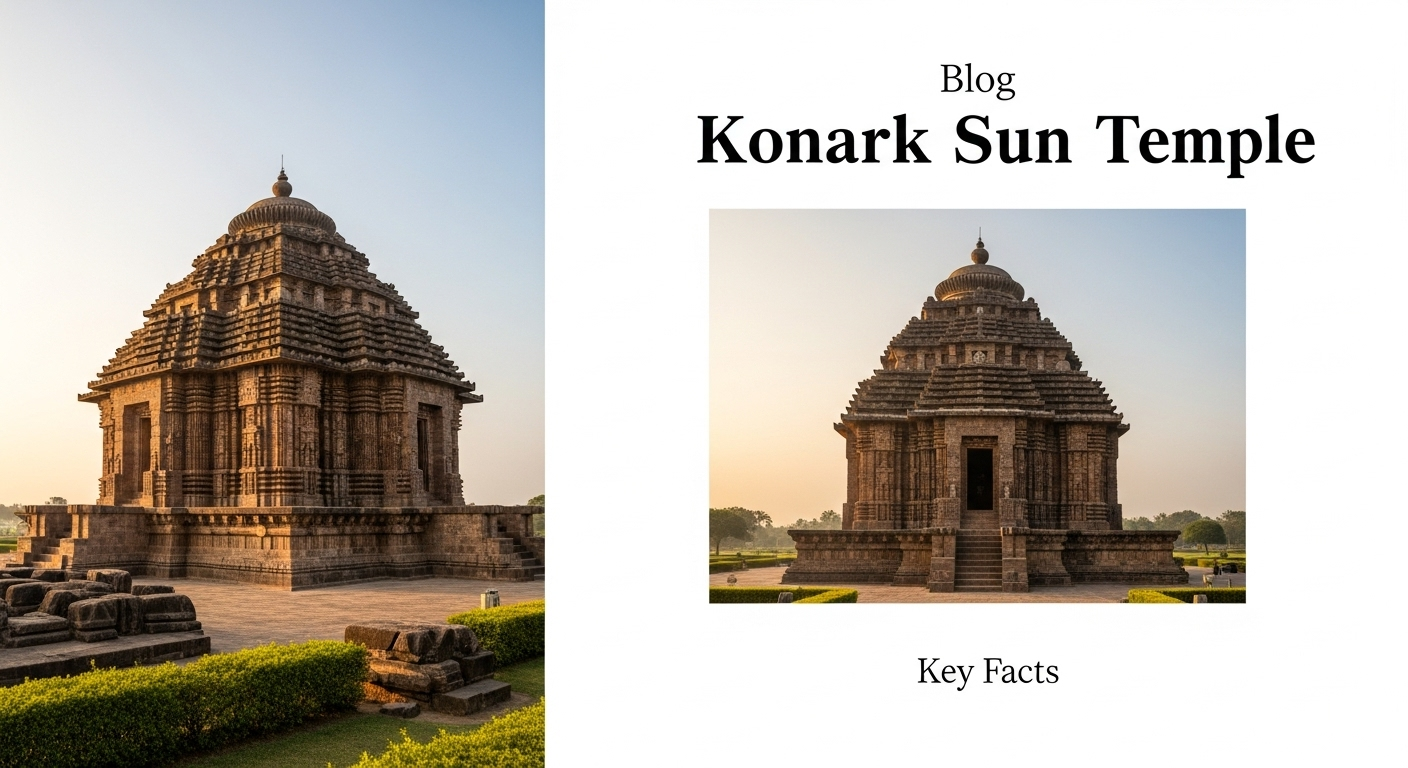
Did you know the Konark Sun Temple was super tall? It was estimated to be about 229 feet high. This place is very special because it shows the Sun God’s chariot. It’s located in Konark, Odisha. Built in the 13th-century CE, it uses three kinds of stones. These stones are Chlorite, Laterite, and Khondalite. They make the temple look amazing.
The temple’s area is huge, covering 26.2 acres. It was very important when Eastern Ganga King Narasimhadeva I ruled. In 1984, it became a UNESCO World Heritage Site. It stands out among India’s many spiritual sites.
The main audience hall’s walls are covered with art. They reach up to 128 feet. The walls have 24 stone wheels that worked like old clocks. Each wheel is about 12 feet across. They show the amazing skills of old Indian builders.
Key Takeaways
- Coordinates: 19°53′15″N 86°5′41″E
- Construction completed around 1250 CE
- UNESCO World Heritage Site since 1984
- Height of original temple sanctum sanctorum: 229 feet (70 m)
- 24 elaborately carved stone wheels, each nearly 12 feet (3.7 m) in diameter
- Temple complex spans 10.62 ha (26.2 acres)
- Depicted on the reverse side of the Indian currency note of 10 rupees
Introduction to Konark Sun Temple
The Konark Sun Temple was built around 1250 CE by King Narasimhadeva I. It is a major part of India’s cultural history. This beautiful example of Kalinga style architecture represents historical and artistic greatness. People all over the world admire its architectural genius and historic importance.
Brief overview
The temple’s design looks like a huge chariot. It has twelve pairs of stone wheels. These wheels stand for the twelve months of the year.
It sits on India’s eastern coast, in Odisha. The wheels also work as sundials that tell time accurately. This shows the builders had great knowledge of astronomy. The temple faces East. So, the morning sun lights up the entrance first.
Significance in Indian Culture
The Konark Sun Temple is very important in Indian cultural heritage. Every year, many people visit this temple. Especially during the Chandrabhaga Mela in February. This event shows how much people respect the Sun God, Surya.
At Konark, there are many carvings. These include mythical creatures, animals, and daily life scenes. They show the rich culture and knowledge of ancient India. Also, the temple’s image is on the Rs. 10 note. This shows its importance today.
The temple has survived damage from weather and attacks. Now, the Archaeological Survey of India is working hard to keep this site safe. They use modern methods to protect the Konark Sun Temple architecture. This helps keep the temple’s history alive for the future.
| Aspect | Details |
|---|---|
| Construction Year | Around 1250 CE |
| King | Narasimhadeva I |
| Architectural Style | Kalinga style architecture |
| UNESCO World Heritage Site | Declared in 1984 |
| Location | Eastern Coast of Odisha, India |
Location of Konark Sun Temple
Exploring the Konark Sun Temple location leads you to a mix of history and beauty. It sits by India’s eastern coast, in the Puri district of Odisha. Near the Bay of Bengal coastline, it grabs the attention of both historians and tourists.
Geographic Positioning
The Konark Sun Temple sits perfectly located. It’s 35 kilometers from Puri and about 65 kilometers from the Odisha capital, Bhubaneswar. Being close to the Bay of Bengal coastline made it important in the past. Now, it offers stunning views that attract many visitors each year.
How to Reach
Getting to the Konark Sun Temple is easy with many transport options. Fly into Biju Patnaik Airport in Bhubaneswar, 65 kilometers away. Then, you can take a taxi or bus. There’s also a good train connection to Bhubaneswar and Puri. From there, it’s a quick trip to the temple.
| Mode of Transport | Nearest Point | Distance to Konark Sun Temple |
|---|---|---|
| Air | Biju Patnaik Airport, Bhubaneswar | 65 km |
| Rail | Bhubaneswar/Puri Railway Station | 65 km / 35 km |
| Road | State Highways | Direct Access |
UNESCO World Heritage Site
The Konark Sun Temple is a wonder of ancient Indian work. UNESCO named it a World Heritage Site in 1984. This was because it’s truly special.
Criteria for Inscription
To become a UNESCO World Heritage Site, the Konark Sun Temple met tough tests. It shows amazing human creativity with its carvings and chariot shape. The temple shows deep cultural traditions. Builders finished it in 12 years thanks to their great skills. Its 24 wheels and deep symbols show its importance in culture.
Impact on Tourism
Being a UNESCO site made the Konark Sun Temple very popular. Every year, lots of visitors come to see its beauty and history. It’s near Bhubaneswar, about 65 km away, so it’s easy to get to. This honor helped the temple a lot. It also helped the local and national economy by bringing in more tourists. People who love history and architecture, plus those just curious, keep coming to see it.
| UNESCO World Heritage Status | Tourism Benefits |
|---|---|
| Recognized in 1984 | Increased global tourist visits |
| Represents human creative genius | Boosts local and national economy |
| Highlights cultural traditions | Elevates Odisha’s tourism profile |
| Unique chariot & wheel design | Draws history enthusiasts and architecture lovers |
The Historical Background
The Konark Sun Temple is an architectural marvel and a sign of the Eastern Ganga Dynasty’s love for the sun. Built in the 13th century by King Narasimhadeva I, it is for Surya, the Sun God. It shows the amazing skill of Kalinga architecture.

Construction under King Narasimhadeva I
In 1244 CE, King Narasimhadeva I started building the Konark Sun Temple. This big task was finished around 1250 CE, taking about 12 years. The temple shows the dynasty’s power and respect for Hindu gods. It’s known for its spiritual beauty and artistic detail. The design is Surya’s chariot, with 24 wheels and 7 horses.
Timeline of Major Events
- 13th Century: Konark Sun Temple construction begins with Narasimhadeva I.
- 1244 CE: Narasimhadeva I defeats Tughral Tughran Khan. This victory speeds up the temple’s building.
- Circa 1250 CE: The temple is finished, showing years of hard work and skill.
- 1837: The main shrine falls. It was 229 feet (70 meters) tall.
- 1984: The temple becomes a UNESCO World Heritage Site. This boosts its fame and tourism.
Over the years, the temple has faced many changes, like attacks and weather damage. Yet, it still tells the story of the Eastern Ganga Dynasty’s respect and spirituality.
Architectural Marvel of Konark Sun Temple
The Konark Sun Temple is a beautiful example of old Indian art. It was built in the 13th century by King Narasimhadeva I. This temple is for the Sun God, Surya. It is famous for looking like a chariot and for its amazing stone work.
Chariot-shaped Design
The temple looks like a big chariot. It has twelve pairs of wheels that are carved in detail. These are pulled by seven strong horses. The wheels show the 24 hours of a day with their spokes.
The temple faces the east-west. So, the morning sun’s first rays light up the inside. This shows how much the builders knew about the sun and stars.
Intricate Stone Carvings
The stone carvings at the temple are very detailed. Craftsmen worked for twelve years to make them. These carvings show stories from Hindu myths, daily life, and even some erotic art.
This art is full of passion. It tells us about the culture and religion back then. The carvings also talk about people’s quests for money and power. They make the temple even more special.
Astronomical Significance
The Konark Sun Temple is a sign of old astronomy knowledge. Its design matches the sky’s movements and the Sun God Surya’s path. This shows India’s deep link with astronomy and the cosmos.
Sun God’s journey depiction
The Konark Sun Temple astronomical design shows the Sun God Surya’s sky trip. It catches the sunrise, lighting up the main area and the deity inside. This design shows the religious and astronomy skills of its builders.

Use of temple’s wheels as a sundial
The temple’s design shines with its wheels acting as a temple sundial. The chariot’s twenty-four wheels, big around 10 feet, mark time well. These wheels mix art with science, showing time and eternity. Clearly, this blend of science and faith makes the Konark Sun Temple stand out in architecture and astronomy.
Facts about Konark Sun Temple
The Konark Sun Temple is a special place in India. It celebrates Surya, the sun-god. It showcases beautiful designs and detailed carvings. Located in Puri, Odisha, it’s about 65 kilometers from Bhubaneswar. It’s a key part of India’s cultural story.
It’s called the Black Pagoda for a reason. European sailors used it to find their way. Its dark look made it stand out along the shore. This temple also appears on Indian money, showing its value to the country.
This place is known worldwide for its great design. It looks like a big chariot with horses and wheels made of stone. This style is called Kalinga. The wheels work like sun clocks. They tell the time with the sun’s light.
King Narasimhadeva I built it around 1240 CE. It took nearly 12 years to finish. Its carvings tell stories from Hindu mythology. These stories draw both visitors and experts.
There’s a cool story about a lost magnet. It was once on top of the temple’s spire. It helped ships sail along the coast. This adds mystery to the temple’s tale.
The temple faces east. So, the sun’s first light shines on its main room. This honors the Sun God’s daily trip. Even after attacks and disasters in the 16th and 17th centuries, it still stands. The Marathas first took care of it in the 18th century. The British also helped preserve it.
Today, the Konark Sun Temple is still amazing. Its Konark Sun Temple facts, history, and beauty are captivating. The sculptures show life, mythology, and gods. It remains an important site in India.
| Fact | Details |
|---|---|
| Location | Puri, Odisha, India |
| Distance from Bhubaneswar | 65 km |
| UNESCO World Heritage Site | Yes |
| Dedicated to | Surya, the Sun God |
| Construction Period | 1240 CE |
| Architectural Style | Kalinga |
| Nicknamed | Black Pagoda |
| Main Attraction | Chariot-shaped design with stone-carved wheels |
| Legend | Missing magnet on the spire |
Mythological Beliefs and Legends
# Mythological Beliefs and Legends
The Konark Sun Temple is a wonder in Indian architecture. It is full of myths and holy tales. Many believe gods helped build it.
Samba, Lord Krishna’s son, worshiped the Sun God, Surya, here. He was cured of leprosy and built the temple to thank Surya. This story is very important to the temple’s history.
There’s a story about a big magnet called the ‘Lodestone’ at the temple. It supposedly made Surya’s idol float in air. Portuguese sailors once thought its magnetic force affected their ships. They are said to have taken the magnet, causing the temple to fall. Yet, no one can prove this happened.
Some say spirits of young dancer girls, killed by Portuguese invaders, haunt the temple. These tales add to the mystery of Konark. Despite the real reason for its ruin being unknown, these stories draw people in.
FAQ
What is the history of the Konark Sun Temple?
The Konark Sun Temple was built in the 13th century CE. King Narasimhadeva I started its construction. It took 12 years to finish. This temple is famous for its Kalinga architecture style.
What is the significance of the Konark Sun Temple in Indian culture?
This temple is for Surya, the Sun God. It’s a place of worship and art. The design and carvings tell about the Sun God’s journey.
Where is the Konark Sun Temple located?
It’s in Konark, Odisha, near the Bay of Bengal. It’s 65 kilometers from Bhubaneswar, the state’s capital.
How can one reach the Konark Sun Temple?
You can get there by train, with Puri as the nearest station. The closest airport is in Bhubaneswar. This makes visiting easy for everyone.
Why is the Konark Sun Temple a UNESCO World Heritage Site?
It became a UNESCO site in 1984. Its creative design and cultural importance are celebrated worldwide.
What impact has UNESCO recognition had on tourism?
More people visit now, thanks to its UNESCO status. This has helped the economy locally and nationally.
Who commissioned the construction of the Konark Sun Temple?
King Narasimhadeva I ordered its creation around 1250 CE. It shows the importance of sun worship and took 12 years to build.
What are the key architectural features of the Konark Sun Temple?
The temple looks like a big chariot. It has carved wheels and horses. The carvings tell Hindu stories, showing off Kalinga architecture.
What is the astronomical significance of the Konark Sun Temple?
It lines up with the rising sun. The temple’s chariot design, with horses and wheels, is also a timekeeping tool.
What legends surround the Konark Sun Temple?
Myths include a guiding magnet and divine stories. These add to its sacred and mysterious feel.
What is the entrance fee and timings for visiting the Konark Sun Temple?
Fees differ for locals and foreigners, with discounts for kids and groups. It’s open from sunrise to sunset. It’s best to check the latest timing and fee information before you go.