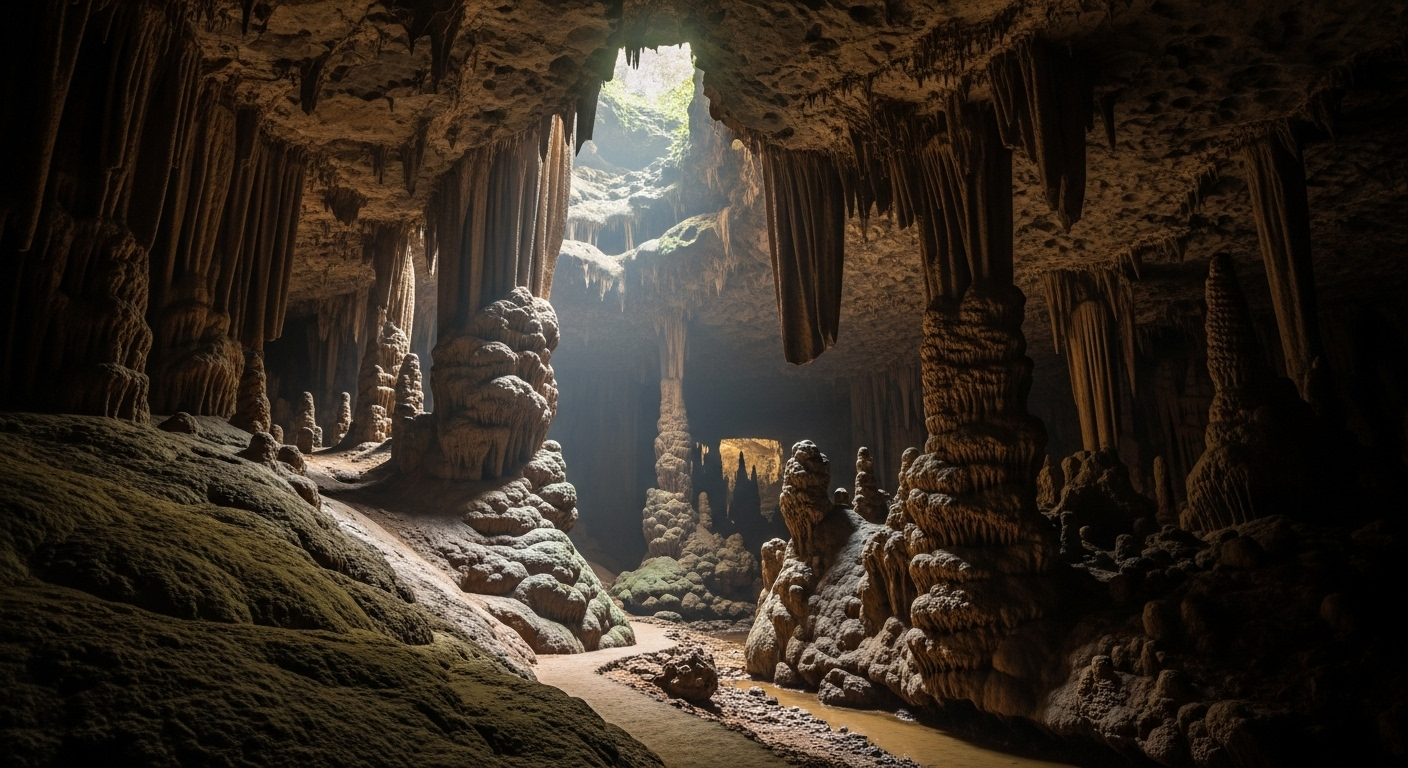
The Western Ghats are home to the historic Edakkal Caves. These caves date back to the Neolithic period, showcasing human creations over 8,000 years old. Known as the “Stone Age Chamber,” this part of the Edakkal Caves shares stories of early humans, long before our current era. People have loved these underground wonders of India since the 1950s. The caves near Kalpetta in Kerala invite adventurers and history lovers.
They offer much more than rocks. Those visiting can enjoy cultural festivals, concerts, and many community activities nearby.
The Guna Caves became famous through movies and have intrigued many. However, exploring these caves can be risky. Because of dangers, the Guna Caves have been closed since the early 2000s.
Exploring India’s mystic caves lets us see natural beauty and ancient human tales. These stories create a deep connection with India’s long past.
Key Takeaways
- Edakkal Caves’ “Stone Age Chamber” holds artefacts and carvings aged beyond 8,000 years.
- These caves, nestled in the Western Ghats, spotlight prehistoric human existence.
- Local cultural vibrancy is augmented through festivals and events at these historical sites.
- Adventures into these Indian caves intertwine with the local communities’ rich cultural mosaic.
- The gripping narrative of Guna Caves cautions against the unpredictable aspects of spelunking.
Unveiling the Charm of Elephanta Caves
Located just 11 kilometers from Mumbai, the Elephanta Caves in Maharashtra are fascinating. They’re more than just caves. They are a journey back to an ancient time. Solid basalt was carved into these caves between the 5th and 8th centuries. Here, art and religion come together beautifully.
The cave system splits into Hindu and Buddhist parts. The Hindu area is famous for its stunning carvings. Here, sculptures celebrate the mystical and divine, with Lord Shiva at the heart.
The Sculptural Grandeur of Shiva Depictions
The main highlight is the Trimurti sculpture of Shiva, which is amazing at 6.3 meters tall. This statue shows Shiva in three roles: Creator, Preserver, and Destroyer. Other carvings around it show Hindu stories. These sculptures are more than just art. They are symbols of devotion and respect.
Historical Debate: The Builders of the Monolithic Marvel
Who made the Elephanta Caves has always been a mystery. People like Garcia de Orta and Joao de Castro looked into it in the 16th century. But the caves’ creators are still unknown. The history of these sculptures and their building methods is a lively debate. This mystery keeps drawing people from all over the world.
The caves became a UNESCO World Heritage Site in 1987. Big repairs in the 1970s helped keep their beauty for us to see. The Maharashtra Tourism Department takes care of them. They make sure we can all enjoy this wonderful place.
The trip to the caves is unforgettable. You take a ferry across Mumbai Harbour. Then, you either hike or take a palanquin up to the caves. This adventure shows how secluded the caves are. This isolation helped protect these amazing places over time.
| Fact | Details |
|---|---|
| Main Trimurti Sculpture Height | 6.3 meters |
| UNESCO World Heritage Site Year | 1987 |
| Regular Adult Ferry Ticket Cost | 180 rupees |
| Palanquin Service Cost | 500 rupees |
| Main Cave Length | 39 meters |
The Elephanta Caves are an important piece of India’s history and culture. They welcome visitors from everywhere to explore their sacred and decorated spaces. Every sculpture and stone here has a story of ancient gods and creativity.
Plunging into the Depth of Borra Caves
Located in the Ananthagiri hills of Araku Valley, Borra Caves Andhra Pradesh are a must-see. They are one of the top spelunking adventures in India. These natural caves in India are thought to be 150 million years old. They sit 90 km north of Vishakapatnam. Being among India’s largest caves, they attract many people with their ancient rock forms.
Inside, you’ll find a world of natural art. Stalactites and stalagmites create amazing shapes. There’s even a Shiva lingam formed by nature. The caves are nestled in rich greenery, full of life.
If you love exploring natural caves in India, Borra Caves are perfect. Lights inside make the rock formations stand out. Every corner looks like a scene from ancient history.
| Feature | Description |
|---|---|
| Age of Caves | 150 million years |
| Location | 90 km north of Vishakapatnam |
| Special Attraction | Natural Shiva lingam |
| Accessibility | Visitor-friendly pathways and lighting |
Exploring Borra Caves is like a surreal trip under the Earth. Every stone and stalactite has its own story. This adventure in spelunking in India lets you uncover those stories. It’s all waiting in Andhra Pradesh’s beautiful underground world.
Ancient Narratives of the Ajanta Caves
When you step into the Ajanta Caves Maharashtra, it’s like going back in time. These ancient caves are like doorways to the past. They are in Maharashtra and show beautiful Buddhist art and culture.
Timeless Buddhist Art and Storytelling
The Ajanta Caves are known for beautiful stories on their walls. These stories are called Jataka tales. They show us values and life from long ago. Each piece of art tells a moral story, made by monks long ago.
The Ajanta Caves’ art shows how skilled people were back then. There are thirty caves, and each one is unique. They turned a rocky cliff into a peaceful place for monks. This place is very important for its culture and religion.
The Monsoon Refuge of Monks
During the rainy season, monks found shelter in the Ajanta Caves. The caves offered a safe place for them to meditate and make art. This helped keep their beautiful art safe over many years.
Many people, including scholars and tourists, love visiting the Ajanta Caves. Here’s a brief look at their history and art:
| Phase | Period | Main Contributions |
|---|---|---|
| First (Satavahana) | 2nd century BCE | Caves 9, 10, 12, 13, 15A with Jataka murals |
| Second (Vakataka) | 460-480 CE | Expansion majorly in artistic sculptures and detailed murals |
| Extended Period | 4th-7th century CE | Additional caves and refined art forms |
The Ajanta Caves still show us the amazing art and faith from long ago. They teach us so much about ancient India’s history and art.
Mysterious Caves in India: The Sacred Amarnath Cave
Located in the serene yet rugged terrains of Baltal, Amarnath Cave Jammu and Kashmir is a monumental natural and spiritual marvel. It draws thousands of pilgrims despite being at a high altitude of 3,888 meters. The cave is famous for its ice stalagmite symbolizing Lord Shiva’s linga, making it a spiritually significant mystical underground chamber.
The formation of the ice linga in Amarnath Cave is both a natural and spiritual phenomenon. It is thought to form from freezing water drops that fall from the cave’s ceiling. These drops accumulate vertically, growing with the moon’s phases. This reflects deep Hindu beliefs and cosmology.
| Statistical Highlight | Detail |
|---|---|
| Pilgrimage Period | Annual pilgrimage from July to August during a brief period when snow melts |
| Visitor Record | Peak recorded visits in 2011: 634,000 |
| Additional Ice Formations | Parvati and Ganesha alongside Shiva linga |
The Amarnath Cave pilgrimage is called the Amarnath Yatra. It is a spiritual journey and a challenge. It showcases human bravery against cold temperatures and tough treks. The journey highlights the blend of physical and metaphysical in India cave exploration, offering insight into India’s spiritual depth.

Faith and natural beauty are at the heart of the Amarnath Cave’s importance. Every year, people worldwide come here. They feel the call of spirituality and the lure of exploring India’s mystical underground chambers.
The Dual Wonders of Udayagiri and Khandagiri
Near Bhubaneswar, the Udayagiri and Khandagiri Caves in Odisha are amazing. They show the smart design and deep spirit of old India. This place is very special for Jain heritage.
Made mostly in the 1st century BCE, these caves were homes for Jain monks. They are important for history and the calm stories they tell. Here, monks lived a simple life under King Kharavela’s rule.
Exploring Jain Heritage in Orissa’s Historical Caves
The Udayagiri and Khandagiri caves have 33 beautiful caves on two hills. Udayagiri has 18 caves and Khandagiri has 15. They have lovely carvings and stories from long ago.
Rani Gumpha, Hathi Gumpha, and Ganesha Gumpha are very important. They show how people lived and what they believed a long time ago.
Cave Inscriptions and Preserved Artifacts
The Hathi Gumpha writings tell us about King Kharavela’s time. The Vyaghra Gumpha looks like a tiger’s mouth and shows ancient art skills. The Ganesha Gumpha has carvings of myths that interest researchers and visitors.
These caves are marked as a “Must See” by the Archaeological Survey of India. They teach us about old Indian culture and art. For those who love nature, history, and buildings, the caves of Udayagiri and Khandagiri are a deep trip into India’s past.
Vaishno Devi: A Pilgrimage into the Cave Temples
Going to Vaishno Devi Jammu Kashmir connects pilgrims to their faith. It also follows the breathtaking beauty of a top cave temple in India. Nestled in the Trikuta Mountains, this holy place shows the true meaning of spiritual journeys in India. Millions come to see Goddess Durga in her natural rock form.
This pilgrimage is more than a trip to a holy place. It’s a walk through beautiful scenes and shows the lasting power of faith. The temple sits in Katra, high up at 5200 feet. The 13km walk to get there is a deep and changing journey for many.

The temple, open all the time, lets visitors pick how they travel there. You can ride a pony, be carried in a palanquin, or fly by helicopter. This makes sure everyone, young or old, can make the journey. The best time to visit is from March to October or during Navratri. Then, the temple shines with devotion and celebration.
- Accessibility: Available by foot, pony, palanquin, helicopter.
- Annual Visitors: Thousands of devotees yearly.
- Opening Hours: 24 hours a day, 365 days a year.
The trip to Vaishno Devi is more than getting to the cave temple. It’s about the reflection and growth that happens on the way. This journey captures India’s rich religious beliefs and deep spirituality. It shows in landmarks like these famous cave temples.
For those looking into spiritual journeys in India, Vaishno Devi is special. It combines natural beauty, cultural heritage, and spiritual insight. It’s a key place on India’s spiritual tourist map.
Carved Elegance at Badami Caves
Located in Karnataka’s rugged lands, the Badami Caves showcase ancient Indian architecture. They have four caves for different deities. This shows a time when people valued many religions.
Their beauty speaks of history and culture. People from all over come to see them. This includes scholars and art fans.
The caves blend Dravidian and Nagara styles beautifully. Each was made from red sandstone. They show the talent of ancient artists.
Their halls and carvings share stories. They show us how people long ago lived and prayed.
Dravidian Architecture Blended with Nagara Style
The Badami Caves in Karnataka have an amazing story. Made from the 6th to 8th centuries, they are on cliffs. They mix Dravidian straight lines and Nagara curves.
This mix is very clear in the third cave. It is dedicated to Vishnu in many forms.
The Significance of UNESCO World Heritage Sites
The Badami Caves are very important. They are UNESCO World Heritage sites. This shows they are valuable to the whole world.
We must keep these caves safe. They help us learn about history and culture. They connect us to the past.
These caves are key to India’s history. They show many beliefs from the Chalukya rule. From Nataraja to Jain Tirthankaras, each cave has its own story.
They blend art and culture from many traditions. This has shaped India’s spirit.
The Badami Caves in Karnataka inspire many. They keep alive the tale of a great civilization. Their stories are still heard today.
Surrender to the Mystic Ambiance of Mawsmai Cave
Located in Meghalaya, Mawsmai Cave is a beautiful example of natural caves. It attracts people interested in exploring India’s caves. Adventure and nature blend together here, surrounded by lush landscapes.
This limestone cave is known for its stalactites and stalagmites formed over millions of years. The dance of shadows and lights sparks the imagination. Each chamber tells ancient secrets, preserved in this underground wonder.
Exploring Mawsmai Cave is like traveling through time. Each corner tells stories of earth’s history. Near Cherrapunjee, the cave combines beauty with the area’s stunning views.
The cave’s beauty is part of a rich cultural region. Meghalaya showcases tribal cultures, history, and nature. The cave connects us to life in these lands over centuries.
Visiting Mawsmai Cave is an adventure into nature’s art. It shows how slowly nature sculpts our world. Adventure seekers and nature lovers will find joy here.
The journey through Mawsmai Cave connects us with nature. It teaches us about our ecosystem. We learn to appreciate earth’s history and the importance of preserving natural wonders.
Rediscovering the Stone Age with Edakkal Caves
In the Western Ghats of Kerala, the Edakkal Caves are not just beautiful. They are also a window to the past. These caves show us a world of prehistoric art. They tell us about human history and creativity long ago.
The Edakkal Caves are interesting because of how they were formed. A giant piece of the mountain split and made them. Locals have stories about gods making this happen. Today, these caves let us explore old secrets. The walls have drawings from the Stone Age.
The Understanding of Prehistoric Petroglyphs
The caves have ancient drawings that tell stories. There are over 400 symbols showing old life and traditions. These carvings are special. They were made with skill and show how people back then understood their world.
Confronting Accessibility and Safety in Cave Exploration
Going to the caves is an adventure. You must climb over 300 steps to get there. The view on the way shows beautiful tea farms and hills. Going down is easier, but you still need to be careful.
The caves are amazing because of how the sun lights them up. Visitors should be careful to protect this place. It has lasted thousands of years.
Edakkal Caves is the only place in South India with Neolithic carvings visible, making it very special.
| Feature | Description |
|---|---|
| Location | Western Ghats, Kerala |
| Age of Petroglyphs | Over 6000 years |
| Unique Aspects | Only Neolithic carvings in South India |
| Accessibility | 300+ steps climb |
| Proximity to Nature | Surrounded by tea estates and mountains |
Conclusion
The journey through India’s hidden caves takes us deep into mystery. The ancient caves show history, art, and faith mixed together. They let us see the country’s rich beliefs and key moments in time.
The Elephanta and Ajanta Caves are special cultural spots. The Ajanta Caves, recognized by UNESCO, show beautiful Buddhist art. They have been loved by people for a long time.
Many visit the Amarnath Caves each year, showing their deep faith. The Ellora Caves, close to Aurangabad, have art from different religions. They are also named a UNESCO World Heritage site, which is a big honor.
Each cave tells stories of India’s past. They are not just for tourists but are important for learning. The stone and sculptures in these caves share secrets of old times. They invite us to explore and learn more about India’s history.
FAQ
What are some of the most mysterious caves in India worth exploring?
India is home to many mysterious caves. You might enjoy the Elephanta Caves in Maharashtra or the Borra Caves in Andhra Pradesh. You could also visit the Ajanta and Ellora Caves in Maharashtra, the Amarnath Cave in Jammu and Kashmir, and the Badami Caves in Karnataka.
Can you participate in spelunking adventures in India?
Yes, you can explore caves in India. It’s a fun activity. Places like the Borra Caves and Ajanta Caves are great for this. Make sure to have a guide and to stay safe.
What is special about the subterranean wonders of the Elephanta Caves?
The Elephanta Caves are amazing underground places. They have beautiful rock-cut sculptures of gods. They’re famous for their artwork of Lord Shiva, showing off ancient Indian art.
Why are the Ajanta Caves significant in understanding ancient narratives?
The Ajanta Caves are important for learning about old stories. They have a lot of art that shows Buddhist traditions and stories.
What makes the Amarnath Cave a notable destination for mystical explorations?
The Amarnath Cave is a special place for Hindu worship. It has a natural ice shape that looks like a sacred symbol. People find it mysterious how the ice shape changes size.
Are there any caves that shed light on India’s Jain heritage?
Yes, the Udayagiri and Khandagiri Caves in Odisha are special. They help us learn about Jain traditions with their carvings and old artifacts.
What makes Vaishno Devi one of the most visited cave temples in India?
The Vaishno Devi Cave Temple is a very important place for Hindus. Every year, millions go on a journey there. They go to see the holy shrine of Goddess Durga shown in natural rocks.
Why are the Badami Caves recognized as a UNESCO World Heritage site?
The Badami Caves are a UNESCO World Heritage site because they are very important and beautiful. They are an amazing mix of two different building styles and have old writings and art.
What can explorers expect when visiting Mawsmai Cave in Meghalaya?
Mawsmai Cave in Meghalaya is like a magical place. It has beautiful rock formations that look like art made by nature. It’s easy for visitors to walk through and enjoy.
Are there any caves in India that offer a glimpse into prehistoric times?
Yes, the Edakkal Caves in Kerala take you back to the Stone Age. You can see carvings from a very long time ago that show how people lived then.
What are the best practices for cave exploration in India?
When you go cave exploring in India, make sure you stay safe. This means having a good guide, wearing the right clothes, and caring for the cave. Always check if it’s safe and okay to go into the caves.